
Assessing the Impact of the EU’s Carbon Border Tax Adjustment Mechanism on Tanzania’s LNG and fossil-based exports
Author: Lulu O’lang (Phd), Researcher and consultant, Governance and Economic Policy Center
Executive Summary:
The European Union’s (EU) proposed Carbon Border Tax Adjustment Mechanism (CBAM) aims to mitigate carbon leakage by imposing a carbon tax on imports of certain commodities that are not taxed internally within the exporter’s country at a comparable level. This policy brief evaluates the potential impact of the CBAM on Tanzania’s promising liquefied natural gas (LNG) project and fossil-based exports. It offers strategic recommendations for mitigating adverse effects and enhancing Tanzania’s export competitiveness.
Background:
Tanzania has large deposits of natural gas and the government is actively seeking attract investment to develop this massive resource for both domestic and export markets. Part of this plan includes gas to power projects by pumping natural gas into the national grid for power generation and export of Liquefied Natural Gas (LNG) to foreign markets. Efforts are underway to construct a massive LNG project in the Southern part of the Country. Tanzania is pushing to sign the host government agreement for its $42 billion Tanzania LNG project by mid-2026, a deal led by Equinor and Shell that would unlock one of Africa’s largest gas developments and set the country on a path to become an LNG exporter[1]. However, this comes at time when the global fossil energy markets and industries are constantly evolving and facing unpredictable future due to efforts to combat global warming by reducing or transiting away from fossil-based energy sources. The global regulatory framework for energy markets is changing, with higher expectations of companies to reduce their carbon foot prints. The EU market will significantly change with the introduction of new European Union generalized measures to reduce incentives of EU based firms to outsource their carbon emission to other Countries outside by imposing taxes or limiting importation of fossil-based products from non-EU countries.
What is EU Carbon Border Adjustment Mechanism (CBAM)
The EU Carbon Border Adjustment Mechanism (CBAM) is the EU’s landmark tool to prevent carbon leakage and support the EU’s increased climate ambitions. It works by putting a price on carbon emitted during the production of carbon-intensive goods entering the EU to incentivize cleaner industrial production in non-EU countries.
Carbon leakage refers to the process of shifted production and/or emissions to other jurisdictions with less stringent emission constraints. It is one of the key obstacles for the EU to reach its climate commitments. The CBAM was designed to specifically address this risk. Carbon leakage can occur when a domestic carbon price negatively impacts the competitiveness of an entity operating in this domestic context. This increased cost might result in the entity shifting its production to another country with a lower carbon price to reduce production costs. For example, a steel producer might consider relocating its production outside of the EU to avoid paying for the carbon it emits. Another possible instance of carbon leakage occurs when non-domestic producers that are not subject to the price of carbon enjoy significant competitive advantages compared to domestic producers, resulting in a shift of production abroad[2]. The CBAM is also intended to promote more environmentally friendly production methods in third countries.
How it will work
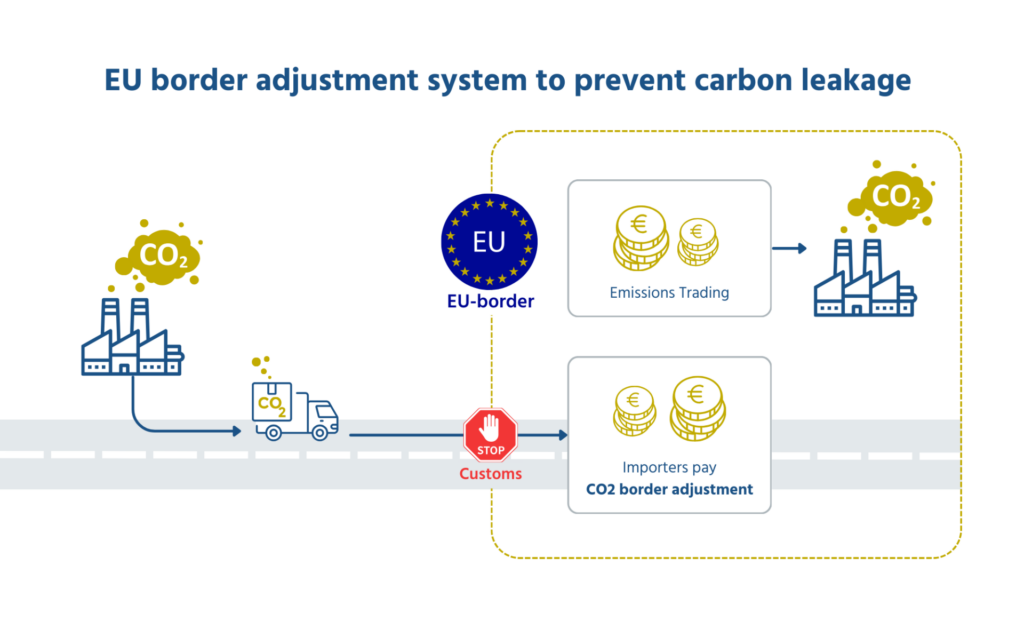 Illustration Source: Let Me Ship
As it stands, the implementation of the CBAM will have far-reaching implications for fossil export countries worldwide. Countries with reliance on fossil exports or fossil-based exports will be significantly affected.
Some early studies indicate that CBAM will disproportionately impact some non-EU economies because many of the potentially impacted economies have a low capacity to adapt their productive structure to shift to less-emitting industries or to adopt low-emission cutting-edge technologies (Magacho et al., 2024). New fossil producing countries such as Tanzania will potentially be more impacted by CBAM. Hence, these countries need to take more action to ensure that the negative impacts are significantly minimised. CBAM will equally impact costs and availability of fossil based goods and services in the EU markets as these have to pay an additional surcharge to compensate for their carbon footprints in the EU (Sabyrbekov & Overland, 2024).
Policymakers on both sides of this initiative must carefully consider a multitude of factors, including its impact on EU trade, its potential effects on the well-being of domestic populations, the influence it might have on public opinion, and broader economic relations with the EU.
Goods covered under CBAM
The CBAM will initially only be applied to goods with a high potential for carbon leakage: Aluminum, iron, steel, fertiliser, electricity, hydrogen and cement. The CBAM takes into account both greenhouse gas emissions that occur directly in the production of products and indirect emissions that arise from the manufacture of intermediate products or the electricity required for production.3
Both certain intermediate products and some downstream products such as liquefied natural gas, petrol, heating oil, synthetic rubber, plastics, lubricants, antifreeze, fertilisers and pesticides are affected. It is expected that all products that are also subject to intra-European emissions trading will be added in the coming years[3]. Effectively, from 1st January 2026, only authorised CBAM declarants will be able to import the corresponding goods.
General Effects of CBAMs of Carbon-based exports
The effects of the Carbon Border Adjustment Mechanisms include:2
- The import of these goods becomes more expensive due to the pricing of CO2 costs.
- Potential additional revenues from CO2 pricing of imports are to be invested in climate protection.
- Incentive for other countries to introduce CO2 pricing so that they can continue to trade freely with the EU.
Tanzania’s LNG and Fossil Exports
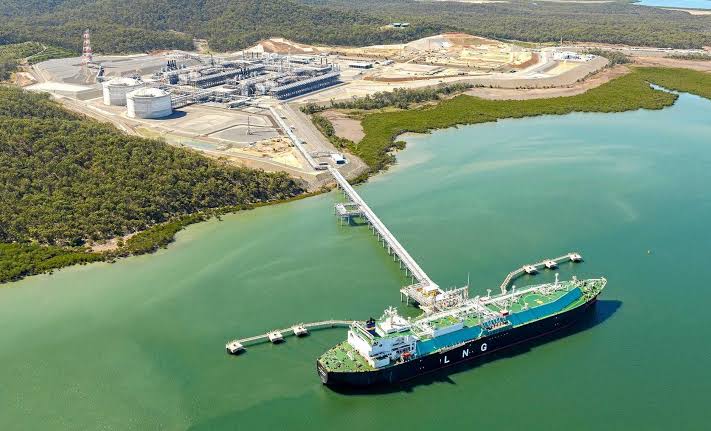
Tanzania has large deposits of natural gas which are currently estimated at 57 Tcf. Tanzania is on the verge of leveraging its significant natural gas reserves through a Liquified Natural Gas (LNG) project expected to substantially boost exports, particularly to the world market.
The project is led by Equinor of Norway and Shell, joined by ExxonMobil, Pavilion Energy, Medco Energi and the state-owned Tanzania Petroleum Development Corporation. The development targets more than 47 trillion cubic feet of offshore natural gas, turning it into exports by cooling the gas into liquid form for shipment. First production is around 2034 and this, if completed will, this project will be the largest in East and Southern Africa, creating jobs and earning Tanzania significant revenues. For Tanzania, LNG is a chance to convert its undersea buried gas resource into revenue, jobs and energy.
However, the project arrives as the world debates the future of fossil fuels. Demand for gas is strong now but clouded over the long run. Supporters argue gas is a bridge fuel that can power growth with lower emissions than coal. Critics warn of stranded assets if demand fades. Tanzania bets that buyers will want its gas for decades to come[4] and global market regulatory frameworks will friendly,
Potential Impact on Tanzania’s LNG and fossil-based exports
The LNG is not being directly targeted in the first phase of CBAM as the EU’s CBAM will in the first phase target iron & steel and aluminum and in its next phase cover cement, fertilisers, electricity, and hydrogen.
The potential challenge to Tanzania’s LNG is primarily through the overall impact of CBAMs on natural gas export markets and industrial production from gas fired electricity, since natural gas could be considered as a significant fossil input into final industrial products exported to the EU. Moreover, EU’s influence on global trade norms and expectations regarding carbon emissions could significantly affect on global energy companies seeking to invest into Tanzania’s LNG. For long, negotiations between the companies and government stalled over taxes and guarantees.
Competitiveness: The main issue that most developing countries are concerned about CBAM is the competitiveness of their products (Magacho et al., 2024; Perdana et al., 2024). Despite the initial phase of CBAM not directly affecting LNG, the trend towards global carbon pricing mechanisms may influence the competitiveness of Tanzania’s LNG. The naturally low CO2 content of Tanzanian gas, however, positions it favorably against competitors, potentially offering a competitive edge in a carbon-sensitive market.
Market Access: Tanzania’s LNG market is predominantly Asian countries, data shows that the export of Intermediate goods, food and vegetables dominates the export products to the EU. There is no clear plan for exporting LNG to the EU however should the plan include it in its expansion plan, the CBAM could set precedents affecting market access for energy exports by encouraging stricter carbon intensity benchmarks in the EU.
Tanzania’s current carbon trading framework underlines its readiness to engage in carbon reduction initiatives, which could facilitate smoother market access. However, the means to determine the carbon content/ carbon accounting system of traded commodities crucial for export goods is still lacking.
Investment Climate: The uncertain trajectory of global carbon pricing policies, including the CBAM, may impact investment decisions related to the LNG project. If highlighted and leveraged, the project’s inherently low CO2 footprint could attract investment by showcasing its commitment to sustainable energy production.
Policy Recommendations
Strategic Engagement: Tanzania should pursue active dialogue with EU policymakers to understand the evolving CBAM regulations and advocate for fair treatment of low-carbon intensity projects like Tanzania’s LNG.
Enhanced Carbon Mitigation: Leveraging its low CO2 emitting LNG, Tanzania should continue to invest in renewable energy integration and carbon capture technologies to further decrease the carbon footprint of its LNG and potentially fossil based exports.
Market Diversification: Given the LNG market’s tilt towards Asia, Tanzania should bolster efforts to diversify its export destinations, thereby reducing dependency on any single market and mitigating risks associated with CBAM. However, it is possible that in the near future CBAM would incentive Asian EU partners to adopt a carbon price mechanism because the amount charged as part of the CBAM deduces the current carbon price applied in the country of origin and these countries may impose tax on their imports to cover for the carbon tax when producing goods for export to EU.
Policy Development: There is no one-size-fits-all approach to designing and implementing CBAM to tackle competitiveness and carbon leakage; policy design and characteristics of the economy matter(Zhong & Pei, 2024).Tanzania should continue to develop and refine its carbon policy and trading regulations to align with international standards and practices, thereby enhancing the attractiveness of its export products including LNG in a carbon-conscious global market. This includes technical support for carbon accounting and regulatory compliance.
Conclusion:
The broader implications for energy exports and the evolving scope of CBAM necessitate proactive measures from Tanzania. While the CBAM presents challenges, it also offers Tanzania an opportunity to position its LNG project as a leader in low-carbon energy production. By engaging proactively with international partners, investing in carbon mitigation, and diversifying markets, Tanzania can enhance the resilience and competitiveness of its LNG exports in the face of evolving global carbon pricing mechanisms.
References
Magacho, G., Espagne, E., & Godin, A. (2024). Impacts of the CBAM on EU trade partners: Consequences for developing countries. Climate Policy, 24(2), 243–259. https://doi.org/10.1080/14693062.2023.2200758
Perdana, S., Vielle, M., & Oliveira, T. D. (2024). The EU carbon border adjustment mechanism: Implications on Brazilian energy intensive industries. Climate Policy, 24(2), 260–273. https://doi.org/10.1080/14693062.2023.2277405
Sabyrbekov, R., & Overland, I. (2024). Small and large friends of the EU’s carbon border adjustment mechanism: Which non-EU countries are likely to support it? Energy Strategy Reviews, 51, 101303. https://doi.org/10.1016/j.esr.2024.101303
Zhong, J., & Pei, J. (2024). Carbon border adjustment mechanism: A systematic literature review of the latest developments. Climate Policy, 24(2), 228–242. https://doi.org/10.1080/14693062.2023.2190074
[1] https://www.riotimesonline.com/tanzania-lng-project-42-billion-host-agreement-2026/
[2] https://tracker.carbongap.org/policy/carbon-border-adjustment-mechanism/
[3] Let Me Ship, https://www.letmeship.com/en/the-eu-carbon-border-adjustment-mechanism/
[4] ibid