Category Climate Change Governance

Assessing the Impact of the EU’s Carbon Border Tax Adjustment Mechanism on Tanzania’s LNG and fossil-based exports


Author: Lulu O’lang (Phd), Researcher and consultant, Governance and Economic Policy Center

Executive Summary:

The European Union’s (EU) proposed Carbon Border Tax Adjustment Mechanism (CBAM) aims to mitigate carbon leakage by imposing a carbon tax on imports of certain commodities that are not taxed internally within the exporter’s country at a comparable level. This policy brief evaluates the potential impact of the CBAM on Tanzania’s promising liquefied natural gas (LNG) project and fossil-based exports. It offers strategic recommendations for mitigating adverse effects and enhancing Tanzania’s export competitiveness.

Background:

Tanzania has large deposits of natural gas and the government is actively seeking attract investment to develop this massive resource for both domestic and export markets. Part of this plan includes gas to power projects by pumping natural gas into the national grid for power generation and export of Liquefied Natural Gas (LNG) to foreign markets. Efforts are underway to construct a massive LNG project in the Southern part of the Country. Tanzania is pushing to sign the host government agreement for its $42 billion Tanzania LNG project by mid-2026, a deal led by Equinor and Shell that would unlock one of Africa’s largest gas developments and set the country on a path to become an LNG exporter[1]. However, this comes at time when the global fossil energy markets and industries are constantly evolving and facing unpredictable future due to efforts to combat global warming by reducing or transiting away from fossil-based energy sources. The global regulatory framework for energy markets is changing, with higher expectations of companies to reduce their carbon foot prints. The EU market will significantly change with the introduction of new European Union generalized measures to reduce incentives of EU based firms to outsource their carbon emission to other Countries outside by imposing taxes or limiting importation of fossil-based products from non-EU countries.

 What is EU Carbon Border Adjustment Mechanism (CBAM)

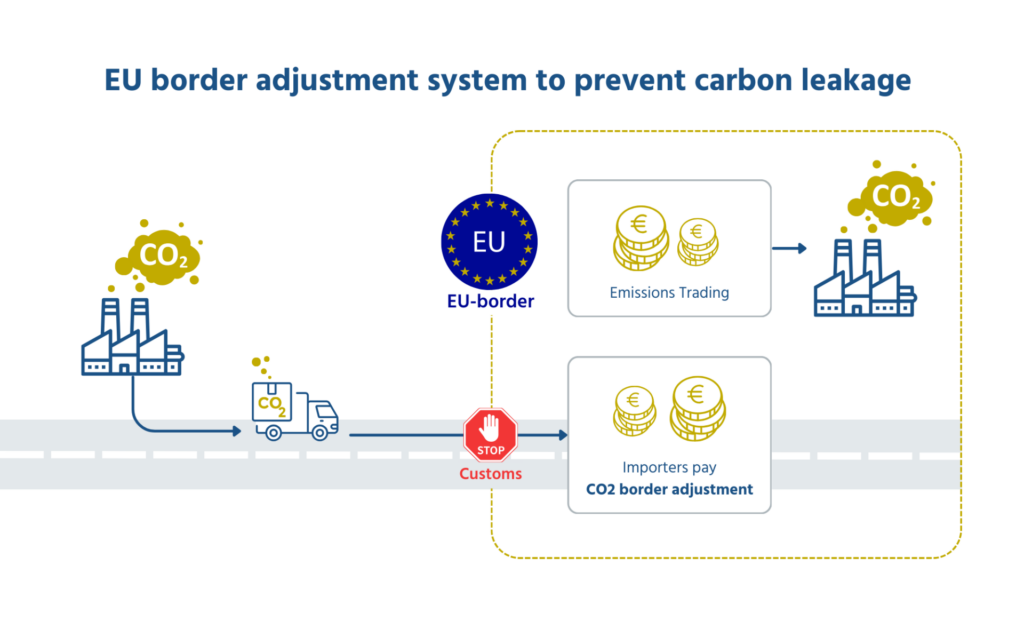
The EU Carbon Border Adjustment Mechanism (CBAM) is the EU’s landmark tool to prevent carbon leakage and support the EU’s increased climate ambitions. It works by putting a price on carbon emitted during the production of carbon-intensive goods entering the EU to incentivize cleaner industrial production in non-EU countries.  

Carbon leakage refers to the process of shifted production and/or emissions to other jurisdictions with less stringent emission constraints. It is one of the key obstacles for the EU to reach its climate commitments. The CBAM was designed to specifically address this risk. Carbon leakage can occur when a domestic carbon price negatively impacts the competitiveness of an entity operating in this domestic context. This increased cost might result in the entity shifting its production to another country with a lower carbon price to reduce production costs. For example, a steel producer might consider relocating its production outside of the EU to avoid paying for the carbon it emits. Another possible instance of carbon leakage occurs when non-domestic producers that are not subject to the price of carbon enjoy significant competitive advantages compared to domestic producers, resulting in a shift of production abroad[2]. The CBAM is also intended to promote more environmentally friendly production methods in third countries.

How it will work


Illustration Source: Let Me Ship

As it stands, the implementation of the CBAM will have far-reaching implications for fossil export countries worldwide.  Countries with reliance on fossil exports or fossil-based exports will be significantly affected.

Some early studies indicate that CBAM will disproportionately impact some non-EU economies because many of the potentially impacted economies have a low capacity to adapt their productive structure to shift to less-emitting industries or to adopt low-emission cutting-edge technologies (Magacho et al., 2024). New fossil producing countries such as Tanzania will potentially be more impacted by CBAM. Hence, these countries need to take more action to ensure that the negative impacts are significantly minimised. CBAM will equally impact costs and availability of fossil based goods and services in the EU markets as these have to pay an additional surcharge to compensate for their carbon footprints in the EU (Sabyrbekov & Overland, 2024).

Policymakers on both sides of this initiative must carefully consider a multitude of factors, including its impact on EU trade, its potential effects on the well-being of domestic populations, the influence it might have on public opinion, and broader economic relations with the EU.

Goods covered under CBAM

The CBAM will initially only be applied to goods with a high potential for carbon leakage: Aluminum, iron, steel, fertiliser, electricity, hydrogen and cement. The CBAM takes into account both greenhouse gas emissions that occur directly in the production of products and indirect emissions that arise from the manufacture of intermediate products or the electricity required for production.3 

Both certain intermediate products and some downstream products such as liquefied natural gas, petrol, heating oil, synthetic rubber, plastics, lubricants, antifreeze, fertilisers and pesticides are affected. It is expected that all products that are also subject to intra-European emissions trading will be added in the coming years[3]. Effectively, from 1st January 2026, only authorised CBAM declarants will be able to import the corresponding goods. 

General Effects of CBAMs of Carbon-based exports

The effects of the Carbon Border Adjustment Mechanisms include:2

  • The import of these goods becomes more expensive due to the pricing of CO2 costs.
  • Potential additional revenues from CO2 pricing of imports are to be invested in climate protection.
  • Incentive for other countries to introduce CO2 pricing so that they can continue to trade freely with the EU.

Tanzania’s LNG and Fossil Exports

Tanzania has large deposits of natural gas which are currently estimated at 57 Tcf. Tanzania is on the verge of leveraging its significant natural gas reserves through a Liquified Natural Gas (LNG) project expected to substantially boost exports, particularly to the world market.

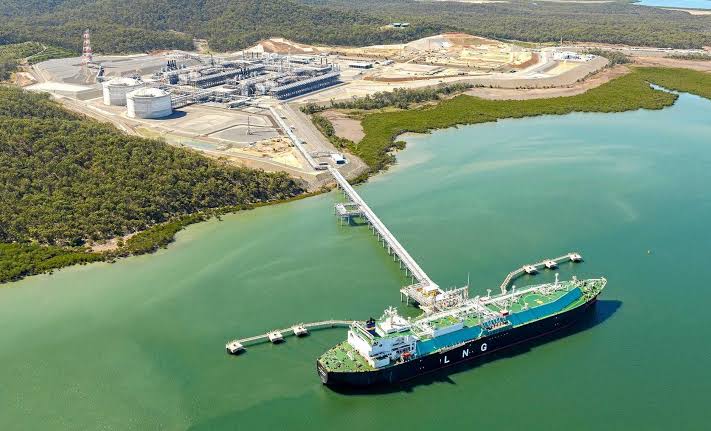
The project is led by Equinor of Norway and Shell, joined by ExxonMobil, Pavilion Energy, Medco Energi and the state-owned Tanzania Petroleum Development Corporation. The development targets more than 47 trillion cubic feet of offshore natural gas, turning it into exports by cooling the gas into liquid form for shipment. First production is around 2034 and this, if completed will, this project will be the largest in East and Southern Africa, creating jobs and earning Tanzania significant revenues. For Tanzania, LNG is a chance to convert its undersea buried gas resource into revenue, jobs and energy.

However, the project arrives as the world debates the future of fossil fuels. Demand for gas is strong now but clouded over the long run. Supporters argue gas is a bridge fuel that can power growth with lower emissions than coal. Critics warn of stranded assets if demand fades. Tanzania bets that buyers will want its gas for decades to come[4] and global market regulatory frameworks will friendly,

Potential Impact on Tanzania’s LNG and fossil-based exports

The LNG is not being directly targeted in the first phase of CBAM as the EU’s CBAM will in the first phase target iron & steel and aluminum and in its next phase cover cement, fertilisers, electricity, and hydrogen.  

The potential challenge to Tanzania’s LNG is primarily through the overall impact of CBAMs on natural gas export markets and industrial production from gas fired electricity, since natural gas could be considered as a significant fossil input into final industrial products exported to the EU.  Moreover, EU’s influence on global trade norms and expectations regarding carbon emissions could significantly affect on global energy companies seeking to invest into Tanzania’s LNG. For long, negotiations between the companies and government stalled over taxes and guarantees.

Competitiveness: The main issue that most developing countries are concerned about CBAM is the competitiveness of their products (Magacho et al., 2024; Perdana et al., 2024). Despite the initial phase of CBAM not directly affecting LNG, the trend towards global carbon pricing mechanisms may influence the competitiveness of Tanzania’s LNG. The naturally low CO2 content of Tanzanian gas, however, positions it favorably against competitors, potentially offering a competitive edge in a carbon-sensitive market.

Market Access: Tanzania’s LNG market is predominantly Asian countries, data shows that the export of Intermediate goods, food and vegetables dominates the export products to the EU. There is no clear plan for exporting LNG to the EU however should the plan include it in its expansion plan, the CBAM could set precedents affecting market access for energy exports by encouraging stricter carbon intensity benchmarks in the EU.

Tanzania’s current carbon trading framework underlines its readiness to engage in carbon reduction initiatives, which could facilitate smoother market access. However, the means to determine the carbon content/ carbon accounting system of traded commodities crucial  for export goods is still lacking.

Investment Climate: The uncertain trajectory of global carbon pricing policies, including the CBAM, may impact investment decisions related to the LNG project. If highlighted and leveraged, the project’s inherently low CO2 footprint could attract investment by showcasing its commitment to sustainable energy production.

Policy Recommendations

Strategic Engagement: Tanzania should pursue active dialogue with EU policymakers to understand the evolving CBAM regulations and advocate for fair treatment of low-carbon intensity projects like Tanzania’s LNG.

Enhanced Carbon Mitigation: Leveraging its low CO2 emitting LNG, Tanzania should continue to invest in renewable energy integration and carbon capture technologies to further decrease the carbon footprint of its LNG and potentially fossil  based exports.

Market Diversification: Given the LNG market’s tilt towards Asia, Tanzania should bolster efforts to diversify its export destinations, thereby reducing dependency on any single market and mitigating risks associated with CBAM. However, it is possible that in the near future CBAM would incentive Asian EU partners to adopt a carbon price mechanism because the amount charged as part of the CBAM deduces the current carbon price applied in the country of origin and these countries may impose tax on their imports to cover for the carbon tax when producing goods for export to EU.

Policy Development: There is no one-size-fits-all approach to designing and implementing CBAM to tackle competitiveness and carbon leakage; policy design and characteristics of the economy matter(Zhong & Pei, 2024).Tanzania should continue to develop and refine its carbon policy and trading regulations to align with international standards and practices, thereby enhancing the attractiveness of its export products including LNG in a carbon-conscious global market. This includes technical support for carbon accounting and regulatory compliance.

Conclusion:

The broader implications for energy exports and the evolving scope of CBAM necessitate proactive measures from Tanzania. While the CBAM presents challenges, it also offers Tanzania an opportunity to position its LNG project as a leader in low-carbon energy production. By engaging proactively with international partners, investing in carbon mitigation, and diversifying markets, Tanzania can enhance the resilience and competitiveness of its LNG exports in the face of evolving global carbon pricing mechanisms.


References

Magacho, G., Espagne, E., & Godin, A. (2024). Impacts of the CBAM on EU trade partners: Consequences for developing countries. Climate Policy, 24(2), 243–259. https://doi.org/10.1080/14693062.2023.2200758

Perdana, S., Vielle, M., & Oliveira, T. D. (2024). The EU carbon border adjustment mechanism: Implications on Brazilian energy intensive industries. Climate Policy, 24(2), 260–273. https://doi.org/10.1080/14693062.2023.2277405

Sabyrbekov, R., & Overland, I. (2024). Small and large friends of the EU’s carbon border adjustment mechanism: Which non-EU countries are likely to support it? Energy Strategy Reviews, 51, 101303. https://doi.org/10.1016/j.esr.2024.101303

Zhong, J., & Pei, J. (2024). Carbon border adjustment mechanism: A systematic literature review of the latest developments. Climate Policy, 24(2), 228–242. https://doi.org/10.1080/14693062.2023.2190074

[1] https://www.riotimesonline.com/tanzania-lng-project-42-billion-host-agreement-2026/

[2] https://tracker.carbongap.org/policy/carbon-border-adjustment-mechanism/

[3] Let Me Ship, https://www.letmeship.com/en/the-eu-carbon-border-adjustment-mechanism/

[4] ibid

How Tanzania Government can Repurpose Youth for SDGs, NDCs and for a fossil free future


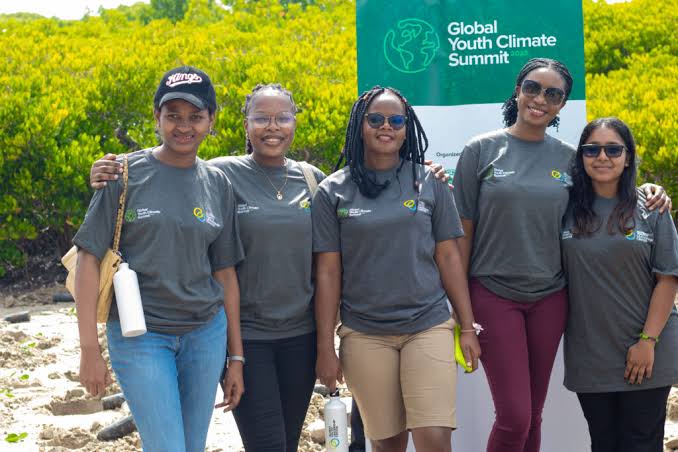
Photo Credit: Youth Global Climate Summit 2023

Author: Arafat Bakir Lesheve, Junior Associate, Governance and Economic Policy Centre and SDG Ambassador

Abstract

This short study and policy brief exposes the gaps and the need to repurpose the contribution of the youth in achieving the NDC and SDGs in Tanzania. The brief concludes that with tweaks to its current climate change governance framework and practice landscape, by purposefully targeting involvement of more young people, Tanzania’s achievement of its SDGs and NDC targets for climate resilience and a fossil free future can be achieved faster

Introduction
Young people are the majority of Tanzania’s population and destined to inherit the future yet are seriously at a risk of climate change. Many young people are actively engaged in mitigation measures such as tree planting campaigns with limited focus on the policy and practical measures that are required to ensure or determine a fossil free future is achieved.  In 2021 Tanzania developed its Nationally Determined Contributions (NDCs), which spells on how the government plans to build resilience against climate change and contribute to clean future. The NDC is anchored on delivering a fossil free future by 2050 yet the document and its implementation has remained largely a technical exercise with limited knowledge and participation of young people.

This short brief exposes the gaps and the need for an intentional repurposing of Tanzania’s youth in climate change and the implementation of the NDC along with the Sustainable Development Goals (SDGs) so as to achieve a fossil free future by 2030 and 2050. 

Background

The transition to a fossil-free future is crucial for Tanzania to achieve sustainable development and combat climate change. The United Nations has set several targets for achieving a fossil-free future by 2030 and 2050. These targets aim to enhance international cooperation in the fight against climate change, promote clean energy research and technology, reduce reliance on fossil fuels, reduce greenhouse gas emissions and speed up the transition to clean and renewable sources of energy.

Young people are the majority of Tanzania’s population and destined to inherit the future yet are seriously at a risk of climate change.

In 2021 Tanzania developed its Nationally Determined Contributions (NDCs), which spells out how the government plans to build resilience against climate change and contribute to clean future. The NDC is anchored on delivering a fossil free future by 2050 yet the document and its implementation has remained largely a technical exercise with limited knowledge and participation of young people. Many young people are actively engaged in mitigation measures such as tree planting campaigns with limited knowledge, focus, engagement and participation in the policy and practical measures that are required to ensure or determine a fossil free future is achieved.  With the youth comprising over 65% of Tanzania’s total population, engaging and empowering young people will be crucial to the success of these national and global targets.

Climate Change and a Fossil Free Future in Tanzania

Despite being among the least polluters, Tanzania is seriously affected by climate change. The country has experienced irregular rainfall patterns, extended droughts, floods and deforestation. Currently, a significant proportion (about 70%) of all types of natural disasters in Tanzania are climate change related and are linked to recurrent droughts and floods.

The most recent projections for climate change in Tanzania (Future Climate for Africa, 2017)9 show a strong agreement on continued future warming in the range of 0.8°C to 1.8°C by the 2040s, evenly distributed across Tanzania. The warming trend leads to a corresponding increase in the number of days above 30°C by 20-50 days in the central and eastern parts and up to 80 additional days in the coastal area of Tanzania.  Warming until 2090 is projected in the range of 1.6°C to 5.0°C depending on the level of greenhouse gases in the atmosphere( (URT: Tanzania Nationally Determined Contribution, 2021)

The extreme weather patterns affect National Economic growth due to large dependence of Tanzania’s Growth Domestic Product (GDP) on Climate sensitive activities such as agriculture. The recent floods affected crops and farmland while the extended droughts in some regions have increased food insecurity and poverty by almost half.

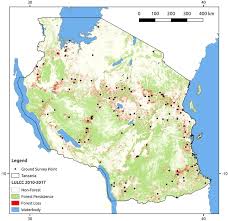
Moreover, climate change’s impact on Tanzania’s forest cover and sensitive ecosystems has been increasing.  According to reports, Tanzania’s forest cover has reduced by at least one third over the past decade, thereby reducing the coverage of the natural carbon sink that has protected us for generations.  Annually, almost 38% of Tanzania’s forest cover is being lost at the rate of about 400,000 ha annually and should this continue, the country would deplete its forest cover in the next 50-80 years[2]

Figure 1: Map of forest loss in Tanzania during 2010–2017 and location of ground survey points

Sensitive ecological and biodiversity systems hosted within from forests and wooded areas are affected and climate related diseases such as malaria in previously cold and less malaria prone regions such as Moshi, Arusha, Lushoto, Iringa and Mbeya are on the increase.

 According to medical reports, malaria is a major public health problem in mainland Tanzania and a leading cause of morbidity and mortality, particularly in children under five years of age and pregnant women.  Moreover, the climate condition has become favourable for transmission throughout almost the entire country, with about 95% of mainland Tanzania at risk. Over the past few years Tanzania now has the third largest population at risk of stable malaria in Africa after Nigeria and Democratic Republic of the Congo[3]. Clearly, there is a nexus between climate change and the social-economic and public policy challenges that Tanzania faces.

The perilous search for a Fossil Free Future

The UN under the Agenda 2030 targets to achieve a fossil free future by reducing global greenhouse gas emissions by half by 2030 and to achieve net zero by 2050.

For this to be feasible the world has to gradually transit from the use of fossil-based fuels towards renewables and clean energy sources.  Fossil fuels, such as coal, oil and gas, are by far the largest contributor to global climate change, accounting for over 75 percent of global greenhouse gas emissions and nearly 90 percent of all carbon dioxide emissions.

Therefore, ramping up investment in alternative sources of energy that are clean, accessible, affordable, sustainable, and reliable offers a way out of the enormous climate change challenges that we face. To achieve this requires a radical shift in global energy system but equally collective participation.  The UN has encouraged countries to develop and implement Sustainable Development Goals (SDGs) and Nationally Determined Contributions (NDCs), as road maps towards a sustainable cleaner future, yet many countries like Tanzania face a bumpy road ahead. The underfunding and limited meaningful participation by the youth is holding back success.

Climate Change, SDGs and the Nationally Determined Contributions (NDC) in Tanzania

In line with the UN Paris Agreement and call to climate action, the Tanzanian government set targets for climate change response and achieving a fossil-free future. The government aims to accelerate mitigation and adaptation measures, cutting Green House Emissions and contributing towards a transition to cleaner and renewable sources of energy.

These targets are clearly stipulated in Tanzania’s National Adaptation Plans (NAPs), National Climate Change Response Strategies (NCCRS) and most recently the Nationally Determined Contributions (NDC) in 2021.  The NDC provides a set of interventions on adaptation and mitigation which are expected to build Tanzania’s resilience to the impacts of climate change and at the same time contribute to the global efforts to reduce greenhouse gases.

According to the NDC, the government commits to reduce greenhouse gas emissions economy-wide between 30- 35% relative to the Business-As-Usual (BAU) scenario by 2030. The NDC further indicates that about 138-153 million tons of Carbon dioxide equivalent (MtCO2e)-gross emissions is expected to be reduced depending on the baseline efficiency improvements, consistent with its sustainable development agenda.  

The NDC goals are aligned to the UN Sustainable Development Goals (SDCs) 2015, in particular SDG13 and other closely related goals such as SDG (1.7,12,14,15.16 &17). They further in synchrony with the Agenda 2063 on the Future of Africa We want and the Sendai Framework on Disaster Risk Reduction (2011).

To achieve these targets, the government commits to consider the impacts of climate change in development planning at all levels and to pursue adaptation measures as outlined in the NDC. Despite these efforts, many SDG targets are off course and NDC’s implementation has been slow. The NDC implementation is faced with financial, governance, institutional and participation gaps, which are delaying or may ultimately thwart its successful achievement of a climate safe and fossil free future.

Gaps in Climate Change, NDC and SDG implementation

The Economics of climate change and implementation of SDGs and the NDC for a climate safe and fossil free future is proving to be an expensive affair.

According to The Economics of Climate Change reports for Mainland Tanzania (2011) and Zanzibar (2011) , an initial cost estimate of addressing current climate change risks is about USD 500 million per year[4].  These reports provide indicative costs for enhancing adaptive capacity and long-term resilience in Tanzania.  This cost is projected to increase rapidly in the future, with an estimate of up to USD 1 billion per year by 2030[5].

Further, the net economic costs of addressing climate change impacts are estimated to be equivalent to 1 to 2% of GDP per year by 20305. Similarly, Tanzania would require an investment of approximately USD 160 billion for mitigation activities aimed at achieving 100% renewable energy for electricity, buildings, and industry by 2050[6]. In total the NDC estimates that USD19,232,170,000 is required for its full implementation.

Moreover, Tanzania is facing several challenges related to weak institutional, financial constraints, poor access to appropriate technologies; weak climate knowledge management, inadequate participation of key stakeholders, and low public awareness have significantly affected effective implementation of various strategies, programmes, and plans[7]

The government has identified an institutional and governance framework for implementation. This includes the National Steering Committees and National Technical Committees for Mainland Tanzania and Zanzibar.  It further mentions the need for mainstreaming intervention but conspicuously, misses listing or identifying the youth as key stakeholders in this implementation.

With tweaks to its current policy and practice landscape, by purposefully targeting involvement of more young people, we believe, Tanzania’s achievement of its SDGs targets and climate change and energy transition goals as elaborated in the NDCs and overall National Development Plans could be faster.

Tanzania’s Road towards a Fossil Free Future

Tanzania’s road towards a fossil free future has so far been bumpy and marked with commitments and challenges. Tanzania however has opportunities and can turn up the ride faster.

The per capita emissions of the United Republic of Tanzania were estimated at 0.22 tCO2e[8] in 2014, which is significantly below global average of 7.58 tCO2e[9] recorded in the same year. However, given the disproportional effect of climate change, adaptation to the adverse impacts continues to be a topmost priority in the implementation of the NDC

Tanzania underlines the importance of harnessing opportunities and benefits available in mitigating climate change through pursuing a sustainable, low-carbon development pathway in the context of sustainable development. Thus, the NDC takes into account global ambition of keeping temperature increase well below 2°C as per the Paris Agreement.

Moreover, Tanzania is aiming for a greater use of natural gas and harnessing renewable energy sources to reduce on emissions. There are an estimated 57 trillion cubic feet of discovered reserves of which to-date over 100 million cubic feet have been exploited to produce 527 MW10. The government acknowledges that whilst natural gas is a fossil fuel, and therefore contributes to increasing climate change, it results in half the CO2 emissions as charcoal

Currently the government of Tanzania aims to shift away from biomass and increase the share of renewable energy sources such as hydro, wind, and solar in its energy use mix. Tanzania’s energy sector is currently dominated by traditional biomass; accounting for more than 82% of the total energy consumption as of 2019. As of 2022 energy usage in households, charcoal and wood represented 87% of the energy used, Liquefied Petroleum Gas (LPG) accounted for 10%, and other sources such as electricity accounted for about 3%[10].

Secondly, Tanzania has an estimated hydro potential of up to 4.7GW. However, as of 2021, only 573.7 MW (around 12%) of hydro capacity had been installed. The government plans to further develop its hydro capacity to increase the share of renewable energy.

Thirdly, while Tanzania aims to increase its renewable energy generation, there are also plans to ramp up investment in natural gas and coal. The government aims to reach 6700MW (33%) from natural gas and 5300MW (26%) from coal by 2044. However, further investments or reliance on fossil fuels such as coal and natural gas is considered as an energy transition risk as the country may lock itself into a high carbon-intensive pathway and thereby running contrary to achieving the NDC goals.

Furthermore, Tanzania has significant deposits of critical minerals that are considered essential for the clean energy transition. These minerals include nickel, graphite, copper, lithium, and others. The demand for these minerals expected to increase as clean energy technologies develop. This presents an opportunity for Tanzania to benefit from their extraction to value addition hence powering the global transition to a green economy.

Repurposing the youth dividend for climate change, NDCs and SDGs in Tanzania

Globally, the youth represent a significant portion of the population and their active involvement and engagement in supporting government and UN targets are essential.  

According to Tanzania’s 2022 census reports, the youth (under 35 years) constitute significant proportion (over 60%) of Tanzania’s population.  They account for the largest active labour force of the population and no doubt have potentials   to bring about economic growth and development of the country. Moreover, the demographics and dynamics of youth have changed substantially over the last decade. Many young people are highly educated and technologically exposed and skilled.  They are a dividend waiting to be utilized in many respects.

The implementation of Tanzania’s NDC is supposed to be guided by the principles of the UNFCCC, particularly the principle of equity and that of common but differentiated responsibilities and respective capabilities. Furthermore, the implementation is supposed to be implemented in a transparent and participatory manner in accordance with the provisions of the Paris Agreement. Despite these principles, the youth are yet to be fully engaged and harnessed for climate change and a fossil free future.

How can Youth be mobilized for a fossil free future?

Since 2006 government has made efforts by developing the National Climate Adaptations Programs and the National Climate Change Strategy. However, Tanzania does not have a climate change policy and its practical engagement of youth despite the numbers has been quite fragmented

Despite the major progress made, very limited deliberate and structured youth engagement opportunities have been created. For example, there is a government initiative on clean cooking targeting women but is not clear what role the youth can play in this campaign. Moreover, the Youth Policy is not aligned with the Climate Change and Energy policy. The NDC for example is very silent on Youth and mentions these in generic terms lobed together under the gender considerations. Governance challenges and weak intra-government coordination exists. There is weak insufficient capacity and resources for youth to engage.

To date, this potential of Tanzania’s youth participation, in the context of the global climate change is largely limited or focused on climate mitigation while engagement in energy transition discourse towards a fossil free future has been substantively low.

Re-prioritising Youth Engagement for Climate Change, SDGs and NDCs implementation

There are collective actions that Tanzanian youth can uptake to support government plans and UN targets for a clean future by 2030 and 2050. These includes actions such as investment in advocacy, awareness creation, skills development, creating of innovations, movement mobilization, partnership and collaboration for the goals. Tanzanian youth possess the energy, innovation, and sense of urgency required to drive the transition to a fossil-free future. By leveraging their skills and passion, young people can play a vital role with multiple entry points as below.

Raise Awareness and Advocate for Renewable Energy

As the population continues to grow, so will the demand for cheap energy, and an economy reliant on fossil fuels is creating drastic changes to our climate; Investing in solar, wind and thermal power, improving energy productivity, and ensuring energy for all is vital if we are to achieve SDG 7 by 2030.

Towards achieving this, the youth and other stakeholders, including the government should organize awareness campaigns and workshops to educate youth about the benefits of renewable energy and the negative impacts of fossil fuels. Engage in advocacy efforts to promote renewable energy policies and initiatives at the local, national, and international levels; Tanzania Youth led organizations must be supported to amplify the voices of Tanzanian youth in advocating for a transition to renewable energy.

Promote Energy Efficiency and Conservation

Tanzanian youth can organize campaigns and workshops to raise awareness about the importance of energy efficiency and conservation. They can educate their peers and communities about the benefits of using energy-efficient appliances, reducing energy consumption, and adopting sustainable practices.

Dr. Samia Suluhu Hasan the President of the United Republic of Tanzania is a global champion of clean cooking solutions that aims to address over reliance on toxic biomass, gender inequality against women as well as reduce impact of climate change.  Tanzania’s youth should be in frontline to promote clean cooking solution with the country.

In Tanzania, there are several initiatives aimed at promoting energy efficiency and conservation among youth. The United Nations Development Programme (UNDP) is actively involved in fortifying the capacity of governmental bodies, businesses, and civil society organizations to implement effective energy efficiency measures. Additionally, UNDP has launched a ground breaking scholarship program in partnership with the Ministry of Energy and the Dar es Salaam Institute of Technology, focusing on educating young women in the energy sector and honing their skills in Energy Management and Energy Audits.

These efforts not only empower women and youth but also foster collaboration across diverse segments of the population. Furthermore, The Prime Minister’s Office – Labour, Youth, Employment, and Persons with Disabilities is championing policy reforms in employment through public-private cooperation, with a focus on equal opportunity, fair pay, and gender-sensitive vocational training. These initiatives aim to empower Tanzanian youth, promote energy efficiency, and create a sustainable and inclusive future.

In SDG 5 (Gender Equality and Empowering Women), the use of biomass has resulted in social economic inequality that mainly affect women. They are unable to participate in various economic and developmental opportunities because they spent half of their time to fetch cooking charcoal. Clean cooking solution will improve their lifestyle, empower women and enable them to participate in developmental opportunities. 

For the government to support youth roles is key to encourage energy-efficient practices among youth by promoting energy-saving habits in households, schools, and communities. Youth and youth led organizations should be supported to advocate for the implementation of energy-efficient infrastructure and appliances in public spaces and buildings.

NGOs, and government agencies must collaborate with energy experts to develop engaging and interactive training materials that cater for the needs and interests of young people towards promoting energy efficiency.

Advocating for policy changes

Advocating for policy changes is a crucial step in promoting renewable energy and climate action. Tanzanian youth have the opportunity to actively engage with local and national government representatives to push for policies that support renewable energy and discourage the use of fossil fuels.

Through outreach to their government representatives, youth can express their concerns about climate change and the need for renewable energy policies. They can request meetings or participate in public forums to discuss the importance of transitioning to renewable energy sources and highlight the benefits it can bring to the environment and the economy. By sharing their knowledge and experiences, youth can help policymakers understand the urgency of taking action on climate change and recognize the potential of renewable energy.

Additionally, youth-led organizations and initiatives focused on climate action must provide a platform for young people to come together and advocate for sustainable policies. By joining these organizations, Tanzanian youth can amplify their voices and collaborate with like-minded individuals to lobby for renewable energy policies. These organizations often organize campaigns, protests, and awareness-raising events to educate the public about the importance of renewable energy and the need for policy changes. Lastly, Tanzanian youth can actively participate in lobbying efforts to influence policymakers and decision-makers. They can organize meetings with government officials, write letters, and utilize social media platforms to raise awareness about the benefits of renewable energy and the negative impacts of fossil fuels.

Moreover, youth can effectively advocate for sustainable policies that prioritize renewable energy and climate action. presenting well-researched arguments and evidence-based solutions. Through engagement with government representatives, involvement in youth-led organizations, and active lobbying for sustainable policies, Tanzanian youth can thereby make a significant impact in promoting renewable energy and driving climate action in their country.

Engage in Sustainable Agriculture and Land Use

Tanzania youth must be supported to engage in sustainable agriculture and land use. Engaging in sustainable agriculture is of paramount importance in promoting environmental conservation and reducing reliance on fossil fuel-based inputs in farming practices. Tanzanian youth have a significant role to play in actively supporting and advocating for sustainable farming methods that prioritize organic techniques, agroforestry, and permaculture. By reducing the dependence on chemical fertilizers and pesticides, young individuals can make valuable contributions to preserving biodiversity and curbing greenhouse gas emissions.

The promotion of organic farming methods not only fosters healthier and more sustainable food production but also safeguards soil health and water quality. Furthermore, agroforestry practices, such as the integration of trees into agricultural landscapes, can bolster biodiversity, enhance soil fertility, and create additional income streams for farmers.

Embracing permaculture principles, which revolve around designing sustainable and self-sufficient agricultural systems, can further bolster the resilience and long-term sustainability of farming practices. By embracing sustainable agriculture, Tanzanian youth can play a pivotal role in constructing an environmentally friendly and resilient food system.

Foster Entrepreneurship and Innovation in Renewable Energy

Support young people to engage in entrepreneurship and renewable energy. Participating in green entrepreneurship presents Tanzanian youth with exciting prospects to contribute to the sustainable energy sector while establishing their own businesses. By developing innovative solutions for energy efficiency and conservation, young entrepreneurs can make a positive impact on the environment and contribute to the country’s economic growth. There are several avenues for Tanzanian youth to explore in the green economy, including manufacturing energy-efficient products, providing energy auditing services, specializing in renewable energy installation and maintenance, offering energy consulting and training, and developing waste-to-energy solutions. Through these endeavours, young entrepreneurs can both drive environmental sustainability and create economic opportunities for themselves and their communities.

Engaging in waste management practices

Promoting environmental sustainability and mitigating the harmful effects of waste necessitate active engagement in waste management practices. Tanzanian youth can play a vital role by championing recycling, composting, and waste reduction initiatives within schools, communities, and households. By raising awareness about recycling’s significance and providing resources for proper waste separation, the youth can redirect recyclable materials away from landfills, thus fostering a circular economy. Moreover, they can advocate for composting as an effective means of minimizing organic waste while generating nutrient-rich soil for gardening and agriculture.

Participating in clean-up campaigns and initiatives represents another impactful avenue for youth to drive awareness about the environmental repercussions of waste. By organizing and actively participating in clean-up activities in public spaces, beaches, and natural areas, they can underscore the importance of responsible waste disposal and inspire others to take similar action. Through their enthusiastic involvement in waste management, Tanzanian youth can contribute significantly to creating cleaner and more sustainable communities and a brighter future for the environment.

References

Critical Minerals and Energy Transition in Tanzania: A new dance, maybe? Policy Forum (2022); https://www.policyforum-tz.org/blog/2022-06-14/critical-minerals-and-energy-transition-tanzania-new-dance-maybe

Fossil Fuels Cast Dark Shadow Over Tanzania’s Green Future – Health Policy Watch; (https://healthpolicy-watch.news/fossil-fuels-cast-dark-shadow-over-tanzanias-green-future/)

URT; Nationally Determined Contributions ; 1.5°C national pathway explorer – Tanzania (NDC); https://1p5ndc pathways.climateanalytics.org/countries/tanzania/current-situation/

Governments plan to produce double the fossil fuels in 2030 than the 1.5°C warming limit allows

Net Zero by 2050 – Analysis – IEA

Renewable energy – powering a safer future | United Nations

Sustainability | Free Full-Text | A Global Assessment: Can Renewable Energy Replace Fossil Fuels by 2050?

United Nations Development Programme

United Nations Development Programme. (2022). Elevating Meaningful Youth Engagement for Climate Action. Retrieved from link United Republic of Tanzania .:. Sustainable Development Knowledge Platform

[1] URT: Tanzania Nationally Determined Contribution, 2021

[2] https://dicf.unepgrid.ch/united-republic-tanzania/forest

[3] https://web-archive.lshtm.ac.uk/www.linkmalaria.org/country-profiles/tanzania.html

[4] The Economics of Climate change in the United Republic of Tanzania, January 2011

[5] Ibid

[6] URT; Tanzania’s Nationally Determined Contributions, 2021

[7] URT; Tanzania’s Nationally Determined Contributions, 2021

[8] National Climate Change Strategy, Vice President’s Office, United Republic of Tanzania.

[9] Emissions Database for Global Atmospheric Research (EDGAR), Joint Research Centre (JRC).

[10] ibid
Social Economic Impact of Climate Change on Indigenous Communities: A case of Hadzabe Indigenous people of Tanzania

A lot of climate change coverage and advocacy in defense of indigenous communities is largely focused on other parts of the world such as the Amazonian and Andean communities yet little attention is given to African indigenous communities. Without immediate action, we warn, the Hadzabe livelihoods and communities could gradually be wiped into extinction.

Author: Eva Kihupi, Junior Associate, Governance and Economic Policy Center

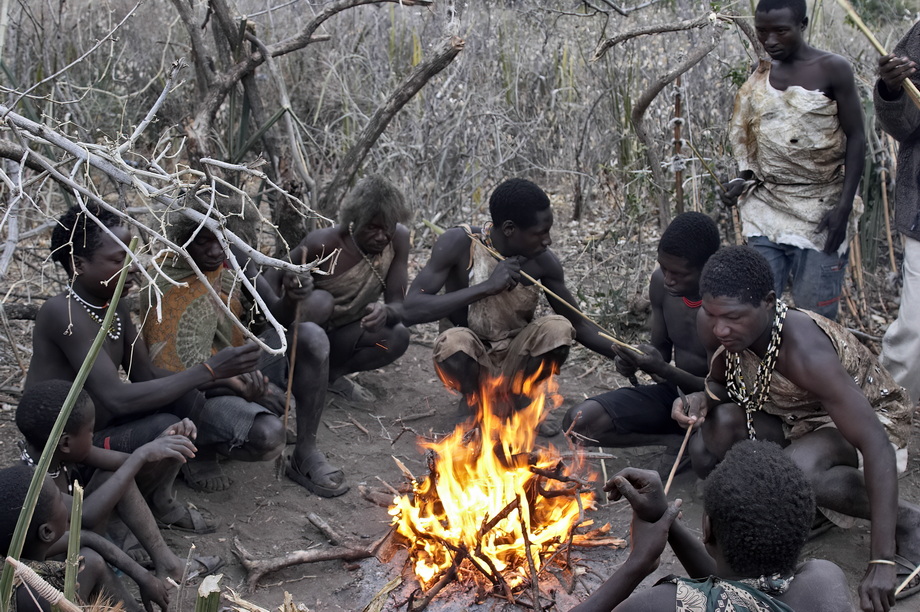
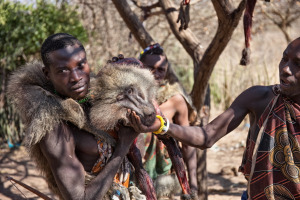
(Featured photos sourced from: Africa 101 Last Tribes online website-https://www.101lasttribes.com/tribes/hadzabe.html)

1.0 Introduction to Climate Change and Indigenous Communities

Africa has a lot of indigenous groups critically exposed to the dangers of climate change with little support. These constitute the left behind in climate governance and the quest for climate Justice. This short analytical study and brief highlights the relevance of taking action to mitigate the problems created by climate change on African indigenous communities, with a focus case on the Hadzabe indigenous communities of Tanzania.  

Amidst a world transformed by climate’s embrace, Indigenous communities bear the deepest scars. Their ancestral lands, rich in spirit, face unprecedented challenges. In their resilience lies a profound wisdom, urging us to unite for a future where all thrive in harmony. 

Current studies show a positive correlative evidence of climate change’s impacts on increased temperatures and declining biodiversity in sensitive nature ecosystems. This makes indigenous groups the first group to be directly affected and more disadvantaged by the negative impacts of climate change due to their direct reliance on the natural environment. Moreover, the impacts of climate change are more severe, long lasting, socially disruptive on indigenous communities than other population groupings.

According to the United Nations “Indigenous communities, peoples and nations are those which, having a historical continuity with pre-invasion and pre-colonial societies that developed on their territories, consider themselves distinct from other sectors of the societies now prevailing on those territories, or parts of them.

Indigenous people are therefore distinct social and cultural groups that share collective ancestral ties to the lands and natural resources where they live and occupy.  By nature, the indigenous people are heavily reliant on their natural environment and local ecosystems for livelihoods and survival.

The UN further estimates that the total net impact of climate change on indigenous communities is in billions of dollars and intergenerational. Despite being the least polluters, the indigenous communities are paying heavily for the climate change crimes and damages that they never caused. Their lands, dwellings, livelihoods and cultures are being disrupted and wiped out. Their future generations may never exist or even live to enjoy their cultural heritage.

While the impacts of climate change on indigenous communities are almost similar, a lot of global climate change coverage and advocacy in defense of indigenous communities is largely focused on other parts of the world such as the Amazonian, Andean and pacific communities.

Little attention is given to African indigenous communities. Yet Africa has a lot of indigenous groups critically exposed to the dangers of climate change with little support. In our assessment, these constitute the left behind in climate governance and the quest for climate Justice.

2.0 Why Indigenous Communities Matter in Climate Change Justice

Indigenous peoples comprise less than five percent of the global population but protect more than 80 percent of its biodiversity. Indigenous people play a great importance in climate solutions alongside their need to have access to resources[1].

When the rights of Indigenous peoples are recognized, secured, and protected, rates of deforestation tend to be lower and carbon stocks tend to be higher than in forests managed by other actors. Secure rights for community forest guardians can also improve ecosystem integrity, protect biodiversity, and enhance public health

Climate change exacerbates the difficulties already faced by indigenous communities.  This includes social and economic marginalization, loss of ancestral land for hunting, gathering and water resources for livelihood. Encroachment from external actors aggravating, human rights violations and discrimination based on cultural differences. 

By addressing the critically climate change problems and concerns facing indigenous communities equally, governments and the world can strike a double win of achieving long lasting solutions to climate change and at the same time contributing to securing the unique cultural diversity and livelihoods of indigenous communities for future generations.

3.0 Climate Change and the Hadzabe People of Tanzania

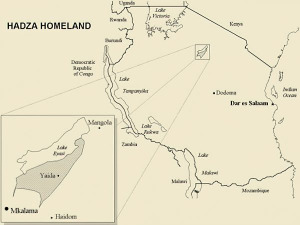
Hadzabe Homeland Map: Source- Africa 101 Last Tribes

The Hadzabe people reside in a 4000 km2 area around the shores of Lake Eyasi in Northern Tanzania, East Africa. The total small population size of approximately 1000 to 2,000 individuals, has shown no major disruption during the past 100 years. According to the 2015 National Census report the Hadzabes range between 1,200 to 1,500 but this number has been dropping.

Only around 150 to 200 individuals of these, however, currently practice a predominantly hunting and gathering way of life, meaning that the bulk of their diet is derived from wild plant foods and game animals.  Because of climate change related factors, many have been either displaced or forced to abandon their ancestral lands and culture and escaped to urban centers in search for better livelihoods.

The Hadzabe are more prone to the impacts of climate change than any other community because they are very highly dependent on the environment and climate compared to other social groupings in Tanzania.

Over the years, the Hadzabe’s have been facing the vagaries of climate change head-on and yet very little efforts are made to highlight their plight and address the climate change risks that they face.  The risks are socio-economic, health and cultural in nature yet have serious human rights and justice violations connotations that are silently overlooked.

Their livelihood is entwined with the climatic environment where they live, and therefore it is important to have appropriate means to tackle the impacts of climate change and its adverse effects on these indigenous people. 

 Environmental degradation and livelihoods

Firstly, the rising temperatures and extended droughts have resulted in a loss of vegetation and negatively impacted gathering and hunting activities undertaken by the Hadzabe people. Their hunting and eating habits have changed as they now have to turn to unconventional hunting methods and eating of endangered animal such as monkeys, baboons and rare bird species to compensate for the dwindling plant and animal species that previously provided food.  Increasingly the Hadzabe are gradually becoming a danger to the animals and an ecosystem that they protected for many generations earlier.
 Health and morbidity risks

Moreover, the health of the Hadzabe indigenous people is deteriorating as they no longer get their livelihood from nature.  The Hadzabe’s are very well known to feed on meat from wild game, honey, and plants, including tubers, berries, and baobab fruit[1].  For the Hadzabe, the phrase “food is medicine” is applicable and yet the increased climate impacts like heat waves, storms and flash floods have wiped out their food sustenance. Because of climate change, the flower bearing trees are rare and the bees are dying or migrating to distant places in search for green forest cover.

The already inadequate access to health facilities such as hospitals amidst declining immunity has caused more danger for the indigenous people who live in the wilderness and have to roam deeper in search for food.  According to medical reports from the nearest medical facilities such as the Haydom Lutheran Hospital, the morbidity and mortality rates amongst this small Hadzabe community in Yaedachin Valley has increased.

The level of alcoholism and substance abuse has increased as they look for alternative ways to survive the harsh living conditions in a changing natural environment. The leading causes of death are malaria, respiratory diseases, anemia and cardio-circulatory disease and maternal mortality rates amongst the women and children.[2]
Limited supportive infrastructure, social services and opportunity

Furthermore, lack of supportive social infrastructure such as clean water sources have increased vulnerability to the negative impacts of climate change. The water streams have dried up and the few surviving are shared with wild animals, increasing the risks of contamination and disease.  Women and children have to walk long distances in search of water and this has disrupted their traditional family settings, learning and increased to exposure to gender-based violence.

 Enhanced climate induced emergencies affecting for Hadzabe

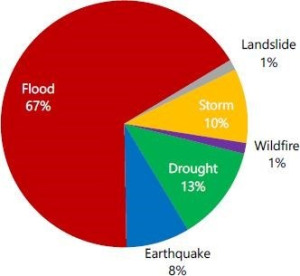
Figure 2: Percentage of Natural Resource disasters from 1980-2022 in Northern part of Tanzania

The increased droughts and erratic rainfalls have increased vulnerability and occurrence of natural climate driven disasters such as flush floods affecting the Yaedachini Valley where the Hadzabe live. According to the Tanzania Prevalence of Natural Disasters Report (1980-2022), Northern Tanzania now suffers from recurrent floods and droughts, and the frequency (and severity) of events has been increasing. 

The adjacent pie chart shows the percent share by type of natural disasters recorded in Northern Tanzania between 1980-2022. According to this statistics floods and drought account for more than 71% of the total disasters recorded. This proves that the impacts of climate change are affecting the drier part of Northern Tanzania, where the Hadzabe live more than any other parts of the Country.

The Hadzabes live in Yaedachini Valley on the floors of the Eastern Rift Valley Escarpments located in Babati, Hanang, Haydom, Mbulu districts corridor of Manyara region which have become more susceptible to drought and flash floods.

The recent examples of enhanced climate induced emergencies were the flash floods and mudslides which affected Babati and Mbulu district in 2023 killing hundreds and living thousands homeless[1].  During these last flash storms and floods, it is estimated that at least 60% of the Hadzabe dwelling places in the Yaeda valley were affected and many left without food and shelter.   The consequences to their livelihoods were more severe as they are directly more reliant on the natural environment than any of their neighboring social groupings. Yet very little national and global coverage and attention was provided.

The Natural disasters reports from Tanzania’s Prime Minister’s Office confirms, the severity of climate change related disasters such as floods has been increasing in the country. For example, the heavy rains and floods  that occurred in Tanzania between 28th March and 28th April 2024   claimed around 155 lives. This was so far the highest number of flood related deaths ever recorded in the country[2].  The damages were more severe in drought prone regions such as Manyara region. If not addressed therefore, the Hadzabes and other indigenous groups in these disaster-prone areas could be wiped out.

 Climate Injustice implications to the Hadzabe

Further, climate change has significant human rights and justice implications on indigenous groups. The indigenous Hadzabe people are facing numerous injustices and violations of their socio, economic and cultural rights due to climate change. Their socio-economic rights are not guaranteed, and their indigenous lands are not protected, putting them at risk of extinction.  They are also facing threats to their right to food, shelter, and ancestral lands, as they may be forced to leave their traditional lands in search of alternative livelihoods.

Climate induced migration and cultural injustices

The Hadzabe’s culture is being adulterated by new communities such as the cattle keeping and farming Datoga tribes who are moving into Hadzabe lands in search for pasture and new settlement. The numbers of new comers are increasing while their Hadzabe numbers are dwindling, making them increasingly a minority and vulnerable[1]. Their location in hard-to-reach areas and lack of access to education and formal skills has increased their economic marginalization as an indigenous group and limits their opportunities to employment and a better future. 

In the midst of all these, there are critical policy and governance actions that must take and the international community must support to bring the Hadzabe from the behind to the front. From near extinction to future survival.

4.0 Recommendations for action

  1. Tanzania government must recognise Hadzabe as an indigenous group for protection by both national and international mechanisms against climate change and extinction. Despite voting in favor of the UN Declaration of the Rights to Indigenous peoples, Tanzania does not recognize the existence of any indigenous peoples in the country and there is no specific national policy or legislation on indigenous peoples per se. The absence of such makes protection of the Hadzabe with in the ambits of national and international frameworks weak. On the contrary, a number of policies, strategies and programs that are misaligned to the interests of the indigenous peoples in terms of access to land and natural resources, basic social services and justice are continuously being developed, resulting in a deteriorating and increasingly hostile environment for both pastoralists and hunter gatherers[2].   In a recent move in 2022 and 2023, the government relocated hundreds of Masai and Hadzabe families from the Loliondo Ngorongoro area to Tanga, hundreds of kilometers away from the ancestral land[3]. This was to pave way for expansion of private game hunting grounds of a Dubai based firm.  This move was widely condemned by Human and Land rights defense organizations, as reflective of the risks that indigenous groups face in Tanzania. Despite global condemnations, the government did not change its decision.
  1. Tanzania government must establish a dedicated fund towards climate change mitigation and adaptation measures targeting the Hadzabe. The Tanzanian Government and parliament must allocate a special vote in its national budget to cater for climate change mitigation, adaptation and protection of indigenous communities at frontline of climate change. While the government funds climate change and disaster related activities through line Ministries, Departments and Agencies such as the Prime Minister’s Office, the Vice President’s Office- Environment, Ministry of Tourism and Natural resources etc., it is evident that such funding lines can be conflated and blurred due to over competing priorities. The net consequences have been that less dedicated funding is reaching the extremely vulnerable and left behind in climate change such as the Hadzabe who desperately need it for survival. Tanzania is yet to establish a fully-fledged National Climate Fund and the current climate change related funding has been largely foreign sourced and quite unsustainable[4]
  1. The UN and other international agencies must dedicate percentage of the Loss and Damage Fund to cater for indigenous groups including the Hadzabe in Tanzania. During the COP27 in Egypt, the United Nations committed to setting up a climate loss and damage fund. While as the details of this Fund are still unclear, the framework for access of these funds is still being developed. This provides an opportunity for putting guard rails as to how indigenous groups such as the Hadzabe will benefit. Reports from climate champions indicate that a very small fraction of funding is currently directed towards Indigenous Peoples and Local Communities (IPLC) for securing land rights and managing forests in tropical regions. Over the past decade, a minimal portion of the resources designated to support IPLC’s land rights and forest management actually involved an IPLC organization. This accounts for an insignificant share of the overall climate change assistance. Additionally, from the financial commitments made during the COP26 IPLC Forest Tenure Pledge for the period between 2021 and 2025, only a minor percentage of those funds has been utilized[5].
  1. Tanzania government must provide adequate infrastructure and social services like health, water services, and education for future sustainability. The Tanzanian government in collaboration with other state actors or non-state actors such as CSO, community-based organization must provide supportive social-economic infrastructure[6] such as wells, boreholes, and water tanks to the Hadzabe communities. This will help provide the Hadzabe with access to clean and reliable sources of water and opportunities for learning and acquiring new skills to confront climate change. Alternative means of food must be equally provided to complement the dwindling wild sources.  
  1. Scale up indigenous conservation and tame nugatory land grabbing of indigenous lands. The government ministries and departments responsible for environment, conservation and lands must address the persistent land grabbing and encroachment on ecosystems that support indigenous groups such as the Hadzabe. Since the indigenous people heavily rely on the natural environment to sustain themselves it must be a priority to preserve and even promote indigenous conservation of their natural environment. Proclaiming more places as conversation areas and restricting deforestation or intrusion and allowing access for the indigenous communities to live and enjoy the natural habitats, such as Yaeda Chini valley will be a game changer in ensuring continued existence of the Hadzabe[7].
  1. Create space at the table for the Hadzabe, to directly speak and advocate for their interests at both national and international levels. Creating forums and opportunities for the Hadzabe to sit at the table as active participants in national climate change dialogues spaces would help raise awareness of the magnitude of their plight at national level. Having the Hadzabe constitute part of the National Delegations to international forums like the forthcoming COPs, is essential in highlighting their concerns at international level and creating international consensus. Direct representation in forums like parliament and the United Nations would amplify their voices and influence suitably tailor-made solutions to their needs. This will empower the Hadzabe to advocate for effective climate change mitigation policies and support based on their firsthand experiences.

 References and notes

  1. IMF (2023), ‘Building Resilience to Climate Change’. Country Report No 23/154. https://doi.org/10.5089/9798400241772.002
  2. The Water Supply and Sanitation Act, 2019 (s. 4). Available at https://tanzlii.org/akn/tz/act/2019/5/eng@2019-02-22
  3. Khatibu, F. A., Msami, J., Mchallo, I and Gontako, J (2022, June). ‘Climate Finance Availability and Access in Tanzania’ (Issue Brief No 04/2022) :https://www.repoa.or.tz
  4. https://education.nationalgeographic.org/resource/thehadzaoftanzania/
  5. 29 No. 1 (2022): ‘Tanzanian Journal of Population Studies and Development’. https://doi.org/10.56279/tjpsd.v29i1
  6. Laltaika, E. & Parmello, S. (2012). ‘International Work Group for Indigenous Affairs: Indigenous Peoples in Tanzania’. https://www.iwgia.org/en/tanzania/897-update-2011-tanzania
  7. Race to Resilience. ‘Indigenous Peoples and The Race to Secure Self-Determined Finance’: https://climatechampions.unfccc.int/system/indigenous-peoples-finance/
  8. National Geographic, (2023): ‘Evolution of Diet – The Hadza of Tanzania’. https://education.nationalgeographic.org/resource/the-hadza-of-tanzania/
  9. National Library of Medicine (2018). ‘Cause-specific mortality patterns among hospital deaths in Tanzania, 2006-2015’. https://doi.org/10.1371%2Fjournal.pone.0205833
  10. Association of Member Episcopal Conferences in Eastern Africa (2023). ‘TANZANIA: TEC Sends Humanitarian Aid and Condolences after Deadly Mudslide Hits Hanang Manyara’. https://communications.amecea.org/index.php/2023/12/08/tanzania-tec-sends-humanitarian-aid-and-condolences-after-deadly-mudslide-hits-hanang-manyara/
  11. Lasteck, A., (2024). ‘Tanzania floods and landslides kill more than 150’. BBC News 25 April https://www.bbc.com/news/world-africa-68896454
  12. Karashani, B (2022). ‘Tanzania spends millions to move, build new life in Tanga for Loliondo Maasai’ The East African. https://www.theeastafrican.co.ke/tea/news/east-africa/tanzania-relocates-loliondo-maasai-to-tanga-3860046
  13. Dave, ‘The Hadzabe of the Yaeda Valley’ A Step Ahead. https://www.astepahead.es/the-hadzabe-of-the-yaeda-valley/


[1] Tanzanian Journal of Population Studies and Development, Vol. 29 No. 1, 2022: 44-64

[2] https://www.iwgia.org/en/tanzania/897update2011tanzania  

[3] https://www.theeastafrican.co.ke/tea/news/east-africa/tanzania-relocates-loliondo-maasai-to-tanga-3860046


[4] https://www.repoa.or.tz/wp-content/uploads/2022/10/Climate-finance-availability-and-access-in-Tanzania-.pdf

[5] https://climatechampions.unfccc.int/system/indigenous-peoples-finance/

[6] Section 23 of the water supply and sanitation act, 2019 

[7] https://www.astepahead.es/thehadzabeoftheyaedavalley/  

[1]https://communications.amecea.org/index.php/2023/12/08/tanzania-tec-sends-humanitarian-aid-and-condolences-after-deadly-mudslide-hits-hanang-manyara/

[2] https://www.bbc.com/news/world-africa-68896454

[1] https://education.nationalgeographic.org/resource/the-hadza-of-tanzania/

[2] https://www.ncbi.nlm.nih.gov/pmc/articles/PMC6209209/  


[1] https://climatechampions.unfccc.int/system/indigenous-peoples-finance/


The Nexus of Climate Change and Energy Transition on women in Tanzania: Why and how government must address gaps

While Tanzania has made some progress in addressing climate change, significant policy and governance gaps to leverage women power still exist. Addressing these gaps requires putting in place a Climate Change policy, strengthening institutional capacity, enhancing coordination, improving legal frameworks, promoting transparency, and ensuring women inclusive decision-making processes backed with sustainable funding. An organ similar to a National Women in Climate Change and Energy Council, could be an ideal vehicle for channeling and championing women participation in climate change and energy transition in Tanzania. Conducting periodic women congresses on Climate Change, Gender and Energy Transition would propel this even further.

Author(s):  Gloria Shechambo, Researcher and Moses Kulaba,  Governance and Economic Policy Centre

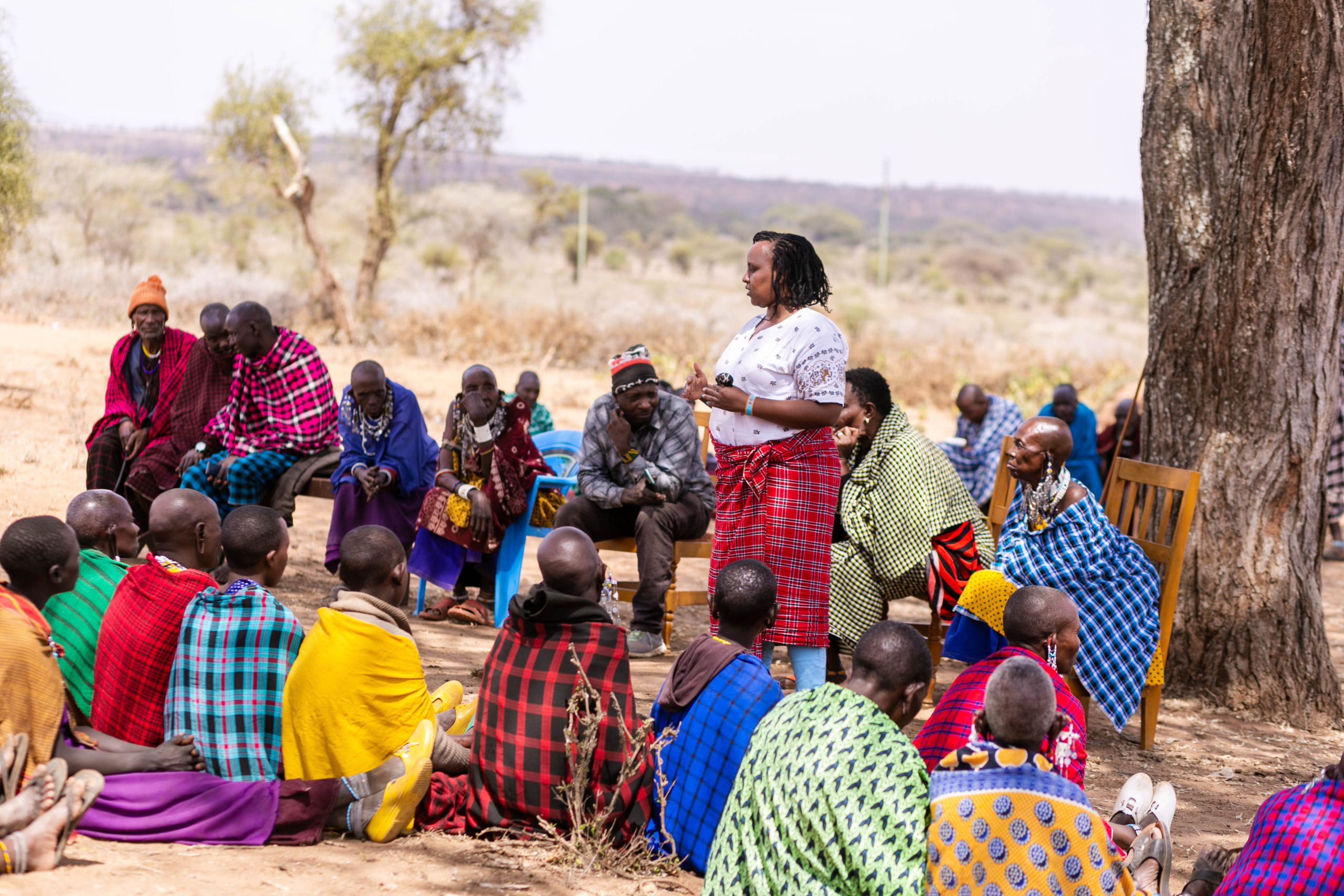
Featured Photo: Courtesy of Pastoral Women Council, Tanzania (Africa Climate Adaptation Centre)

As covered in  the first part of this analytical brief, Tanzania has made some progress in addressing climate change by putting in place a number of frameworks. While these frameworks provide a foundation, more targeted policies integrating gender considerations are essential to promote women’s participation and leadership of climate change and energy justice driven initiatives. To date, significant governance gaps still undermine efforts to address climate change and energy concerns in Tanzania.           

 In Tanzania, the main policy and governance gap is that the Country does not have a single comprehensive Climate Change Policy to guide the governance of the sector. As a consequence there are significant coordination and risks for duplicated efforts spread across different documents and institutions, with little synergy.

Moreover issues of  women concern in climate change and energy are not tackled as an independent urgent contemporary issue but has been mainstreamed in this labyrinth of policy and regulation framework.

The problem with this mainstreaming approach is that when a critical issue such as gender is mainstreamed, it fades into depth of elaborate policy texts and loses the core urgency that it deserves. In fact, instead of getting mainstreamed, the issue gets out streamed and gradually loses core attention.

For example, while the National Climate Change Response Strategy 2023 is keen on Mainstreaming Gender, it does not provide a distinct organ through which women can channel their opinions on matters related to climate change and energy. Similarly, the National Strategy for Mainstreaming Gender in Climate Change (NSMGCC) is weak in this area. A part from providing guidance on how gender considerations should be made in policies and budgeting matters, the document does not create a distinct forum for women.  

The National Energy Policy 2015 (NEP 2015) is awkwardly silent on gender in energy sector and therefore does not provide and pivots on which a compressive engagement of women in energy can be built.  The LPG promotion plan and the National Gas Utilisation Master Plan have largely remained an implemented and the recent clean cooking gas initiative is an attempt to put this into action[1].

The government acknowledges that despite significant progress from the above efforts by the government and other stakeholders, there remain needs for increased mainstreaming of gender at all levels of climate change interventions including in policy, programs, strategies and activities using appropriate gender lens and mainstreaming instruments. Approaches such as gender analysis, gender audit and gender budgeting using gender disaggregated data in M+E and reporting on all climate change responses should be enhanced[2].

Moreover, the financing of women led and targeted climate change and just energy transition initiatives has been low and unsustainable. While the Clean Cooking Initiative in Tanzania is commendable, the downside of this is that it is largely donor funded, private sector driven and thus its long-term funding and wide scale affordability is largely unguaranteed.

Tanzania has set a target of achieving 50% renewable energy generation by 2030, however, budgetary allocations to support climate change mitigation and adaptation have generally focused on sectors like agriculture, water, and forestry, which are highly vulnerable to climate change. However, overall allocation specifically targeting climate change mitigation and adaptation remains relatively low compared to the needs identified in national strategies. According to a Research Report by REPOA, climate financing sources do not meet the expectations as by 2020 a total of TZS 24.7 trillion equivalent to USD 10.7 million were mobilized during FYDP II, which was only 3.6% of the targeted amount[3]

According to Africa Enterprise Foundation (AEF), the Tanzania Clean Cooking Project (TCCP) is a US$3.75 million three-year project, funded largely by the Government of Sweden, that aims to catalyse the clean cooking sector through enhanced private sector participation. The project will provide matching grant financing and technical assistance to small and growing businesses working in clean cooking. The financing aims to de-risk companies to venture into underserved markets and enhance the affordability and accessibility of clean cooking solutions for at least 60,000 beneficiary households.

By requiring or expecting the poor women in rural areas to switch from free firewood and biomass to paid cooking gas (LPG), the initiative places poor women directly into the market place driven energy cash economy which may be expensive and unsustainable to afford. According to the Ministry of energy, so far only 50% of rural women enrolled on to this initiative have continued[4]. For this initiative to succeed, the issues of reduced cost, increased household incomes and sustainability of supply must be addressed.

Generally, essential milestones need to be covered. These include lack of a comprehensive policy  coordination fragmentation, limited institutional capacity, inadequate or duplicative legal frameworks, weak enforcement mechanisms, and insufficient participation of women in designing, championing and leading initiatives that affect their welfare (Nachmany, 2018).

Why engaging women in Climate Change and Energy Matters:

Engaging women in climate change and energy transition decision-making processes is crucial and pays dividends. According to the UN and documented evidence in development, empowering women bears lasting solutions and can a be a multiplier factor in addressing climate change and achieving sustainable development.

Women make up nearly half of the agricultural labor force in developing countries. When provided with the same access to resources as men, women can increase their agricultural yields by 20 to 30 percent. This boost in productivity not only improves total agricultural output by 2.5 to 4 percent, but it can also help reduce world hunger by 12 to 17 percent.

Empowering women especially in rural areas in agriculture can also have a positive impact on climate adaptation. By providing appropriate technology and resources, we can promote more sustainable farming and conservation practices. And by reducing poverty, we can help individuals better adapt to the effects of climate change.

When it comes to building climate resilience in communities, involving women is crucial. In fact, the UN reports that communities are more successful in resilience and capacity-building strategies when women are part of the planning process. Moreover, by improving access to clean energy, women death due to toxic fumes and related disease can be reduced by half.

It is therefore essential that climate change mitigation and adaptation strategies adequately take into account women considerations, addressing gender inequality, reduced harms from climate injustice[5] and effective participation at the national and global climate change discussion tables.

Recommendations for engaging women in climate change and energy matters:

 While Tanzania has made some progress in a climate change, significant policy and governance gaps still exist. Addressing these gaps requires strengthening institutional capacity, enhancing coordination, improving legal frameworks, promoting transparency, and ensuring women inclusive decision-making processes backed with sustainable funding. An organ similar to a National Women in Climate Change and Energy Council, could an ideal vehicle for channeling and championing women participation in climate change and energy transition in Tanzania. Conducting periodic women congresses on Climate Change, Gender and Energy Transition would propel this even further.

 Some of our identified and recommended approaches include:

  1. Develop a comprehensive Climate Change Policy for Tanzania to address some of the gaps that exist.  Currently, Tanzania doesn’t have and are fragmented in different  documents such as the National Adaptations Programs, National Climate Response Strategy and the National Strategy for Mainstreaming Gender in Climate Change (NSMGCC). The absence of a comprehensive climate change policy constitutes a huge lacuna that Tanzania must bridge
  2. Creating and convening safe spaces for women dialogue on climate change and energy transition matters is fundamentally urgent. This includes establishing women’s groups, organizing consultations, and ensuring women’s representation in policy dialogues and negotiations at all levels. Women Must talk. It is for this reason that we (GEPC) advocate for a hosting periodic Women National Pan African Congresses on Climate Change and Energy Transition and a Women COP on Climate Change and Energy Transition in the nearest future.
  3. Support and Facilitate Women’s inspired and led participation in Climate Change and Energy transition: This includes encouraging and supporting women’s leadership in climate change and energy sectors by providing mentorship, networking opportunities, and skills development at all levels. In this regard we (GEPC) advocate for establishment of a National Women in Climate Change and Energy Council as a vehicle to advance women concerns and interests in climate change and energy matters. Existing studies support that women’s representation in decision-making bodies, advisory committees, and project management teams is crucial for better resource governance, conservation outcomes, and disaster readiness (Brixi et al., 2022). Moreover, effective participation of women will reduce climate and energy related vulnerability and death by thousands
  4. Promoting Education and Training: Investing in education and training programs to enhance women’s capacity in climate change adaptation, renewable energy technologies, sustainable agriculture, and natural resource management. We advocate for tailored vocational training on climate adaptation and energy transition solutions, workshops on business and enterprise development, and awareness campaigns as essential skills and tools measures to meet women’s specific needs and interests.
  5. Provide access to resources: Government and Private sector must ensure equal and cheap access for women to financial resources, technology, land, and other productive assets necessary for their participation in climate change and energy initiatives. This involves providing dedicated financing lines, affordable microfinance services, facilitating access to clean energy technologies, and promoting resource rights for women. The gaps and vulnerability scores as per current reports (Tanzania Demographic Health Survey and Malaria Indicator Survey TDHS-MIS, 2022) are significantly large and have remained tilted against women.
  6. Promoting and implementation of Gender-Responsive Policies: We advocate for going beyond the integration of gender considerations into climate change and energy policies, programs, and projects. Conducting gender analyses, integration of gender concerns as a distinct feature into project design and implementation are first steps monitoring, evaluating and learning from the gender impacts of interventions and renewed action is essential.
  7. Raising Awareness and Changing Attitudes: Conducting awareness-raising campaigns to emphasize the importance of women’s participation in climate change and energy matters. Challenging stereotypes and social norms that restrict women’s involvement in decision-making processes or limit their access to resources and opportunities is crucial.
  8. Promote Women in Green Entrepreneurship: Encouraging and supporting women entrepreneurs to develop and scale up businesses that promote climate resilience and sustainable energy solutions. Private sector initiatives such as Jasiri Green Bonds is a positive initiative, however the simplicity, affordability and onboarding of more women has to be improved and scaled up purposefully for women. Additionally cheap training, technical assistance, and access to markets must be undertaken to help women establish and grow their enterprises in sectors such as renewable energy, eco-tourism, and sustainable agriculture.
  9. Provide a collaborative and facilitative environment for Civil Society and NGOs to engage: Government, Private Sector and Donors must support, partner and collaborate with Civil Society and NGOs that work on Women and Climate Change and Energy Transition. Over the last years, the civic space and financing for climate rights-based organisations has been constrained.  Research suggests that leveraging on their expertise and networks as allies can enhance women’s engagement in climate change and energy initiatives can deliver more dividends (Nachmany, 2018).

By implementing these strategies and fostering collaboration across sectors, Tanzania can empower women to play a significant role in addressing climate change and driving sustainable energy transitions.

Conclusion:

This policy brief underscores the critical importance of addressing gender disparities in climate change and energy transitions in Tanzania. Both part 1 and 2 of the brief highlights the effects that climate change and energy injustice have on women and the inherent policy, governance and financing gaps that exist in Tanzania’s climate and energy transition space. The brief concludes that  despite the efforts, women are still at the periphery and their active engagement in the current climate change and energy discussions and decision-making processes is imperative to ensure climate change and energy transition interventions are inclusive and effective. By prioritizing gender equality and women’s empowerment, Tanzania can enhance resilience to climate change, address energy injustice, reduce climate change vulnerability and advance sustainable development.

References:

Agora Portal for Parliamentary Development. (n.d.). Climate change, energy, and gender. Retrieved from https://agora-parl.org/resources/aoe/climate-change-energy-and-gender

Brixi, H., Das, J., & Doss, C. (2022). People and planet together: Why women and girls are at the heart of climate action [Blog post]. World Bank Blogs. Retrieved from https://blogs.worldbank.org/en/climatechange/people-and-planet-together-why-women-and-girls-are-heart-climate-action

Energia. (2020). Gender and energy country brief for Tanzania. Retrieved from https://www.energia.org/assets/2021/02/Country-brief-Tanzania_Nov2020_final

Fadhila H.A Khatibu, Razack B. Lokina (2023). A Review of Tanzania’s Fiscal Regime for Climate Action. https://www.repoa.or.tz/wp-content/uploads/2024/03/A-Review-of-Tanzanias-Fiscal-Regime-for-Climate-Action.pdf

Nachmany, M. (2018). Climate change governance in Tanzania: Summary policy brief. Grantham Research Institute on Climate Change and the Environment, London School of Economics and Political Science.

National Climate Change Strategy (2021-2026). Tanzania Government.

National Strategy for Mainstreaming Gender in Climate Change (2023). Tanzania Government.

Tanzania Demographic Health Survey and Malaria Indicator Survey TDHS-MIS. (2022).

UN Women. (n.d.). Fact Sheet: Women, gender equality and climate change. United Nations. Retrieved from https://www.un.org/womenwatch/

UNDP Tanzania. (n.d.). Bridging the gender gap: Empowering women in the agricultural sector. Retrieved from https://www.undp.org/tanzania/news/bridging-gender-gap-empowering-women-agricultural-sector

UNECA. (n.d.). Support for land use planning sees over 2000 women farmers in Tanzania become landowners. Retrieved from https://africa.unwomen.org/en/stories/news/2023/02/support-for-land-use-planning-sees-over-2000-women-farmers-in-tanzania-become-land-owners

[1] https://www.thecitizen.co.tz/tanzania/news/national/roadmap-for-clean-cooking-energy-to-target-rural-masses-3921536

[2] National Climate Change Strategy, 2021-2026

[3] https://www.repoa.or.tz/wp-content/uploads/2024/03/A-Review-of-Tanzanias-Fiscal-Regime-for-Climate-Action.pdf

[4] https://www.thecitizen.co.tz/tanzania/news/national/roadmap-for-clean-cooking-energy-to-target-rural-masses-3921536

[5] https://genderclimatetracker.org/sites/default/files/Resources/Gender-and-the-climate-change-agenda-212.pdf

Analysis of Climate Change and Energy Transition impacts on women in Tanzania: Policy and governance gaps

Climate Change and Energy Transition are pertinent issues in contemporary global development challenge facing the world yet women are still at the periphery. Moreover there is a varied difference in how poor rural versus urban women experience the climate change and energy transition effects. The situation in Tanzania is not different.

Author(s):  Gloria Shechambo, Researcher and Moses Kulaba,  Governance and Economic Policy Centre

Climate Change and Energy Transition are pertinent issues in contemporary global development challenge facing the world yet its impacts on women and their practical engagement have remained nuanced and camouflaged in of volumes of endless winding texts and UN resolutions, with less significant impact. Women are still at the periphery and there is a varied difference in how poor rural versus urban women experience the climate change and energy transition effects .  Despite attempts, the situation in Tanzania is not different and warrants immediate consistent and purposefully intentional attention.

The world is one place yet  climate change and energy transition problems facing women are distinct because of their economic and social vulnerabilities and traditional care giving roles compared to men. 

Because women face a higher level of economic and social vulnerability compared to men, the meta question in climate change and energy transition must not remain how can the world and particularly developing countries be better positioned to be more adaptive, resilient and responsive but rather why is it a concern for women in particular? How and why should poor women be at the center of these discussions? In Tanzania this is even more critical given that women are disproportionately more affected than any other group.

 In fact, and justifiably, the demand for more women engagement in climate change and energy transition is not a feminist ask but a development imperative that must be addressed. 

This policy brief examines the intersection of gender, climate change, and energy transitions in Tanzania, emphasizing the importance of engaging women in bridging the disparities to inclusive actions and successful interventions for sustainable development. The brief highlights the disproportionate impact of climate change and energy-related disasters on women due to their caregiving roles and limited access to resources and efforts in place.

 By prioritizing gender justice and equality, Tanzania can strengthen resilience to climate change, reduce energy injustice gap and advance sustainable development.

Nexus of Climate Change and Energy injustice on women in Tanzania

Women often play key roles in food production and household food security yet climate change and energy significantly impact agriculture and productive sectors in Tanzania. Women, who constitute a substantial portion of the agricultural labor force, face heightened vulnerability to climate-related disasters and energy insecurity due to various social, economic, and cultural factors[1].

UNDP reports that more women than men (67 percent of the country’s total female labor force versus 64 percent of the male labor force) are engaged in agriculture.

Tanzania’s recent Agricultural Transformation Strategy known as Agenda 10/30 emphasizes the role of women in facilitating the sector’s growth to 10% by 2030[2] and thus places women in direct confrontation with the effects of climate change on agriculture and food production.

Additionally, in terms of energy; data from Gender and Energy country briefs for Tanzania indicates that by 2020 only 8.1% of households used clean energy sources and in 92% of households it is merely women who are vested with the responsibility to cook and collect firewood for use and thus affecting their health and time productivity (Energia, 2020). There are wider gender disparities when it comes to the impact of climate change and energy-related disasters in terms of vulnerability, resilience, and adaptation spread across a short and longer term.

Women often face disproportionate health impacts from climate change due to their roles as caregivers and their biological vulnerability. For example, during natural disasters or heatwaves, pregnant women and those with reproductive health issues may face increased risks. 

Both rural and urban women face systemic gender inequalities that limit their access to resources, education, and decision-making processes, exacerbating their vulnerability to climate change impacts. However, it is undeniably also true that poor rural women are more disproportionately affected due to their higher dependency on natural resources, their heavier involvement in agriculture, lower access to clean energy and more limited access to technology and information.  

On the other hand, urban women face more exposure to heat waves and poor air quality; they are more exposed to energy poverty particularly in low-income households; urban women are also more prone to working in sectors that are particularly affected by climate change or the energy transition, such as retail, hospitality, or informal sectors; urban women are also more likely to face affordability reliability and quality issues related to energy services.

Climate change-induced changes such as droughts or floods can impact agricultural productivity, potentially leading to food shortages and malnutrition, which disproportionately affect women and children. Climate-Induced changes can lead to increased burden for women such as traveling longer distances to obtain water for household use in turn causing higher chances of GBV (National Climate Change Strategy, 2021-2026).

Additionally, poor women’s ability to adapt and mitigate climate and energy-related impacts is limited by their limited access to resources such as land (33% women vs 47% men sole land ownership and 25% women vs 30% men joint land ownership)[3] 

Other crucial reasons that place women’s involvement in these discussions high on the agenda include the income disparities between women and men when it comes to dealing with the aftermath of disasters. According to UN Economic Commission for Africa, Women in Tanzania are one and a half times more likely to be unemployed at 12.3 per cent than men at 8.2 per cent with implications for household income disparities[4] (UNECA, n.d.)

Women’s disproportionate position in disastrous situations is fueled by the different gender roles played by women and men, for example in caregiving during and after disasters, collection of household water, and managing household sanitation; underrepresentation of women in decision-making processes related to climate change mitigation and adaptation. Women especially in rural areas experience lower access to information about adaptation technologies, cropping patterns, and weather events.

The net costs of climate change on women are staggeringly high yet the current climate change and energy transition debates and response measures have not adequately augmented, rallied and addressed the significant concerns facing women.

According to UN reports, particularly in developing countries, the consequences of climate change can increase the burden for rural women and girls, for example, causing them to travel further to obtain daily supplies such as firewood and biomass, leaving less time for paid work and potentially exposing them to greater risk to their personal safety[5] Climate change has exacerbated gender violence and injustice against women and drop out of young girls from school in search for water, food water and energy.

Moreover, the constant use of biomass as source of energy for cooking increases exposure to toxic fumes leading to high respiratory, cardiovascular diseases, cancers and death. According to medical reports, Cardiovascular and respiratory diseases were the top two leading cause of women’s deaths in Tanzania with the occurrence of cancerous cardiogenic diseases being more likely in urban women and respiratory diseases being more likely in rural areas due to indoor air pollution. These two accounted for 92.84 and 82.58% of all deaths per 100,000 in 2019, overtaking Maternal and Neonatal disorders. [6]

Pulmonary experts at Muhimbili National Hospital estimate that about 33,000 people, mostly women, die annually in Tanzania due to the use of charcoal, firewood and biomass for cooking[7]

Clearly there is a nexus between climate change, energy and deaths amongst women and that is why it is very important to engage women and consider the gender dimensions of climate change and energy injustice on women from planning interventions to implementation such that interventions address inequalities, are efficient, effective and sustainable.

Existing frameworks or mechanisms for women in climate change and energy in Tanzania

 Tanzania has developed various policies and strategies to address gender issues within climate and energy contexts. Key instruments include among others  the National Climate Change Response Strategy (NCCRS) 2021-2026 and the National Strategy for Mainstreaming Gender in Climate Change (NSMGCC) 2023 with the overall objective of ensuring that gender considerations are mainstreamed into national policies, programs and strategies related to climate change. The government is a signatory to a number of Multilateral Instruments on climate change.

In 2015 the government passed the Tanzania Sustainable Energy for All (SE4All) Action Agenda (2015). The goal of this agenda is to ensure access to modern energy, preferably clean energy; improvement of energy efficiency; and increase share of renewable energy in the global mix. The Government of Tanzania fully embraces the SE4ALL objectives. This includes recognising the fact that access to modern energy services is a necessary precondition for achieving development goals that extend far beyond the energy sector, such as poverty eradication, access to clean water, improved public health and education, women’s empowerment and increase food production. Further, the government passed the LPG promotion plan and the National Gas Utilisation Master Plan, aimed at increasing the use of gas as a clean fuel.

The National Guidelines for Mainstreaming Gender into Climate Change Adaptation-related Policies, Plans, Strategies, Programmes and Budgets (2014) Tanzania has mainstreamed gender into a number of national development frameworks and ratified international and regional gender instruments. Some of these frameworks include the National Development Vision 2025. Moreover, in 2022, the government convened the first national clean cooking conference and in 2024 launched The National Clean Energy Cooking Strategy 2024-2034.   The strategy aims at scale up the use of clean cooking gas as a source of energy.

According to Dr Dotto Biteko, the Deputy Prime Minister and Minister for Energy/ the Ministry of Energy, the government expects that by the year 2034, 80% of Tanzanians will be using clean energy to cook and therefore reducing on the amount of carbon emissions and exposure to toxic fumes by women[8].

Currently, the government is implementing a project funded by the Government of Sweden, to support market-based approaches for clean cooking in the United Republic of Tanzania. This intended to scale up use of  clean cooking gas amongst rural households.

To back this up, during the COP28 in the UAE, President Suluhu Samia Hassan launched the Africa Women Clean Cooking Support Program (AWCCSP. This program encompasses promotion of use of gas cooking stoves and gas cylinders in Africa and Tanzania in particular by fostering energy and policies changes to cater for the earth’s prosperity, will cut carbon emission significantly.  President Samia acknowledges that women and girls bear the brunt of lack of sustainable energy cooking solutions and clean cooking energy is about mitigation, women empowerment and welfare.

Despite these efforts, there are significant policy and governance gaps that exist. In our second part of this brief we will bring you the policy and governance gaps and how government can address them. Keep on the look out and visiting this site for the next part of this brief.