Unlocking Uganda’s Renewable Energy potential: A reflection paper on Uganda’s renewable energy sources, policy gaps and financing mechanisms.
Author: Joseph Ahimbisibwe, Governance and Economic Policy Sustainable Energy Course Graduate 2026
Introduction
Uganda has a tremendous renewable energy potential, yet policy gaps and financing mechanisms are perpetually holding back large-scale renewable investments outside hydro power. Hydropower generation capacity has increased recently however the costs of power and regular outages affects production and access to rural households. This gap could quickly be covered by scaled up investment in other renewable sources such as solar power.
1.0 Renewable Energy Source in Uganda
Uganda presents a very interesting case in the global energy transition discourse. On one hand, the country is richly endowed with renewable energy resources, and on the other, it continues to struggle with translating this potential into large-scale, bankable investments, particularly outside hydropower.
Over the years, the Government of Uganda, through the Ministry of Energy and Mineral Development (MEMD), has developed several policy frameworks aimed at promoting renewable energy, including Vision 2040, the Revised Energy Policy for Uganda (2023), and most recently the Uganda Energy Transition Plan (Government of Uganda, 2023; IEA, 2023). While Uganda’s electricity mix is already dominated by renewables, largely due to hydropower, other renewable sources such as solar and geothermal energy remain underdeveloped relative to their potential.
1.1 Reflections on solar energy development
Uganda receives relatively high and stable solar irradiation, averaging between 4.4 and 6.3 kWh/m²/day, making solar PV one of the most technically attractive renewable energy options available (IEA & OECD, 2023; GIZ, 2022). In theory, this should make Uganda one of the prime destinations for large-scale solar investment.
However, in practice, utility-scale solar deployment has remained modest, with just over 60 MW of grid-connected solar installed by 2022 (IEA & OECD, 2023). This gap highlights that technical potential alone is not enough. The real challenge lies in financing conditions and risk perception.
One of the biggest deterrents to large-scale solar investment has been off-taker and payment risk. Solar projects depend on long-term power purchase agreements, yet concerns about delayed payments, foreign exchange exposure, and grid evacuation capacity increase perceived risk and financing costs. Even when tariffs appear competitive on paper, these risks make projects unattractive to private investors.
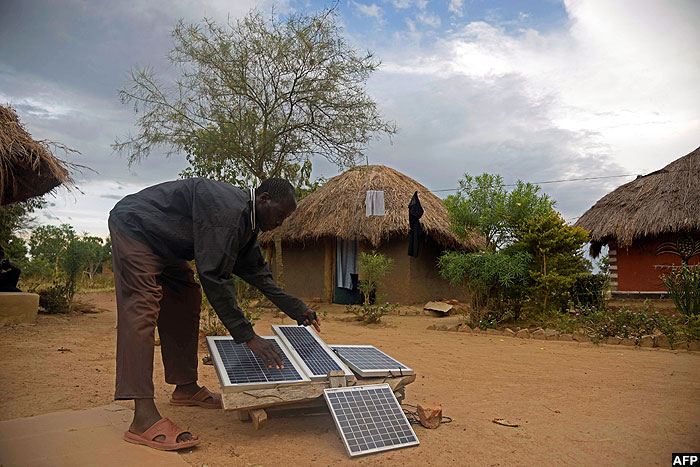
Interestingly, where the government appears to have made more tangible progress is in decentralised solar systems, particularly solar mini-grids implemented through the Rural Electrification Agency (REA). Government-supported projects in remote and island communities, such as Kalangala, demonstrate a practical approach to electrification where grid extension is not immediately viable. These projects show that solar energy in Uganda has been more successful when it is closely tied to local development needs rather than abstract national capacity targets.
This is even more evident in solar projects linked to productive uses of energy, especially solar-powered irrigation systems. With support from development partners such as GIZ, the World Bank, and AfDB, the government has piloted solar-powered water pumping for irrigation and agro-processing. I find these initiatives particularly compelling because they directly link energy access to income generation, agricultural productivity, and rural livelihoods (GIZ, 2022).
However, many of these projects remain pilot-driven and donor-dependent. Scaling them up requires addressing difficult questions around tariff affordability, cost recovery, and long-term financing. From a policy and financing perspective, this raises an important dilemma: how to balance social objectives with financial sustainability, an issue that is central to sustainable energy transitions.
Another important reflection is that Uganda’s electricity system is already approximately 99% renewable, largely due to hydropower dominance (IEA, 2023). This changes the narrative around solar energy. Solar expansion in Uganda is therefore less about decarbonisation and more about diversification, climate resilience, and preparing for future demand growth, particularly from the rapid population growth, industrialisation, agricultural irrigation for food production, and electric mobility. These must be drivers for Uganda’s future policy trajectory towards scaling up investments in diversified renewable energy sources.
1.2 Reflections on geothermal energy development
Geothermal energy represents, one of Uganda’s most strategically important but underutilised renewable resources. Estimates place Uganda’s geothermal potential at around 450 MW, mainly in the western Rift Valley areas such as Katwe–Kikorongo, Buranga, and Kibiro (Bahati & Natukunda, 2020; GIZ, 2022).
The government has invested considerable effort in surface exploration and resource assessment, including geological, geochemical, and temperature gradient studies coordinated by MEMD, and the Department of Geological Survey and Mines. These efforts have been supported by international partners and have produced credible evidence of geothermal systems (Bahati, n.d.). The government has also supported capacity building, including training Ugandan professionals through the GRÓ Geothermal Training Programme.
Despite this progress, geothermal development has stalled at the exploration stage. In reflecting on this, it becomes clear that the primary barrier is high upfront exploration and drilling risk. Deep geothermal drilling is expensive and uncertain, and private investors are understandably reluctant to finance this phase without strong public risk-sharing mechanisms.
Unlike countries such as Kenya, Uganda has not yet operationalised a robust geothermal risk-mitigation or exploration financing facility. This is the single most critical missing piece in Uganda’s geothermal journey. Without public or concessional capital absorbing early-stage risk, geothermal is unlikely to move beyond studies and pilot activities.
From an energy transition perspective, this is particularly concerning because geothermal offers firm, dispatchable renewable power. In a system increasingly reliant on variable renewables such as solar, geothermal could provide stability and reduce dependence on fossil-based peaking options. While the Uganda Energy Transition Plan recognises this role, translating strategic recognition into bankable projects remains a challenge (IEA, 2023).
2.0 Policy and financing
Reflecting on both solar and geothermal energy development in Uganda, the central challenge is not lack of planning, but lack of effective de-risking and financing instruments. Government initiatives, whether solar mini-grids or geothermal exploration, have laid important foundations, but they have not yet unlocked sustained private investment at scale.
For solar energy, especially mini-grids and irrigation-linked systems, the key issue is transitioning from donor-supported pilots to commercially viable models. This requires blended finance, improved tariff frameworks, and stronger integration of energy planning with agricultural and industrial development.
For geothermal energy, the state’s role is even more critical. The government must take on a more proactive role in financing early-stage exploration, either directly or through dedicated risk-mitigation facilities.
Uganda has made meaningful efforts through policy reforms, pilot projects, and technical studies, yet these have not fully translated into large-scale renewable energy investment. The next phase of Uganda’s energy transition will depend on how effectively government moves beyond planning and pilots toward systematic de-risking, integrated demand creation, and long-term investment certainty. For this to happen, the policy and regulatory landscape must move in a facilitative manner that supports investments and a systematic transition towards clean energy.
2.1 Policy-regulation gaps in sustainable energy governance in Uganda
Uganda’s energy sector presents a paradox that is common across many developing countries: strong policy ambition combined with weak regulatory translation. Uganda’s national energy framework is both encouraging and frustrating. Encouraging because the policy language clearly recognises sustainability, access, and renewable energy; frustrating because many of these commitments are not firmly anchored in enforceable regulatory instruments.
Uganda’s Energy Policy for Uganda, 2023 sets out an ambitious vision for universal access, renewable energy expansion, and sustainable development. However, it becomes clear that the challenge is not the absence of ideas, but the absence of regulatory mechanisms that reduce risk, compel implementation, and align institutions toward sustainability outcomes.
It is evident that the government understands the core challenges facing the energy sector: limited access, low productive use of electricity, financing constraints, and weak decentralised solutions. The policy articulates sustainability as a guiding principle and explicitly acknowledges the role of renewable energy and mini-grids.
However, policy statements do not automatically translate into action. In practice, many sustainability objectives remain aspirational rather than operational. For example, while the policy promotes productive use of energy, no regulation links energy licensing or tariff structures to productive outcomes. This disconnect limits the ability of energy investments to drive inclusive economic development.
Mini-Grids
One area where this gap is particularly visible is in the regulation of mini-grids. Uganda has taken important steps by introducing the Electricity (Isolated Grid Systems) Regulations, 2020, and by explicitly recognising mini-grids in national policy. Yet, the Energy Policy itself admits that mini-grids remain financially fragile and poorly integrated into national planning.
From a regulatory standpoint, the lack of guaranteed grid-arrival compensation is a critical weakness. Without legally enforceable rules protecting private mini-grid investments when the main grid expands, investors face unacceptable risk. As a result, mini-grids remain largely donor-funded pilots rather than scalable solutions for sustainable access.
This is particularly troubling because mini-grids are central to energy justice and rural sustainability. A regulatory framework that fails to protect them undermines the very populations the energy transition is meant to serve.
Renewable Energy Investment and Energy Feed in Tariff program
Uganda’s use of Uganda Renewable Energy Feed-In-Tariff (REFiT) Programme demonstrates an understanding of the need to de-risk renewable energy investment. However, these instruments rely heavily on guidelines and administrative arrangements, rather than statutory guarantees.
This creates long-term uncertainty. Investors respond to legal certainty, not policy goodwill. Without regulations that guarantee priority dispatch, transparent curtailment rules, and predictable tariff adjustment mechanisms, renewable energy remains exposed to system and governance risks beyond the control of project developers.
For a country seeking large-scale renewable investment, this reliance on soft instruments represents a structural weakness.
Clean Cooking initiatives
Perhaps the most significant sustainability gap lies in the regulation of clean cooking. Despite policy recognition of biomass dependence and its impacts, Uganda lacks binding regulatory targets or enforcement mechanisms for household energy transition.
Electricity policy reforms can advance rapidly, yet the energy needs of households, particularly women and rural communities, remain weakly governed. Without regulatory integration of clean cooking into national energy planning, Uganda risks achieving partial sustainability while leaving its largest energy challenge unresolved.
While multiple agencies have legitimate roles, the absence of legally binding coordination mechanisms creates inefficiencies that disproportionately affect renewable energy projects. From licensing delays to overlapping approvals, regulatory fragmentation increases costs and discourages investment.
Uganda’s national energy policy framework demonstrates a strong understanding of sustainable energy principles, but its regulatory architecture does not yet fully support those principles. The main challenge is not policy design, but regulatory depth, enforceability, and coherence.
Uganda’s energy transition will depend on whether policy ambitions are translated into binding regulations that: protect decentralised solutions, de-risk renewable investment, modernise grid governance, and integrate clean cooking as a core energy issue.
3.0 Green funds and financial mechanisms in Uganda
Achieving a green economy in Uganda requires more than environmental policies; it requires financial systems capable of mobilizing capital toward sustainable investments. Uganda does not yet have a fully-fledged “green bank” similar to those established in some countries. However, the country has begun developing institutions and mechanisms that function in similar ways. These include green financing facilities, climate funds, and innovative financial instruments designed to mobilize both domestic and international capital.
3.1 Does Uganda have a green bank or green fund?
Uganda does not currently have a standalone national green bank. However, the Uganda Development Bank has taken on many of the roles typically associated with green investment institutions through its Climate Finance Facility.
The Climate Finance Facility is a dedicated financing vehicle designed to mobilize capital from both domestic and international sources to support climate-smart investments. The facility finances projects in areas such as renewable energy, climate-smart agriculture, climate-resilient infrastructure, and low-carbon industries. To support these investments, Uganda Development Bank committed UGX 50 billion as initial capitalization to catalyse green projects. The facility remains relatively small compared to the scale of investment required for Uganda’s energy transition and climate adaptation needs.
Blended financing
Within the Climate Finance Facility and similar initiatives, blended finance instruments include loans, equity investments, guarantees, and grants. The purpose of this approach is to address a common challenge in green investments: high upfront costs and long payback periods. Renewable energy projects, climate-resilient infrastructure, and sustainable agriculture often require large initial capital investments before generating returns.
An example is the Uganda Green Enterprise Finance Accelerator (UGEFA), which partners with commercial banks to provide loans blended with grant funding to support environmentally sustainable businesses. Blended finance has been particularly effective in helping small and medium-sized enterprises access green financing. However, its effectiveness remains limited by the relatively small scale of available funds.
Money markets
In Uganda, commercial banks and financial institutions increasingly play a role in financing renewable energy projects and climate-smart investments. Money markets still remain underdeveloped, because many green projects require long-term financing, whereas money markets are generally designed for short-term financial instruments.
Green bonds
Globally, green bonds have become an important source of climate finance. However, Uganda’s green bond market remains at an early stage of development. Limited capital market depth and low investor awareness have slowed the adoption of this financing instrument.
Institutional investors such as pension funds hold significant financial resources that could be mobilized for sustainable infrastructure investments. If appropriate regulatory frameworks are developed, green bonds could help channel domestic savings toward green development.
Carbon financing mechanisms
Carbon financing represents another mechanism through which Uganda can mobilize resources for climate action. Carbon finance allows projects that reduce greenhouse gas emissions, such as reforestation, renewable energy installations, and clean cooking programs, to generate carbon credits that can be sold in international carbon markets.
Uganda has already begun participating in global carbon finance initiatives. For example, the country secured US$31 million from the Green Climate Fund through a results-based climate financing program after demonstrating verified reductions of more than 8 million tonnes of carbon dioxide emissions. This funding supports forest conservation and climate-resilient livelihoods for rural communities.
Carbon markets create financial incentives for environmental conservation and provide new income streams for communities participating in climate projects. However, they also face challenges such as volatile carbon prices and complex verification procedures.
3.2 Challenges facing green financing
- Domestic green financing remains small compared to the Uganda’s climate investment needs. Most climate finance still comes multilateral funds and development partners.
- There is a shortage of bankable green projects. Many potential projects fail to attract investment because they lack feasibility studies, financial structuring, or technical expertise.
- Uganda’s financial markets remain relatively shallow. Limited capital market development restricts the use of financial instruments such as green bonds.
- Institutional coordination challenges can slow down the implementation of green financing initiatives. Multiple government agencies and financial institutions are involved, sometimes creating overlapping mandates, and often times working in silos.
3.3 Measures to improve green economy financing
- Expand the capitalization of domestic green funds such as the Climate Finance Facility.
- Uganda could establish a dedicated national green bank to mobilize large-scale financing for renewable energy and climate resilience projects.
- Regulatory frameworks for green bonds and sustainable finance should be strengthened to encourage investment from pension funds and institutional investors.
- Capacity building is needed to develop a pipeline of bankable green projects. This includes training in climate finance structuring, project preparation, and risk assessment.
- Improving coordination between government institutions, financial regulators, and development partners will help ensure that green financing mechanisms operate more efficiently.
4.0 Conclusion
Uganda has tremendous renewable energy potential however large-scale investment outside hydropower remains low, held back by a mismatched regulatory policy framework and fragmented financing landscape. Uganda’s experience demonstrates that having large potential for renewable energy is not enough. This potential has to be matched with commensurate policy and practical government drive towards renewable energy. For Uganda, the road to a clean renewable energy future lies in a repurposed policy landscape and expanded financing mechanisms which drive investment but also uptake of new renewable energy sources such as solar.
References
Bahati, G., & Natukunda, J. F. (2020). Geothermal energy exploration in Uganda: Country update. GRC Transactions, 44.
Bahati, G. (n.d.). Status of geothermal energy exploration in Uganda. Uganda National Council for Science and Technology.
Climate Finance Uganda. (2024). Financing mechanisms for climate action in Uganda. (Climate Finance Uganda)
DFCU Bank. (2025). Partnership to accelerate green finance in Uganda through UGEFA. (dfcu Bank)
Electricity Act, 1999 (Uganda).
Electricity (Amendment) Act, 2022 (Uganda).
Electricity (Isolated Grid Systems) Regulations, 2020 (Uganda).
Gesellschaft für Internationale Zusammenarbeit (GIZ). (2022). Renewable energy sector brief: Uganda.
Government of Uganda. (2023). Revised energy policy for Uganda (2023). Ministry of Energy and Mineral Development.
Government of Uganda. (2023). Energy policy for Uganda (2023). Ministry of Energy and Mineral Development.
International Energy Agency. (2023). Uganda energy transition plan. IEA.
International Energy Agency & OECD. (2023). Uganda 2023: Energy policy review. OECD Publishing.
Ministry of Finance, Planning and Economic Development. (2023). Climate finance initiatives in Uganda.
Ministry of Finance, Planning and Economic Development. (2025). Uganda secures $31 million from the Green Climate Fund for results-based climate financing. (Development Finance Portal)
Uganda Development Bank. (2023). Climate Finance Facility: Driving Uganda’s transition to a green economy. (Uganda Development Bank)
Uganda Development Bank. (2023). UDB launches UGX 50 billion Climate Finance Facility. (Watchdog Uganda)