Solar and Energy Transition: Good policy intentions but less progress: Assessing Tanzania and EAC’s Utility scale solar energy potential and policy gaps to fix
Governments are struggling with little success to attract and retain utility scale solar projects and many have died in their nascent stages. Yet utility scale solar projects could be a significant contributor to resolving the regions power shortages and increased energy access by sizeable proportions. So, what is holding back utility scale solar projects and how can governments maneuver to attract and retain more investors.
By Moses Kulaba, Governance and Economic Policy Centre
@energypolicy @cleanenergy @solarafrica @energytransition
Multiple studies have concluded that the Eastern Africa region has the highest technical potential for solar power technologies, with estimates of 175 PWh and 220 PWh annually for Concentrated Solar Power (CSP) and Photovoltaics (PV) respectively. African countries with the highest CSP and PV potentials are Algeria, Egypt, Namibia, South Africa, Sudan, and Tanzania. The annual technical solar power potential in Tanzania is estimated to be 31,482 TWh for CSP technology and 38,804 TWh for PV technology. Despite this potential, Tanzania and EAC lags behind its peers such as South Africa, Algeria and Egypt. Besides the technical aspects as earlier discussed, the policy terrain in East Africa has been largely zig zag and therefore not coherent enough to support investment.
In this second part of our analytical series on solar as a clean energy source, we attempt to shade some light on the policy terrain in Tanzania and East Africa generally and how this is contributing towards holding back large-scale investment and utility scale solar penetration.
Policy and investment terrain
Generally, the policy and investment landscape in East Africa has been evolving at a snail pace. Both Tanzania, Kenya and Uganda have renewable energy policies in place however these are not backed up by adequate promotion, implementation and funding. The regulatory terrain has also been discordant. For the region to benefit, the policy and investment trajectory will have to align and move faster, catching up with the global trends and the drive to clean energy.
Tanzania’s policy terrain.
The government passed a National Energy Policy (NEP) in 2015 with a commitment to increase the share of renewables in its energy mix. The NEP 2015 seeks to facilitate improvement of investment environment to promote and support private sector participation. The policy further commits to scaling up utilization of renewable energy source by among others introducing a.. feed-in-tariffs for renewable energy technologies and structure power purchase agreements for renewable energy.
It further commits to facilitate integration of renewable energy technologies in buildings and industrial designs and establish frameworks for renewable energy integration into the national and isolated grids; an Promote sustainable biofuel production and usage.
However, actualization of this has been slow. To date contribution of renewables to Tanzania’s energy mix remains low at 1.2 %. By 2021 Tanzania’s electricity generation came mostly from natural gas (48%), followed by hydro (31%), petrol (18%) with solar and biofuels contributing a mere 1% each. The National energy consumption balance is still dominated with biomas (charcoal and firewood) use at around 85%.
Tanzania government admits that that solar utilization is constrained by high initial costs, poor after sales services, insufficient awareness on its potential and economic benefits offered by solar technologies plus inappropriate credit financing mechanisms.
Previous policies, particularly the 2003 was successful in the establishment and operationalization of Energy and Water utilities regulatory authorities, the Rural Energy Agency (REA) and the Rural Energy Fund, However, it fell short of making advancements on the renewable energy, particularly by not creating a designated and operational Renewable Energy Fund. By design it is implied that funding of the renewable sector would come directly from the consolidated Energy Fund. However, with conflicting priorities and government’s focus on increasing energy access to hydro and gas fired electricity, much of the available funding was channeled towards rural electrification.
In 2012 Tanzania was one of the pilot countries selected to prepare the Scaling Up Renewable Energy Program (SREP). The chief objective of this plan was to transform the energy sector of Tanzania from one that is more dependent on fossil fuels to one that is more diversified with a greater share of renewable sources contributing to the energy mix through catalyzing the large–scale development of renewable energy.
The SREP–Tanzania Investment Plan was prepared by the Government of Tanzania, through a National Task Force led by the Ministry of Energy and Minerals (MEM) with support from the Multilateral Development Banks (MDBs). However much of this plan is yet to fully takeoff and its translation into actual deliverables yet to materialise
Cognizant of the significant gaps that exist, in 2023 the Minister of energy at time, Hon January Makamba revealed that the government was developing a new Renewable Energy Policy to further enhance investments in renewable energy. This policy would capitalize on the substantial financial resources, capital markets, and advancements in new technologies dedicated to renewable energy globally. He also announced ongoing efforts to identify areas with renewable energy resources and prioritize native investments in wind and solar projects. The government would provide support in this regard and establish guidelines for project implementation.
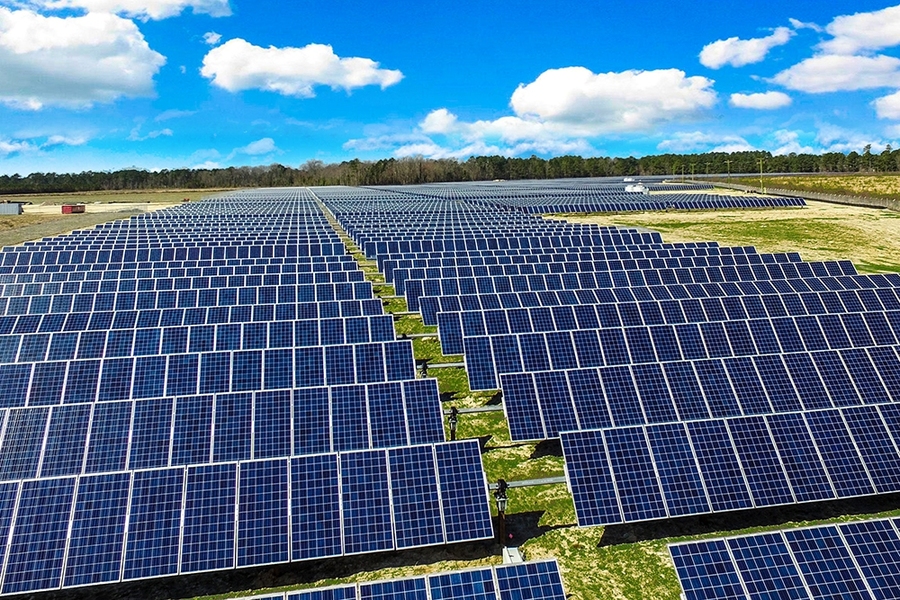
In 2023 Tanzania entered into an agreement to construct the Country’s first-ever solar photovoltaic power station to feed into the national electricity grid. According to the Ministry of Energy, the project is part of a larger initiative of installing 150 MW of solar energy in the Kishapu district of the Shinyanga region. The first phase of the project to be constructed by Sinohydro Corporation from China was estimated at TZS 109 billion and was scheduled for completion before end of 2024.
According to the Minister, the implementation of the solar project reflected the government’s commitment to establishing a diverse mix of electricity sources in the national grid, incorporating water, gas, wind, and solar power. This approach aims to ensure a continuous supply of electricity, even in the event of a failure in one source.
There are also several large-scale solar power projects under development, including the 30 MW Singida project and the 50 MW Nyumba ya Mungu project. In addition to government efforts, there are also private companies and organizations working to develop renewable energy projects in Tanzania.
Similarly, Zanzibar, the semi-autonomous Island of Tanzania, also signed in 2023 an agreement with a Mauritius-based Generation Capital Ltd and Tanzania’s Taifa Energy to build its first large-scale 30MW solar PV power plant, as it seeks to become energy independent. The plant will cost $140 million. The Power Purchase Agreement (PPA) between the state-owned Zanzibar Electricity Corporation (Zeco) and the two companies to develop the 180 megawatts plant will be implemented in phases, according to Zanzibar’s Ministry of Energy and Minerals.
Kenya’s solar terrain
So far, Kenya is leading in large solar projects. There are at least 10 large solar farms in Kenya. The Garisa solar farm, is the largest in East and Central Africa, with 55 MW generation capacity. The solar farm sits on85 hectares (210 acres) and consists of 206,272 265Wp solar panels and 1,172 42kW inverters owned and operated by Rural Electrification and Renewable Energy Corporation. Others already operational or proposed include; Malindi Solar (52MW), Alten Kasses (52 MW), Kopere Solar Project (50MW), Eldosol Solar Project (48MW), Radiant (50MW), Rumuruti (40 MW), Nakuru Solar project (40MW), Witu (40MW) and Makindu (40MW).
Kenya has buttressed its renewable energy credentials with a new Energy Transition and Investment Plan (ETIP) launched in 2023. The ETIP spells out Kenya’s road map to delivering a 100% clean energy driven economy by 2050. The country is however yet to figure out how it will fund this ambitious plan. Over the past recent years Kenya has been facing significant budgetary constraints affecting funding of its major national development plans. Even when the government has committed to achieving 100% clean energy by 2030, it bets heavily on funding from external donors. With the recent trend in aid inflows and if they remain unchanged in the short and medium term, it will be a tall order Kenya to meet this target.
Uganda’s solar uptake
Uganda has been slowly catching up with its peers. Uganda’s policy commits to make modern renewable energy a substantial part of the national energy consumption. To increase the use of modern renewable energy, from the current 4% to 61% of the total energy consumption by the year 2017[i].
The policy terrain has been zigzagging and investment in renewables is still low but the government has blended its focus on hydropower generation with small investments in solar projects as back up for its hydropower. There was a big growth in 2021, reaching 92 MW, followed by a significant increase of around 6.9 MW, reaching a total of 98.9 MW Uganda’s installed solar energy capacity in 2022.
Some of the projects contributing to this growth include Kabulasoke Solar PV Park is a 20MW solar PV power project, located in Central, Uganda, Bufulubi solar project in Tororo and Access solar plants in Soroti. New pipeline projects include the Amea West Nile Solar PV Park, a ground-mounted solar project, whose construction was expected to commence from 2024 and subsequently enter into commercial operation in 2025. The power generated from the project will be sold to Uganda Electricity Transmission under a power purchase agreement.
This however falls short of achieving the targets as stipulated in Uganda’s Renewable Energy policy. Uganda’s renewable energy policy commits to establish and maintain a responsive legislative, appropriate financing and fiscal policy framework for investments in renewable energy technologies. It mentions forms of financing such as strengthening the Credit Support Facility and Smart Subsidies which are intended to scale up investments in renewable energy and rural electrification.
Moreover, a special financial mechanism, a credit support facility known as the Uganda Energy Capitalisation Trust, was instituted to help realise the policy but this expired in 2012 and had never been renewed[ii]. Uganda lags in meeting its policy targets as only 10 solar projects had been completed by 2022[iii].
What is the current market and investment size?
According to global energy reports, there is a substantive market size of solar photovoltaic (PV) in East Africa and Africa generally. The Middle East & Africa solar photovoltaic (PV) market size was valued at USD 5.00 billion in 2022. The market was projected to grow from USD 6.93 billion in 2023 to USD 37.71 billion by 2030, exhibiting a cumulative Average growth rate (CAGR) of 27.4% during the forecast period.
Despite its immense solar power potential, East Africa and Africa generally continues to lag behind other continents when it comes to building up utility scale grid and off-grid solar capacity, in part due to a stagnant policy regime, overlapping institutional roles, limited research, technical capacity and lack of appropriate financing facilities for investment. Some proposed projects have failed to take off. As a consequence, the total investment share of utility scale projects into East Africa remains comparable low.
So, what can EAC governments do to make utility scale solar markets attractive?
Recommendations
# Governments must make policy switches from paper to aggressive attracting of investment into the solar PV East African markets. The policies may exist but the implementation gap is too big. Policy interventions and a national course-correction is urgently needed to effectively overcome structural barriers and create local value in the emerging solar market many of which is still left behind in this progress.
# Decentralization of energy generation away from vertically integrated power monopolies such as TANESCO and Kenya power could be a game changer. De regulation and introduction of net metering by independent Solar PV power producers to directly generate and sell to customers could improve profitability of solar projects and attract new investments.
# Financing institutions must scale up project financing of renewable energy projects. Solar projects are still expensive and funding is difficult to come by. Kenya’s Garisa solar project required an investment of KSh13. 7 billion ($135.7 million) and was funded by the Exim Bank of China. Other projects have required substantive investment with funds generated from private developers and energy venture capitalists. The existing financial institutions are yet to master tailing project financing to utility scale solar projects.
# Addressing land rights and underlying injustices. Large solar farms require large tracts of land and these can be a source of land grabbing, land deprivation and injustice, generating conflicts and endless litigation between potential investors and the communities. The renewable policies and investments have to sit well with land rights, guaranteeing free prior informed consent, fair compensation and equity,
# Socio-economic: Identifying and prioritizing suitable areas for building large-scale solar power plants is a complex problem. In contrast with the simplistic view, identifying appropriate geographical areas for solar power installation is not only linked with the amount of received solar radiation, but there are many other technical, economic, environmental, and social factors that should be considered like: alternative land uses, topographical characteristics of the land, conserving protected areas, potential environmental impacts, water availability, potential urban expansion, proximity to demand centers, roads proximity, and potential for grid connectivity.
# Solar technology firms must address intermittence and storage of renewable energy. Solar power is generally reliant on the availability of sunshine. Depending on the weather and hours of the day and night. Unfortunately, the technology has not advanced far enough and made cheaply available to East for storage of solar power. For solar power users the days are hot and the nights are cold.
# Government leaders must have a unified political will to support renewables as part of the master energy mix and regional energy power pool. So far there is a divided political opinion on what solar power can do in helping the governments to meet their national energy demands. While Kenya is a front runner, other countries are still focused on hydro and gas. The future of distributed solar therefore depends largely on good political will driving favorable polices and changing mindset to embrace solar power as a new source of energy. This could be reflected in new generation policy drivers such as requirement for solar considerations in building designs and integrated power systems.
[i] Renewable Policy for Uganda; https://s3-eu-west-1.amazonaws.com/s3.sourceafrica.net/documents/118159/Uganda-Renewable-Energy-Policy.pdf