
SADC in Economic Meltdown; Can Tanzania be German of the Region?

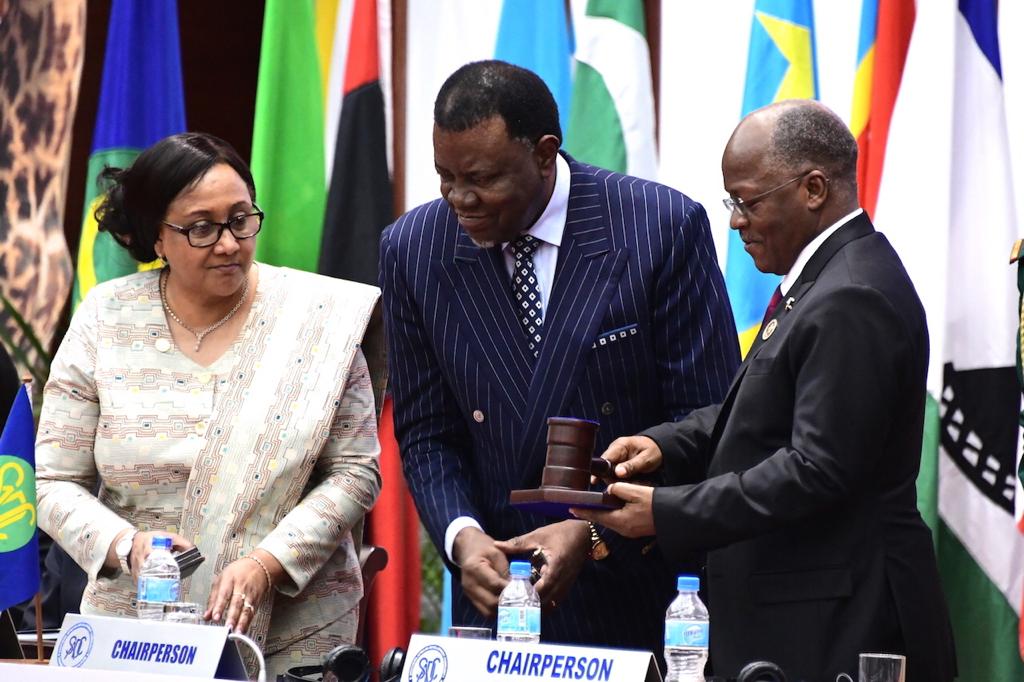
On Saturday 17th August, Tanzania assumed the chair of the South African Development Cooperation (SADC), amidst disturbing economic figures indicating that the region was facing a serious economic meltdown. Can Tanzania be the ‘German’ of the region, playing the economic big daddy role by calling the other states into political order and bailing out the struggling member states?

By Moses Kulaba, Governance and Economic Analysis Center, Dar es Salaam, Tanzania

The SADC is a 16-member state regional economic block established with among others promoting sustained economic growth and sustainable development amongst its objectives. However, the recent economic data indicates that region is witnessing an economic meltdown with most of its member states, except perhaps Tanzania, positing negative or stunted economic growth over the past years.

According to the economic and social indicators data compiled and released by its secretariat the the SADC region posted an estimated average growth rate of 1.4% in 2016 compared to 2.3% in 2015. At country level Tanzania registered the highest growth of 7% among the member states followed by Botswana with a far below rate of 4.3%[i].  

In 2017 Tanzania recorded an economic growth of 7.1% followed by Seychelles (6.3%) whilst Angola registered negative growth for the second consecutive year in order of 2.5%[ii] The region’s growth was increasing at a decreasing rate since the post global period in 2009.

The region’s economic giant South Africa has witnessed rapid economic slowdown, bring along its small neighbors and trading partners under its weight.  Countries such as Zimbabwe were collapsing under the weight of economic sanctions, Namibia and Angola recorded negative annual real GDP (at market price) of 10.8% and -2.5% respectively in 2017 due to the slump in commodity prices and other related risks. Botswana at 2.4% did not perform well either. The region posted an overall trade deficit with rest of the world of USD6.7bln. 

The AfDB report for 2018 warned that the economic outlook for Southern Africa region was cautious[iii]. Broad based economic activity was expected to recover at slow pace, but the outlook remained modest given the diverging growth patterns for the region’s economies. Upper middle income countries turned in low and declining rates of growth meanwhile lower income transitioning economies recorded moderate and improved growth, albeit at reduced rates.

Despite the improvement, economic performance remained subdued as the region’s economic outlook continued to face major headwinds. High unemployment, weak commodity prices, fiscal strain, increasing debt and high inflation.

Real GDP was estimated to have grown at an average of 1.6% in 2017 before increasing to a projected 2.0% in 2018 and 2.4% in 2019.

The future regional growth was expected to be bolstered with primary expectations of increased investment in non-oil sectors such as electricity, construction and technology in large infrastructure projects, mining as well as continued recovery in commodity prices.

However, the latest figures show that the region was not well on that front either.  The decline in commodity prices in recent years reaching the lowest point in 2015 translated into significant income loses for the economies, implying a negative impact on public and private sector spending and therefore growth in employment.

Before the 2008-2009 global recession, the region experienced moderate growth, though individual countries contributed differently. For example, Angola, Mozambique and Namibia exhibited robust growth that collectively outpaced the regional group.

Thereafter, Angola, the region’s foremost oil producer and former raising economic star received the worst bashing with its economy experiencing adverse economic growth effects due to weak oil prices.

Overall the region experienced negative GDP growth with Swaziland (-10.08%), Zimbabwe (-8.38%),  and Angola (-6.31%)  being among the worst hit[iv]  Other Countries such as Zambia, Namibia , Mozambique and Malawi were not performing better either. South Africa reported the highest public debt soaring in billions dollars followed by Angola.

South African Institute of International Affairs observed that intra-regional investment and trade levels had declined markedly since the commodity slump in 2013. Moreover, the trade and economic growth in the region remained imbalanced, exacerbating political strains among member states. Non-tariff barriers and other factors had adversely affected intra-regional trade and investment in recent years.

Assuming the mantle, at the end of its 39th Summit held in Dar es Salaam, Tanzania’ President John Pombe Magufuli was furious with against the Secretariat for having not provided adequate and alert to the political leadership that the region was experiencing an economic meltdown with reduced or stunted growth and an expanding trade deficit.

Speaking at the SADC People’s forum on the sidelines of the main summit in Dar es Salaam, the South African Professor, Patrick Bond, described the situation as alarming, catastrophic and turbulent and yet no one was bold enough to speak about it.

He was perhaps communist in view and radical in approach, blaming what he described as the capitalistic enterprise and its puppeteers for under mining economic justice, risking lives of by putting profit before the people and causing climate change whose effects were ravaging SADC but remained quite revolutionary in suggesting that the ordinary people perhaps needed to send a clear signal to its political leadership that all was not okay. The economic fundamentals were tattered and the regional leaders needed to wake, Prof. Bond lectured.

Can Tanzania emerge and become the ‘German’ of the region?

With this state of the Union, the question therefore arose can Tanzania emerge and become the ‘German’ of the region, playing the economic messiah role by providing both political leadership and economic bail out to its neighbors

In 2013 up to 2015 when the European Union experienced economic turbulence, Brussels turned to German to liberate it from the gigantic economic Dracula which was tearing down its economic block and leaving some of its small states indebted and facing bankruptcy. German wrote cheques in financial bailouts, provided guarantees and political prop up for economically struggling states such as Greece, Portugal and Italy.

German relied on its economic prowess and its political might as the industrial central pillar of the European Union. The charismatic leadership of its Chancellor, Ms Angela Merkel, was a distinct asset. Even at the risk of her own political career and constant onslaught from the German far right, Merkel could not tolerate any nonsense and was not ready to allow Europe to fall back.

In the face of the similar economic doldrums which seems now to face SADC, can Tanzania afford such muscle or a German equivalent?

Tanzania has done it before. In the 1960’s until 1990’s when the region was facing serious political, Tanzania pulled up its resources and committed it to the liberation struggle. It hosted training camps and provided pupilage to thousands of liberation fighters. Dar es Salaam became to the political headquarters of Frontline States where the idea of SADC in its current form was initiated and a spring for independence for many of the current South African states.  For some, therefore SADC at 39 years, just came back home.

In assuming the SADC Chairmanship, President Magufuli warned the Secretariat that it will not be business as usual as of now and for the next one year his interest would be to see that resources placed at the disposal of the Secretariat were not spent on conferences but on meaningful tangible projects which benefited the people. Could this be the kind of approach that region needs to take in order to deal with its increasing economic challenges.

An agile kind of leadership which places the people at the heart of politics and fights with cunning shrewdness against corruption, public waste, nepotism and personal drive to accumulate wealth by those in power.

Over the years these have been some of the vices which have dogged the region and bringing the much needed progress to stagnation and ultimate halt in some member states. Comparatively, perhaps the SADC is the largest economic group in Sub-Saharan Africa. With over an estimated population of 337.1 million people in 2017, is larger than its western equivalent, the Economic Community of West African States (ECOWAS) and obviously bigger than the European Union has a just a fraction of the SADC population yet somehow progress has been considerably steady in the other regions.

According to experts the region was faced by multiple non trade barriers and low intra region trade which still at around 20%.  Technically, speaking, the members are happy to do business with other countries outside the region rather than their economic neighbors partners in SADC. The member states are living alongside each other but not fully economically and trade integrated.

Political uncertainties which has dogged the former economic giants of the region such as South Africa, Zimbabwe, Mozambique and Angola created fertile conditions negative to investment and economic growth.  The governments lost grip on the economic mantle and directed attention towards managing internal politics and mechanics for political survival.  

Xenophobic attacks in South Africa could have also created a sense of fear and caused disarray in a fragile informal sector which was quietly the driving factor or fulcrum on which the South African economy relied. Crushing cost of electricity, turmoil in the extractive sector and stalemate in the platinum industry in 2016 perhaps were also a contributory factor to South Africa’s political woes. 

Overall, according, to Professor bond, the region was just poorly governed and a new leadership impetus led by the people was necessary to bring back the declining glories

For many years SADC was so much preoccupied on political stability. With good success, it has managed to tackle conflicts and bring peace amongst its member states. Overall, political conflict in the form of civil wars in the region has been declining with all except the DRC reporting any semblance of a conventional Civil war in recent years. 

Even, this has significantly been downgraded in recent years. Currently, there is no severe risk of any threat from any member state to destabilize any other through an arms insurrection. The ongoing conflict in the Eastern DRC is largely a war of survival for the remaining tribal and ethnic elements rather than a fully-fledged military configuration to overall and capture power in the DRC. If it can be dealt with, then perhaps the war in the DRC will be over or significantly reduced to minimal levels in many decades.

The future wars of the SADC will therefore be largely economic and perhaps resource based on key issues such as land, water and control of the real means of production and profit. Acute poverty could be the other driver of the masses towards insurrection. For Tanzania therefore, to take up the German challenge will be a touch endeavor.

Tanzania’s economic benefit or contribution to the region is too minimal. According to trade statistics, Tanzania is among the least exporters to SADC and its overall trade balance with its SADC neighbors was still low. It therefore lacks the economic might of German stature.

Over the past three years Tanzania’s political leadership has commitment itself to building its economy first before looking outside. Cutting back on public waste and flogging its population into line to start paying up taxes to finance its public service and infrastructure ambitions, Tanzania is building its economy from within.

Throughout the 1960s to the 1990s Tanzania sacrificed a lot in order to politically liberate virtually all the SADC member states and yet gained very minimal in return.  Political historians have even have even argued with some level of confidence that Tanzania under developed itself in sacrifice for others to develop. Tanzania would be therefore quite cautious in economic diplomatic terms and perhaps uncomfortable at this moment in giving out too much of what it has acquired over the years to salvage its economic neighbors.

The conditions in the region appear to have turned so bad in the past few years with persistent drought raving across the region only to be replaced by wrecking floods leaving behind famine and death in communities along its way.  Approximately over 1000 people dies in the last floods in Mozambique and Malawi caused by cyclone Idai and Keneth. Millions at a risk of starvation.  Essential infrastructure such as road and bridges connecting rural areas to urban centers and across countries such as the port of Beira are badly battered and incapable of supporting economic productivity.

The region has not been able to attract in Foreign Investment into its natural resource wealth and flagship infrastructure projects such as the Mighty Inga dam electro power project in the DRC which would have brought life into the SADC power master plan have remained incomplete for many years now. The region is badly in need of both reconstruction and reconfiguration to sustain itself and its ambitions.

At the end of the summit Tanzania’s former President Benjamin Mkapa advised that SADC member states should stop relying heavily on foreign donors for aid to support or finance their development agenda. Building internal capacity through a reliable market for products from the block, investment in education, technology, domestic revenue collection and unlocking the potential amongst its budging population to drive the economies forward would be a better option. Perhaps the SADC leadership should fine tune an ear to the wisdom of its elders.

The meeting concluded with signing off of three development cooperation programs worth 47 Million Euro deal with the European Union under its European Development Fund (EDF) 11 financing round. According to official statement, the funds will be used over the next five-year period to support improvement in the Investment and Business Environment (SIBE), Trade Facilitation Program (TFP) and Support to Industrial Productive Sectors (SIPS) three programs to be implemented by the SADC over the next five-year period

The SIBE program aims at achieving sustainable and inclusive growth and job creation by transforming the region into an investment zone, promoting intra-regional investments, foreign Direct Investment and a focus on Small and Medium Enterprises. The TFP will contribute to enhance inclusive economic development in the region through deepened economic integration while the SIPs aimed at contributing to the SADC industrialization agenda, improving performance and growth of selected value chains. How this EU injection translates into lifting the region from its economic downward spiral will yet to be found out at the next summit when SADC turns 40. What is clear is that something has to be done.

[i] SADC: Selected economic and social indicators, 2016

[ii] SADC: Selected economic and social indicators, 2017

[iii] AfDB: Southern Africa Economic Outlook, 2018

[iv] https://countryeconomy.com/countries/groups/southern-african-development-community
New threats to peace and Security:  Extent to which new security threats of Piracy have affected economic and human security in East Africa

New threats to peace and Security:  Extent to which new security threats of Piracy have affected economic and human security in East Africa

By Moses Kulaba, Governance and economic analysis centre, Dar es Salaam-Tanzania

Security is taken to be about the pursuit of freedom from threat and the ability of states and societies to maintain their independent identity and their functional integrity against forces of change, which they see as hostile.

In recent years piracy and cyber security have emerged to represent new security threats to economic and human security like never before.

Security has been defined as protection from any kind of threat but in total departure from the orthodox view as perceived by the military and war professional. Experts such as Buzzan (1991) have defined security as freedom from fear or threat of social, economic, society, environmental and military concerns.  Buzzan therefore expands the definition of security to include human and economic security dimensions to the concept of security. 

Human security, as an approach gives understanding to national and international security by adding a dimension that gives primacy to the safety of human beings and their complex social and economic interactions.  In this approach to security, the subjects are individuals and the end goal is the protection of people from traditional threats such as military concerns to nontraditional threats such as poverty and disease.

The UN has advanced this concept further by declaring that “Human security is an approach to assist Member States in identifying and addressing widespread and cross-cutting challenges to the survival, livelihood and dignity of their people” (General Assembly resolution 66/290

Other organisations such as the International Committee of the Red Cross view security from an economic lens. The ICRC defines economic security as the ability of individuals, households or communities to cover their essential needs sustainably and with dignity. This can vary according to an individual’s physical needs, the environment and prevailing cultural standards. Food, basic shelter, clothing and hygiene qualify as essential needs, as does the related expenditure; the essential assets needed to earn a living, and the costs associated with health care and education also qualify.

By understanding peace and security from such a broad lense, it is therefore possible to understand the nexus and extent to which new threats such as piracy and cybercrime have on human security.

Piracy as a security threat

Piracy has been defined as an act of robbery or criminal violence at sea. It includes acts committed on land, in the air, or other major bodies of water or on shore. It generally involves unlawful, boarding, kidnap and commandeering of marine or land vessels or convoys to undesignated locations or destinations for looting, ransom or other purposes.

Although the term “piracy” may conjure up images of bearded men with eye patches, wooden legs and parrots who were convicted and buried centuries ago, pirate attacks are indeed posing a threat today’s shipping lines (and human wellbeing) all over the world.   According to reports, the number of Pirate Attacks globally between 2009 and 2017 was 2717 with 180 attacks registered in 2017 alone.

Causes of an upsurge in piracy

There are many reasons to explain the increasing rise in piracy but some of these have been constantly made;

  • The disappearance of US naval forces fleets from major international water bodies after the end of the cold war. This has allowed pirates and criminal gangs to operate freely on the open high seas with minimal interference
  • The improvement in maritime navigation and technology which has enabled launching and navigation of larger ships manned by smaller crew who are extremely vulnerable to pirate attacks
  • Expansion of jurisdictional waters beyond those which are directly in effective control and patrol of their claimant states.
  • Instability, state collapse and increasing harsh economic conditions in Countries such as Somalia and Yemen.
  • Falling states and absence of centralized governments in Countries such as Somalia
  • Lucrative ransoms paid which acted as incentives for more attacks
  • Long uncompleted trials and deterrent punitive measures to convicts which motivated others to conduct attacks
  • Radicalization and justification of piracy as tool in response to political interference, economic dominance and over exploitation of marine natural resources by global super powers such as America.

Today, pirates’ attacks pause a genuine threat to maritime transportation and security. Pirates are capable of cutting off important transit choke points such as the Strait of Bab al-Mandab between Arabia and Africa or the Strait of Malacca in South East Asian waters.  In 2017, the trade routes around the Indonesian coast as well as in Bangladeshi and Nigerian waters were counted among the most perilous at sea paths globally.

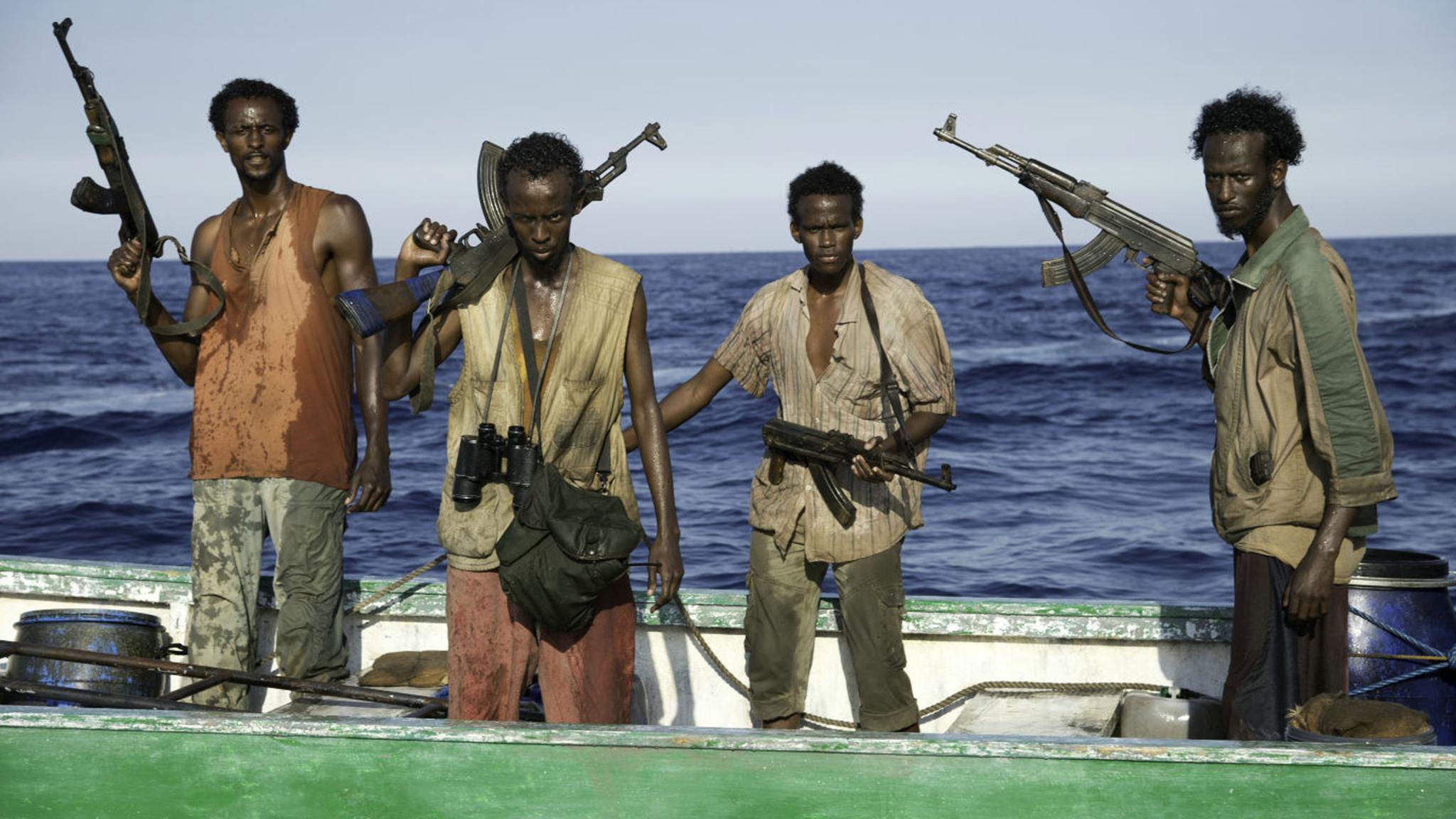
The Horn of Africa, along the Somalian coastline, has become one of the most dangerous waters prone to piracy attacks.  According to various reports maritime piracy off the Horn of Africa grew in frequency, range, aggression, and severity at an alarming rate covering more than 2.5 million square miles of ocean. Since 2007, Somali pirates attacked and harassed vessels transiting up to 450 miles offshore in the Indian Ocean and in the Gulf of Aden, a natural chokepoint providing access to the Red Sea and the Suez Canal.  The number of actual or attempted attacks in the Somalia’s territorial waters off the East African coastal shore line was 462 with 5 attacks reported in 2017 alone

For 2017, an International maritime organization, One Earth Future (OEF)’s Oceans Beyond Piracy (OBP)  recorded a total of 54 incidents in the Western Indian Ocean region, marking an increase of 100 percent from 2016. Accordingly, 2017 saw an increase in the number of seafarers affected by incidents of piracy and armed robbery at sea, from 545 in 2016 to 1,102 in 2017. For the first time in two years, OBP recorded incidents of hijacking and kidnapping at sea in the region. Suspicious activity continued to be the highest represented incident in the region in 2017 reporting a significant increase from 13 recorded incidents in 2016 to 32 in 2017.

The short surge in hijacking attacks in the first quarter of 2017 was attributed to several factors. These include the continued intent of pirate action groups to launch attacks and the opportunity to do so, due to lessened adherence to ship self-protection measures, including Best Management Practices (BMP). Independent deployers represented the primary naval presence in the region, but both coalition forces and independent deployers decreased days of operation, or days on station in the region, in 2017.

Effects of Piracy on human security

Piracy has led to significant decline in human security, by instilling fear, insecurity and fatalities along the East African coastal shoreline. According to OEF- OBP on the state of piracy, the number of piracy on the East African coastline tripled in 2016. There were 54 piracy incidents on the East African coast in 2017—more than triple the 16 incidents recorded in 2016.  It states that the number of sailors affected increased from 306 in 2015 to 1,102 in 2017, with at least 79 of them injured or threatened in the attacks in which 41 per cent of the attackers were armed. The number of attacks as in previous years shows that the capability and intent of pirate networks has not decreased. This was witnessed with the increased number of hijackings, including of the Aris 13, the Asayr 2, and Al Kausar. The number of hostages killed or injured by Somali pirates increased significantly in 2017, according to further maritime reports.

Nearly 4,000 seafarers were fired upon by Somali pirates, the report said. Of that number, 968 seafarers faced armed pirates who managed to board their vessels, while some 413 of those seafarers were rescued from secured rooms on their vessels by naval forces. At least 1,206 hostages were held by Somali pirates in 2011, including 555 seafarers attacked and taken hostage during the year, and 645 captured in 2010 who remained in pirate hands. Half of those held were subjected to punching and slapping and 10% suffered violent abuse such as being locked in freezers, burned with cigarettes and having their fingernails pulled out with pliers, the reports stated.

Effects of piracy on economic security

In 2017 the economic effect of piracy on East Africa was estimated at USD1.4billion. This was a slight decline from $1.7 billion in 2016, mainly due to a 13 per cent decrease in the use of privately contracted armed security personnel. The costs had stabilized over the past three years, after a decline between 2010 and 2015, from about $7 billion in 2010 to $1.3 billion in 2015.  None the less, these amounts are substantively high if measured in correlative development terms and represent a significant economic security risk to the region.

Piracy has increased administrative cost measures in counter piracy measures. It has led to increased military presence and diversion of vital resources to combat piracy.  In 2011 the total costs in military counter piracy measures was estimated at USD 1.27bln.  This was spent on administrative budgets, military vessels and unmanned aerial vehicles. An additional USD 635 million was spent on insurance premiums. The cost of prosecuting pirates in trials and imprisonment was USD5.3 million.  These figures have substantively increased in 2017.

These are vital resources which could have been used for other development activities such as social service provision and infrastructure development but have been switched towards addressing piracy off the coast of Somalia.

Effect on trade and commerce

Piracy has affected trade and commerce along the East African coastline. According to the South African Institute for Strategic studies (ISS), trade in sub-Saharan Africa was slowly suffering from the consequences of piracy on major shipping liners along the Eastern African coast.

The resurgence of incidents of piracy has the potential to affect international trade and maritime movement of cargo around the East African coastline. In advertently this has collateral damage to East African economies and other Countries around the world.  Shipping liners have to consider alternative routes which are perceived safer routes such the Suez Canal, the South African tip or even the Panama Canal.

Increased costs in freight and insurance charges.

One of the major consequences of piracy is the increase in insurance rates for the shipping industry and the need to purchase additional insurance to cover the risk associated with transiting a piracy prone region. For example, insurance companies now offer “kidnap for ransom” policies to ships that move through the Suez Canal.  According to one insurance company, the U.K. based Hiscox, prices the policy at US$15,000 per trip through the Gulf of Aden and was reported to have increased dramatically.  Also, because of the danger posed to shipping transiting the Gulf of Aden, insurance premiums had risen tenfold. For example, insurance companies had increased premiums for sending a cargo shipment through the Gulf of Aden to about US$9,000 from US$900 in a period of one year.

From an economic point of view, having Africa’s access to internationally developed materials such as nuclear reactors, vehicles, tractors, imported and exported food, and other materials reduced will be devastating. More worrying is the impact of a decrease in exports of natural resources from African countries.

Piracy has changed the livelihoods of communities along the Somali coastline who have abandoned vital livelihoods such as agriculture and nomadic farming to join piracy. Fishing communities have also been forced to abandon fishing from fear of attacks at sea and hence changed the entire economic security of communities living along the coast of Somalia. According to the UNDP many Somali youth joined piracy as a source of employment and piracy is seen and proven to be a vital ready source of income and path to quick wealth and prosperity.

Piracy financing of money laundering and terrorism

The proceeds from piracy have found their linkages to finance money laundering and terrorism activities. According to the World Bank, the Somali pirate business model relies heavily on onshore support infrastructure to conduct ransom negotiations. Generically a pirate operation consists of armed offshore operations with onshore support that provides shelter for returning pirates and access to markets for stolen goods and for the goods, services, and manpower needed for pirate attacks. The total amount of money paid in ransom fees by various companies was estimated billions of dollars. Most of this was invested in legitimate business such as real estate, forex bureaus and financing Alshabab terrorist activities.

There is risk of fueling war and further instability with deadly military hardware captured by pirates falling in the hands of militants.  Although previously pirates targeted fishing vessels and smaller cargo ships, they later targeted larger vessels such as chemical tankers, bulk carriers and thus pausing a higher security risk than ever.

Amongst their high-profile targets included a Ukrainian vessel loaded with heavy weapons and a Saudi owned VLCC. The MV Faina, or “crown” in Russian, was a Ukrainian vessel loaded with rifles, heavy weapons and 33 Soviet made T-72 tanks that the pirates captured on 25 September 2008. The ship was initially thought to have been heading for Sudan or some other African country, possibly Kenya. The MV Faina was then surrounded by three warships from the Combined Task Force 150 during its hijack to prevent the ship’s deadly cargo from ending up in the hands of Somalia’s Islamic insurgents and other terrorists. The initial ransom demand was for US$35 million but it was finally released for a reported sum of US$3.2 million.

Piracy has affected Tourism and investment along the East African coast of Somalia. Piracy attacks on hotels and large deep-sea fishing vessels has significantly retarded invested in East African coastal economy, along the Somalian coastline.

There have been regional attempts to combat piracy. The US and EU Naval patrols and tracks pirates off the East African Coastline and the Gulf of Aden under the auspices of Joint Task Combined Task Force (CTF) 150 including troops from the US, EU and Canada. This has accounted for the declining numbers of attacks in the recent years. The downside of this effort is that the task force is externally funded and cannot be a long-term solution.  This therefore demands that Eastern Africa states step up their capabilities to counter piracy along its long coastline.

In a nutshell, piracy represents one single new threat to human and economic security. Despite a reduction in reported cases of piracy in 2018, the disappearance of piracy in the 19th Century and its resurgence in the 1990s and increase between 2000 and 2017 shows that this security threat is not over. Perhaps the pirates and their benefactors are planning and waiting to strike their next target.  Extra vigilance, collective military and civilian measures are required to contain this threat.


Reference:

Effects of Cyber Security on Human and Economic Security

New threats to peace and Security:  Extent to which new security threats of Cyber security have affected economic and human security in East Africa

By Moses Kulaba, Governance and economic analysis centre, Dar es Salaam-Tanzania

Cyber security or attacks by using highly sophisticated technology and cyber space to penetrate, modify, adulterate or alter existing ICT infrastructure to inflict significant, damage to a country, an installation, equipment, companies or individuals. According to NATO cyber insecurity is crippling of vital defence and military installations and capabilities to protect human security

Effects of Cyber Security on Human and Economic Security

From a military or defense security perspective, cyber security threat from the following angles or forms

  • Cyberterrorism is the disruptive use of information technology by terrorist groups to further their ideological or political agenda. This takes the form of attacks on networks, computer systems and telecommunication infrastructures.
  • Cyberwarfare involves nation-states using information technology to penetrate another nation’s networks to cause damage or disruption. In the U.S. and many other nations, cyberwarfare has been acknowledged as the fifth domain of warfare (following land, sea, air and space).
  • Cyberwarfare attacks are primarily executed by hackers who are well-trained in exploiting the intricacies of computer networks, and operate under the auspices and support of nation-states. Rather than “shutting down” a target’s key networks, a cyberwarfare attack may intrude into networks to compromise valuable data, degrade communications, impair such infrastructural services as transportation and medical services, or interrupt commerce.
  • Cyberespionage which is the practice of using information technology to obtain secret information without permission from its owners or holders. Cyberespionage is most often used to gain strategic, economic, political or military advantage, and is conducted using cracking techniques and malware.

In recent past cyber-attacks have become quite rampant. In 2008 the Estonian attack in which the entire Estonian Government agencies, financial institutions and broadcasters were jammed by Russian cyber attacker was a good example. In 2010 the reports of attacks on googles mails by Chinese hackers and Sony pictures were a clear reminder of the extent of the risk posed by Cyber security.

Cyber-attacks have capabilities to disrupt government systems, transport and communication infrastructure and defence capabilities.

However, from a human and economic security perspective, cyber insecurity has largely affected social and economic sectors. Cyber security has globalised or regionlaised organized crime. According to the UK government’s Cyber Security Breaches Survey 2017 found that the average cost of a cyber security breach for a large business was £19,600 and for a small to medium-sized business was £1,570. According to a CISCO Annual report on cyber security, over one third of organizations that experienced breach in 2016 reported loss of substantial customer opportunity and revenue loss in more than 20%

Effects of cybercrime of human and economic security in East Africa

Experts have described the East African digital economy as weak and vulnerable to multiple cyber attacks

“Essentially, in terms of cyber resilience, the Kenyan digital economy can be likened to a slow, plump gazelle stumbling through the ‘cyber savanah’’ in the full view of an agile, informed and hungry cyber predator, keen to sink their teeth into their sumptuous prize”

In 2016, African countries reportedly lost USD2bln in cyber-attacks. Remittance based economies, which depend on electronic wire transfers of money from its foreign sources and nationals living abroad via the international financial system were the worst hit

Effects on Financial systems

Financial transactions such as banking and money transfer services have been the largest targets affecting millions of people. In East Africa it was reported that Kenya was the worst affected with a total estimated of loss of USD 171Mln while Tanzania lost USD85million and Uganda lost USD 35million in its financial sector.

Tanzania’s cyber security report for 2016 warned of critical dangers facing the country. According to the report technology adoption is driving business innovation and growth in Tanzania, while at the same time, exposing the Country to new and emerging cyber security threats. Terrorists, spies, hackers, fraudsters are increasingly motivated to target Tanzania’s Information, Communication and Technology (ICT) infrastructure due to the value of information held within it, the report indicated.

One of the major risks was lack of awareness amongst technology users. According to the report over 1.6 million Internet Portals (IPs) were publicly accessible and over 138,000 network security events were reported.

Effects of exposure through interconnected and domestic gadgets

Cybercrime has reduced human security risk through exposure to interconnected things such as medical devices, smart TVs, cars and other gadgets. Research has found potential vulnerabilities in dozens of devices such as insulin pumps, and implantable defibrators. Hundreds of connected TVs are potentially vulnerable to click fraud, botnets, data, ransomware. Cybercriminals have developed mechanisms to remotely take control of personal gadgets such as remotely opened cars, personal computers.

Threat to privacy and confidentiality

There is a security risk of breach of confidentiality and personal privacy on vital confidential documents and personal data. As governments become digitalized through the drive for e-government, confidential government documents and personal details of its citizens are now more exposed to cybercrime. From passports, birth certificates, medical reports, pension numbers and personal IDs are now interlinked via the electronic networks

Costly policing and administration in cyber defence

Fighting cybercrime is very costly to police and enforcing cyber security diverts the already constrained government resources away from financing vital social services such as education and health. According to  cybersecurity readiness report very few governments and companies can afford to invest in highly sophisticated cyber security defence systems.  The Kenyan Cyber Security report highlighted that about 44% of financial institutions run on a paltry cyber security budget of USD1-1000 annually. About 33% of financial institutions in Kenya have spent nothing on all matters of cyber security.There are limited skills to manage and address it and keep ahead of cyber criminals, the report warns.

Regional attempts to counter and fight cybersecurity

Regional initiatives to combat cybercrime have been initiated through specialized units now established in the military and police forces of the East African states. However, they are still ill trained and under equipped to effectively contain the threats.

In conclusion, it is evident that the threats of piracy and cyber security has been increasing and pause a major threat to human and economic security of the region. Piracy and Cybercrime are highly organized global crimes with vast networks operating miles away. The weak counter measures and lack of adequate resources to counter these threats suggest that these will remain security threats to the region for longtime.

Indeed, given the increasing threat that cyber-crime has generated it is probable to suggest that future wars may/will not be fought on the battle fronts but in cyber space. Soldiers of the future will not be Generals commanding battalions and platoons of mobiles soldiers marching across battle fields.  The generals of the future will be technologically savy individuals sitting in high-tech offices and issuing commands to remote computers, gadgets and robots deployed to engage targets thousands of miles away.


Reference: