SADC in Economic Meltdown; Can Tanzania be German of the Region?

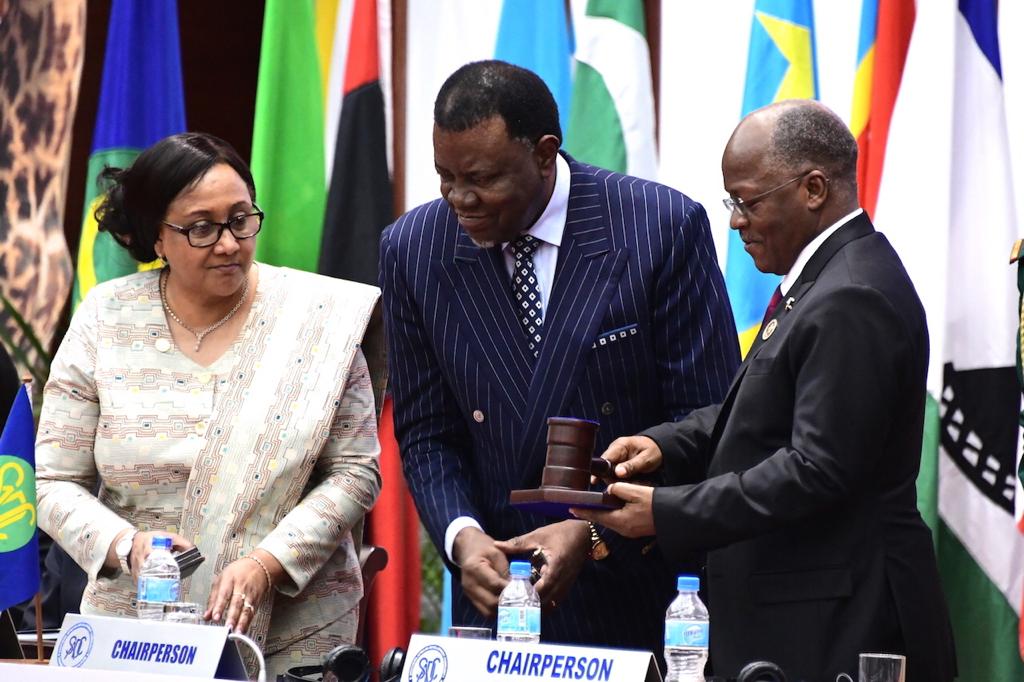
On Saturday 17th August, Tanzania assumed the chair of the South African Development Cooperation (SADC), amidst disturbing economic figures indicating that the region was facing a serious economic meltdown. Can Tanzania be the ‘German’ of the region, playing the economic big daddy role by calling the other states into political order and bailing out the struggling member states?

By Moses Kulaba, Governance and Economic Analysis Center, Dar es Salaam, Tanzania

The SADC is a 16-member state regional economic block established with among others promoting sustained economic growth and sustainable development amongst its objectives. However, the recent economic data indicates that region is witnessing an economic meltdown with most of its member states, except perhaps Tanzania, positing negative or stunted economic growth over the past years.

According to the economic and social indicators data compiled and released by its secretariat the the SADC region posted an estimated average growth rate of 1.4% in 2016 compared to 2.3% in 2015. At country level Tanzania registered the highest growth of 7% among the member states followed by Botswana with a far below rate of 4.3%[i].  

In 2017 Tanzania recorded an economic growth of 7.1% followed by Seychelles (6.3%) whilst Angola registered negative growth for the second consecutive year in order of 2.5%[ii] The region’s growth was increasing at a decreasing rate since the post global period in 2009.

The region’s economic giant South Africa has witnessed rapid economic slowdown, bring along its small neighbors and trading partners under its weight.  Countries such as Zimbabwe were collapsing under the weight of economic sanctions, Namibia and Angola recorded negative annual real GDP (at market price) of 10.8% and -2.5% respectively in 2017 due to the slump in commodity prices and other related risks. Botswana at 2.4% did not perform well either. The region posted an overall trade deficit with rest of the world of USD6.7bln. 

The AfDB report for 2018 warned that the economic outlook for Southern Africa region was cautious[iii]. Broad based economic activity was expected to recover at slow pace, but the outlook remained modest given the diverging growth patterns for the region’s economies. Upper middle income countries turned in low and declining rates of growth meanwhile lower income transitioning economies recorded moderate and improved growth, albeit at reduced rates.

Despite the improvement, economic performance remained subdued as the region’s economic outlook continued to face major headwinds. High unemployment, weak commodity prices, fiscal strain, increasing debt and high inflation.

Real GDP was estimated to have grown at an average of 1.6% in 2017 before increasing to a projected 2.0% in 2018 and 2.4% in 2019.

The future regional growth was expected to be bolstered with primary expectations of increased investment in non-oil sectors such as electricity, construction and technology in large infrastructure projects, mining as well as continued recovery in commodity prices.

However, the latest figures show that the region was not well on that front either.  The decline in commodity prices in recent years reaching the lowest point in 2015 translated into significant income loses for the economies, implying a negative impact on public and private sector spending and therefore growth in employment.

Before the 2008-2009 global recession, the region experienced moderate growth, though individual countries contributed differently. For example, Angola, Mozambique and Namibia exhibited robust growth that collectively outpaced the regional group.

Thereafter, Angola, the region’s foremost oil producer and former raising economic star received the worst bashing with its economy experiencing adverse economic growth effects due to weak oil prices.

Overall the region experienced negative GDP growth with Swaziland (-10.08%), Zimbabwe (-8.38%),  and Angola (-6.31%)  being among the worst hit[iv]  Other Countries such as Zambia, Namibia , Mozambique and Malawi were not performing better either. South Africa reported the highest public debt soaring in billions dollars followed by Angola.

South African Institute of International Affairs observed that intra-regional investment and trade levels had declined markedly since the commodity slump in 2013. Moreover, the trade and economic growth in the region remained imbalanced, exacerbating political strains among member states. Non-tariff barriers and other factors had adversely affected intra-regional trade and investment in recent years.

Assuming the mantle, at the end of its 39th Summit held in Dar es Salaam, Tanzania’ President John Pombe Magufuli was furious with against the Secretariat for having not provided adequate and alert to the political leadership that the region was experiencing an economic meltdown with reduced or stunted growth and an expanding trade deficit.

Speaking at the SADC People’s forum on the sidelines of the main summit in Dar es Salaam, the South African Professor, Patrick Bond, described the situation as alarming, catastrophic and turbulent and yet no one was bold enough to speak about it.

He was perhaps communist in view and radical in approach, blaming what he described as the capitalistic enterprise and its puppeteers for under mining economic justice, risking lives of by putting profit before the people and causing climate change whose effects were ravaging SADC but remained quite revolutionary in suggesting that the ordinary people perhaps needed to send a clear signal to its political leadership that all was not okay. The economic fundamentals were tattered and the regional leaders needed to wake, Prof. Bond lectured.

Can Tanzania emerge and become the ‘German’ of the region?

With this state of the Union, the question therefore arose can Tanzania emerge and become the ‘German’ of the region, playing the economic messiah role by providing both political leadership and economic bail out to its neighbors

In 2013 up to 2015 when the European Union experienced economic turbulence, Brussels turned to German to liberate it from the gigantic economic Dracula which was tearing down its economic block and leaving some of its small states indebted and facing bankruptcy. German wrote cheques in financial bailouts, provided guarantees and political prop up for economically struggling states such as Greece, Portugal and Italy.

German relied on its economic prowess and its political might as the industrial central pillar of the European Union. The charismatic leadership of its Chancellor, Ms Angela Merkel, was a distinct asset. Even at the risk of her own political career and constant onslaught from the German far right, Merkel could not tolerate any nonsense and was not ready to allow Europe to fall back.

In the face of the similar economic doldrums which seems now to face SADC, can Tanzania afford such muscle or a German equivalent?

Tanzania has done it before. In the 1960’s until 1990’s when the region was facing serious political, Tanzania pulled up its resources and committed it to the liberation struggle. It hosted training camps and provided pupilage to thousands of liberation fighters. Dar es Salaam became to the political headquarters of Frontline States where the idea of SADC in its current form was initiated and a spring for independence for many of the current South African states.  For some, therefore SADC at 39 years, just came back home.

In assuming the SADC Chairmanship, President Magufuli warned the Secretariat that it will not be business as usual as of now and for the next one year his interest would be to see that resources placed at the disposal of the Secretariat were not spent on conferences but on meaningful tangible projects which benefited the people. Could this be the kind of approach that region needs to take in order to deal with its increasing economic challenges.

An agile kind of leadership which places the people at the heart of politics and fights with cunning shrewdness against corruption, public waste, nepotism and personal drive to accumulate wealth by those in power.

Over the years these have been some of the vices which have dogged the region and bringing the much needed progress to stagnation and ultimate halt in some member states. Comparatively, perhaps the SADC is the largest economic group in Sub-Saharan Africa. With over an estimated population of 337.1 million people in 2017, is larger than its western equivalent, the Economic Community of West African States (ECOWAS) and obviously bigger than the European Union has a just a fraction of the SADC population yet somehow progress has been considerably steady in the other regions.

According to experts the region was faced by multiple non trade barriers and low intra region trade which still at around 20%.  Technically, speaking, the members are happy to do business with other countries outside the region rather than their economic neighbors partners in SADC. The member states are living alongside each other but not fully economically and trade integrated.

Political uncertainties which has dogged the former economic giants of the region such as South Africa, Zimbabwe, Mozambique and Angola created fertile conditions negative to investment and economic growth.  The governments lost grip on the economic mantle and directed attention towards managing internal politics and mechanics for political survival.  

Xenophobic attacks in South Africa could have also created a sense of fear and caused disarray in a fragile informal sector which was quietly the driving factor or fulcrum on which the South African economy relied. Crushing cost of electricity, turmoil in the extractive sector and stalemate in the platinum industry in 2016 perhaps were also a contributory factor to South Africa’s political woes. 

Overall, according, to Professor bond, the region was just poorly governed and a new leadership impetus led by the people was necessary to bring back the declining glories

For many years SADC was so much preoccupied on political stability. With good success, it has managed to tackle conflicts and bring peace amongst its member states. Overall, political conflict in the form of civil wars in the region has been declining with all except the DRC reporting any semblance of a conventional Civil war in recent years. 

Even, this has significantly been downgraded in recent years. Currently, there is no severe risk of any threat from any member state to destabilize any other through an arms insurrection. The ongoing conflict in the Eastern DRC is largely a war of survival for the remaining tribal and ethnic elements rather than a fully-fledged military configuration to overall and capture power in the DRC. If it can be dealt with, then perhaps the war in the DRC will be over or significantly reduced to minimal levels in many decades.

The future wars of the SADC will therefore be largely economic and perhaps resource based on key issues such as land, water and control of the real means of production and profit. Acute poverty could be the other driver of the masses towards insurrection. For Tanzania therefore, to take up the German challenge will be a touch endeavor.

Tanzania’s economic benefit or contribution to the region is too minimal. According to trade statistics, Tanzania is among the least exporters to SADC and its overall trade balance with its SADC neighbors was still low. It therefore lacks the economic might of German stature.

Over the past three years Tanzania’s political leadership has commitment itself to building its economy first before looking outside. Cutting back on public waste and flogging its population into line to start paying up taxes to finance its public service and infrastructure ambitions, Tanzania is building its economy from within.

Throughout the 1960s to the 1990s Tanzania sacrificed a lot in order to politically liberate virtually all the SADC member states and yet gained very minimal in return.  Political historians have even have even argued with some level of confidence that Tanzania under developed itself in sacrifice for others to develop. Tanzania would be therefore quite cautious in economic diplomatic terms and perhaps uncomfortable at this moment in giving out too much of what it has acquired over the years to salvage its economic neighbors.

The conditions in the region appear to have turned so bad in the past few years with persistent drought raving across the region only to be replaced by wrecking floods leaving behind famine and death in communities along its way.  Approximately over 1000 people dies in the last floods in Mozambique and Malawi caused by cyclone Idai and Keneth. Millions at a risk of starvation.  Essential infrastructure such as road and bridges connecting rural areas to urban centers and across countries such as the port of Beira are badly battered and incapable of supporting economic productivity.

The region has not been able to attract in Foreign Investment into its natural resource wealth and flagship infrastructure projects such as the Mighty Inga dam electro power project in the DRC which would have brought life into the SADC power master plan have remained incomplete for many years now. The region is badly in need of both reconstruction and reconfiguration to sustain itself and its ambitions.

At the end of the summit Tanzania’s former President Benjamin Mkapa advised that SADC member states should stop relying heavily on foreign donors for aid to support or finance their development agenda. Building internal capacity through a reliable market for products from the block, investment in education, technology, domestic revenue collection and unlocking the potential amongst its budging population to drive the economies forward would be a better option. Perhaps the SADC leadership should fine tune an ear to the wisdom of its elders.

The meeting concluded with signing off of three development cooperation programs worth 47 Million Euro deal with the European Union under its European Development Fund (EDF) 11 financing round. According to official statement, the funds will be used over the next five-year period to support improvement in the Investment and Business Environment (SIBE), Trade Facilitation Program (TFP) and Support to Industrial Productive Sectors (SIPS) three programs to be implemented by the SADC over the next five-year period

The SIBE program aims at achieving sustainable and inclusive growth and job creation by transforming the region into an investment zone, promoting intra-regional investments, foreign Direct Investment and a focus on Small and Medium Enterprises. The TFP will contribute to enhance inclusive economic development in the region through deepened economic integration while the SIPs aimed at contributing to the SADC industrialization agenda, improving performance and growth of selected value chains. How this EU injection translates into lifting the region from its economic downward spiral will yet to be found out at the next summit when SADC turns 40. What is clear is that something has to be done.

[i] SADC: Selected economic and social indicators, 2016

[ii] SADC: Selected economic and social indicators, 2017

[iii] AfDB: Southern Africa Economic Outlook, 2018

[iv] https://countryeconomy.com/countries/groups/southern-african-development-community
How to manage transboundary petroleum resources as Somalia and Kenya talk conflict off East African Coastline


The war of words and negative diplomacy between Kenya and Somalia over the disputed potentially oil and gas rich territory in the Indian Ocean has rekindled the importance of understanding how to manage transboundary petroleum resources. Petroleum does not know political borders. The vagaries of geology have dictated that sometime petroleum resources occur in trans boundary areas. How nation states collectively manage these resources can determine whether they effectively harness the benefits from these resources without going to conflict.

By Moses Kulaba, Governance and economic analysis centre

Management of petroleum resources or revenues from ‘trans boundary or ‘disputed’ areas has always been an issue of controversy in most petroleum resource rich countries.  It is a source of disputes and a challenge to investors, planners and policy makers when parties or Countries fail to agree amicably on the ownership of these resources and revenue sharing mechanisms for resources from these areas.  Trans-boundary resources are also called ‘common’ or shared resources.

In Tanzania and the wider East Africa region management of resources in ‘potentially contestable areas’ and ‘trans boundary’ areas are becoming a major challenge as some of the petroleum resources are found closer or along the boundary areas. It will be even more challenging in the nearby future as the gas and oil starts flowing.  If not addressed it will be a big hindrance to investment and development of the petroleum sector. In East Africa, currently there is no concrete and pragmatic approach to addressing this challenge.

The East African dimension

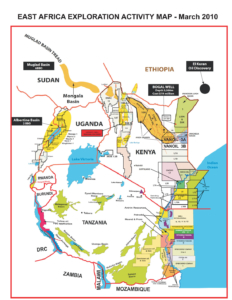
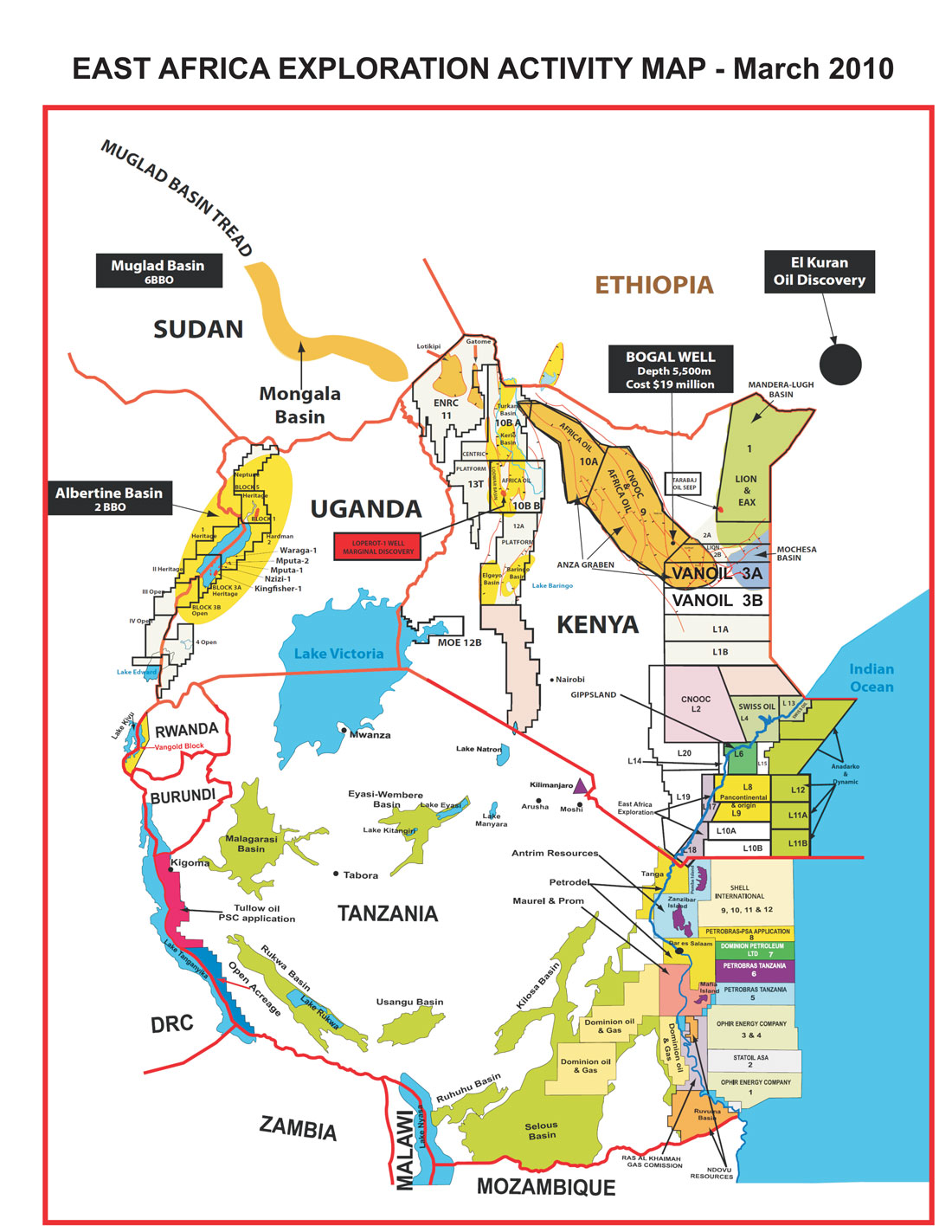
In a broader East African context, seismic studies have indicated that petroleum resources may be largely found along Trans international boundary areas. This has created disputes and raised challenges for proper resource management and revenue sharing arrangements. For example the discovery of petroleum deposits in the Albertine basin generated trans boundary tensions between Uganda and the DRC along the Lake Albert. There are disputes over petroleum in Unity state along the South Sudan and Sudan border. There are disputes between Kenya and South Sudan along the Nadapal area (Block 11 A & B) and Kenya and Somalia along the Wajir border area (block 1, 2 &3) and Indian Ocean Coastline continental shelf.

In 2014, Somalia filed a before the International Court of Justice, accusing Kenya of encroaching on its potentially rich petroleum rich maritime territory off its continental shelf. Both countries have claimed ownership of an approximately 100,000 square miles in the Indian ocean waters suspected of having vast oil and gas deposits.

The conflict largely arises from a dispute in regards to how the international border between Somalia and Kenya should drawn and internationally recognized. In the case before the ICJ, Somalia wants the maritime boundary to run diagonal, as an extension of the land boundary, while Kenya wants it to run parallel to the latitude, east wards, south of Kyunga. Both countries have relied on the straight-line principle in the International Law of the sea. Somalia wants the boundary to run south east wards and has vowed not surrender what it considers, its territorial integrity.

Figure 3: East African Exploration Map 2010-Source: Vanoil Ltd Energy-Kenya

In recent months there has been an escalation the war of words and negative diplomatic relations. Kenya in April barred Somali Officials from entering into Kenya and further banned unaccompanied luggage from Somalia and required that all aircrafts flying into Kenya from Somalia should temporary land in the Northern town of Wajir for a mandatory security check before flying into Nairobi.

The recent diplomatic row represents a significant development between the two neighbors which could escalate into a full-blown out conflict. It further reflects the common resource quagmire that neighboring petroleum rich nation states often find themselves and further shows that latent conflicts emanating from transboundary petroleum resources exist in East Africa.

It is therefore important that viable solutions are reached even without addressing the international law (Law of the sea) challenges facing Kenya and Somalia and the international political concerns or interests in East Africa yet significant challenges and ways of resolving this problem do exist.

Specific problem

  • There is lack of clarity for policy makers, planners and tax administrators on how to share the revenues from these areas
  • Uncertainty and wavering Investor confidence to fully commit their investment and as a consequence petroleum resources in potentially disputed or Trans boundary areas have remained unexplored. For example, licensed blocks operated by Shell in Tanzania’s waters closer to Zanzibar have remained   unexplored for a long time
  • On a wider East African level there are missed opportunities for joint investment promotion.
  • There is a ‘Race to the bottom’ as East African Countries under cut each other with lucrative fiscal terms in competition to attract petroleum investors into their own territories, without looking at East Africa as a whole
  • There are ongoing and underlying territorial disputes which could erupt into full blown out conflicts, risking the current and future investments into the petroleum sector

Currently, a lot has been written about these possible challenges but very limited pragmatic steps have been taken to address these challenges. There has been some significant discussion about the issue but there have been no pragmatic viable options provided which can be acceptable to the protagonists in the conflict.

If some pragmatic solutions are found for Kenya and Somalia, similar suggestions could also be used to inform approaches taken by other East African governments within the wider East African framework to address similar other potential disputes along their border frontiers.

Some international approach to similar challenges

The answer to nature’s conundrum where petroleum resources migrates within or across a country’s border has always been unitization.  Unitisation is one of the legal devices which seek to remove the destructive competitive elements stimulated by the rule of capture (as advanced in the United States legal tradition under which the title to petroleum belongs to the owner who physically extracts it from a well on his land, even if petroleum has migrated underground from neighboring lands). With unitisation petroleum deposits are exploited as a whole, expenditure is reduced and recovery is maximized.  Unitisation is accomplished through a unitization agreement. A unitization agreement is an amicable solution between parties as individuals, group of individuals or states holding exploitation rights in common petroleum reservoirs by which the reservoirs will be exploited in an integrated manner.  The reservoir is treated as one whole and the costs and revenues shared between the parties according to an agreed formula defined by parameters such as geological technical factors, investment or operational costs and volumes of the reservoir. An international unitization agreement (Unit operating Agreement) can be signed between relevant international companies from both states subject to the bilateral treaty outlining the rights and obligations of each company and issues like selection of operator or determination of tract of participants.

International law remedy and Joint Development Areas

The International law remedy to offshore ‘trans international boundary’ petroleum resources is provided within the ambits of the United Nations Law of the Sea Convention of 1982 (UNCLOS) which obliges states which have not been able to agree on boundaries of their continental shelves and exclusive zones to make efforts to enter into provisional arrangements  of a practical nature to develop the petroleum deposit  located in the overlapping geographical area under dispute whilst not foregoing their sovereignty rights to the deposits  in place  in its territory or continental shelf.

This international law remedy is the backbone on which the idea of Joint Development Areas or Zones is built. Joint development is an arrangement between two states to develop and share in agreed proportions the petroleum found within a geographical area whose proportions the petroleum found in a geographical area whose sovereignty is disputed; and the geographical area is an overlapping area under dispute with undefined boundaries to which the two states are entitled under International law. The JDA is established by a treaty, agreement or any recognisable legal document stating the rights and obligations of each party. The JDA’s can be divided into separate contract areas where deposits can cross the internal boundaries of those contracts and those that cross the JDA’s into third party states.  Both approaches are geared towards securing mutual cooperation and maximizing benefits from the petroleum resources. The treaties or agreements incorporate procedures to minimize disputes and resolve disputes. The following country experiences can be benchmarked:

Possible country experiences for benchmarking

Norway’s experience with United Kingdom

Norway is a good example of the significant economic benefits that can be achieved through strong cooperation and bilateral relationship. Norway has entered various treaties as examples of successful border unitization and management of resources straddling across a vast maritime area between Norway and United Kingdom. On March 10, 1965 Norway and the United Kingdom signed a bilateral delimitation treaty and this agreement constituted the first detailed provisions for action to be taken in the case of a petroleum deposit straddling cross border. This treaty was a voluntary agreement of a maritime border and acceptable cost and revenue sharing formula based on the volume of resources. This treaty provided a basis for three more cross border unitization agreements covering the Frigg, Stratfjord and Murchison Field signed in 1976, 1979 and 1979 respectively.

Norway is also a unique good example of managing Trans boundary petroleum resources by three neighboring states. This experience was demonstrated in the joint management of the Markham Field reserves. In 1965 the United Kingdom and the Netherlands signed a bilateral agreement to establish the boundaries of the Dutch continental shelf, when a petroleum reserve of approximately 700 cubic feet was discovered the licence was awarded to a Dutch company-Ultramar Exploration (Netherlands BV). The discovery was named Markham Field and jointly managed under the Markham agreement signed between the United Kingdom and Norway for unitization of petroleum resources straddling across the maritime borders. The United Kingdom’s health and safety authorities and their Dutch counterparts, the Straatstoezicht op de mijen, had unlimited access to all facilities and information related to the management of the resources. The UK and the Netherlands governments imposed taxes and shared profits as per their fiscal regimes and applicable double taxation conventions The Markham agreement provided a framework for successful development of the field and a possible template for any future unitization between three states

Norway has also taken a pragmatic framework agreement approach in resolving managing Trans boundary petroleum fields without involving distinct intergovernmental treaties. This approach was taken in 2005 by Norway and the United Kingdom in managing the Enoch & Balne Oil fields Norway’s focus has been on securing economic benefits for both states, with provisions made for possible development of resources with infrastructure located on the one side of the boundary. More examples of such approaches include the development of the Boa field which is mostly in Norway and the Playfair fields which are almost entirely in the United Kingdom. Since 2005 Norway has signed more treaties with Russia in the Barents Sea and thus excelled as a champion in managing off shore Trans boundary resources in contentious territories.

East Timor (Timor Leste) and Australia’s experience

In Asia-Timor Leste and Australia are good examples of joint management of Trans boundary petroleum resources. In 2002 East Timor and Australia signed the Timor Sea treaty between the two governments. This treaty enabled the joint development of petroleum resources in the maritime area located between East Timor and Australia. This area also known as the ‘Timor Gap’ had been controversially disputed and subjected to an earlier Timor Gap Treaty in 1989 between East Timor, Australia and Indonesia.

The Timor Sea treaty established a Joint Development Administration (JDA) and provides that Australia and East Timor shall jointly manage, facilitate, exploration, development and exploitation of the resources within the JDA for the benefit of the people of the two countries. The treaty has also provided an acceptable revenue formula whereby 90% of the revenues from the JDA would go to East Timor and 10% would belong to Australia.

The treaty resolved the long political impasse related to the management of the Sunrise and Troubadour petroleum reserves, also collectively referred to as the ‘Greater Sunrise’ which spanned across the Eastern boundaries of the new Joint Petroleum Development Authority (JPDA). The Sunrise and Troubadour deposits were unitized and an acceptable revenue sharing formula agreed. A joint management committee was established to oversee its implementation. To date the approach is a successful model of joint petroleum resource administration in Asia. Similar approaches have been taken by Qatar and United Arab Emirates, Saudi Arabi and Bahrain.

Nigeria and Sao Tome et Principe’s Experience

In cases where countries have longstanding territorial disputes, they can reach out for third parties or independent arbitration panels or international courts of justice to resolve or advice on the best alternative to manage the petroleum resources located in these areas. This approach is referred to as the third-party approach.

This was the approach taken by Nigeria and Sao Tome et Principe in Africa, to create a border upstream cooperation and Joint Development Zones (JDZ) through Unitisation of two major fields (Ikanga and Zafiro) between Nigeria and Equatoria Guinea. On this backdrop, the government of Sao Tome et Principe claimed an archipelago status under Article 46 of the United Nations Conventions of the Law of the Sea (UNCLOS) as based on the 200 miles Exclusive Economic Zone (EEZ) determined by a median line in the North East and the North West as the median line between Sao Tome and Nigeria. The Nigerian government based its claim on the Exclusive Economic Zones Act (CAP 116) and claimed an EZZ which overlapped with Sao Tome et Principe’s zone. The two countries agreed to resolve their differences by creating a Joint Development Zone in the area of overlap to enable exploitation and licensing to proceed. Both countries have since mutual benefited economically.

Relevancy of these Countries’ experience to Tanzania and East Africa’s trans boundary petroleum resources management

As a result of these experiences, unitisation is now a major compulsory feature in petroleum legislations of these countries. The United Kingdom Petroleum Act 1998 and the 1988 Petroleum (Production) (Seaward Areas) Regulations, the Nigerian Petroleum Act of 1969 and the 1969 Petroleum (Drilling and Production) laws impose a compulsory unitization. All licence holders or contractors have an obligatory requirement to agree on a unitization. They are obliged to cooperate if and when reservoirs straddling within or beyond national borders must be developed and it is within the national interests to secure efficient maximum recovery of petroleum. Resources and revenues are managed in agreed manner without losing national or international ownership and sovereignty.

Although the Nigeria and Sao Tome’s case was an arrangement between sovereign states, this approach is relevant to Tanzania, given the similarities of the issues involved. Zanzibar is an archipelago with a specific claim to territorial waters along its coastline. Mainland Tanzania’s 200 miles EEZ overlaps Zanzibar’s territory. Nigeria and Sao Tome’s approach could towards resolving Tanzania’s petroleum resources management challenge with Zanzibar.

These benchmarked examples indicate that geological constrains, territorial disputes, political and economic differences, constitutional limitations and international boundaries should never be a limiting factor to development of petroleum resources located or straddling from one territory to another. Tanzania and the wider East African region can draw alternative solutions to the current challenges facing management of trans boundary petroleum resources:

Possible alternative or supplementing solutions

  1. In Tanzania, within the current constitutional framework there could be a ‘Partial delegation’ of legal powers to Zanzibar to enter into agreements with oil companies (state and non-state actors) subject to the Union Constitution and the Union government’s Petroleum and fiscal management legislations
  2. Delimitation of temporary boundaries for oil and gas management purposes and earmarking specific petroleum blocks which could be legally assigned to Zanzibar’s control for revenue purposes
  1. Establish Joint Development Area (JDA) or Joint Development Zone (JDZ) arrangements modeled successful arrangements like Norway and United Kingdom, Timor Leste and Australia. Agree on unitization arrangements for licensed blocks straddling outside the JDA and develop a revenue sharing formula for managing resources from JDA and Trans boundary areas. Establish a joint petroleum revenue management committee for trans international boundary areas
  1. Develop East African guidelines for unitization and Joint Development Area Management and revenue sharing for Trans boundary petroleum resources.
  1. Either off the above approaches could be adapted in resolving the dispute between Kenya and Somalia

Benefits from these options

If resolved this could lead to peaceful co-existence and increased joint attraction of foreign investment into the areas

Increase investor confidence in East Africa and open up new avenues for investment and value creation in its Petroleum sector.

Unfreeze the current blocks which are closer to Zanzibar for licensing, exploration and development. These blocks have remained unlicensed for many years, despite expression of interests from petroleum companies to develop them

Provide avenues for possible cross border petroleum resources development and sharing of petroleum energy resources at low costs and thus reduce the acute shortages of electricity and over reliance on hydroelectricity for power generation in the region.

References

  • Beyene, Zewdineh and Wadley, Ian L.G. Common goods and the common good: Transboundary natural resources, principled cooperation, and the Nile Basin Initiative. Berkerley, UC Berkeley: Center for African studies 2004.(Breslauer Symposium on Natural Resources Issues in Africa😉 at pg4
  • Cameron P.D: Cross Border Unitisation in the North Sea (Vol. 5 OGEL 2007)
  • Denis V.Rodin: Offshore transboundary petroleum deposits: Cooperation as a customary obligation; Small Masters of Laws thesis in the Laws of the Sea; University of Tromso, Faculty of Law, Fall 2011
  • Perry A: Oil and Gas deposits at international boundaries-New ways for governments and oil and gas companies to handle an increasingly urgent problem (Vol. 5 OGEL 2007);  M.O Igiehon, Present International law on delimitation of the Continental shelf (Sweet & Maxwell 2006
  • Rod Chooramum; Notes to the Field: An English law perspective on the oil and Gas Market, August , 2014
  • Sustainable Development or Resource Cursed: Managing Timor Leste’s Petroleum Revenue, Chapter 4
  • URT: The National Natural Gas Policy, 2013
  • Zanzibar Oil, Gas win cools political heat; The East African Newspaper; http://www.lawteacher.net/free-law-essays/australian-law/joint-petroleum-developmet-area.php
  • http://www.theeastafrican.co.ke/news/Zanzibar-oil-gas-win-cools-political-heat/-/2558/2877248/-/view/printversion/-/1485oatz/-/index.html. Also read: Oil and gas: How EA Can become a key global player; http://www.theeastafrican.co.ke/oil-and-gas
  • http://www.forbes.com/sites/christopherhelman/2014/01/08/the-10-biggest-oil-and-gas-discoveries-of-2013/ accessed on 19th May 2015 at 7:45 pm
Effects of Cyber Security on Human and Economic Security

New threats to peace and Security:  Extent to which new security threats of Cyber security have affected economic and human security in East Africa

By Moses Kulaba, Governance and economic analysis centre, Dar es Salaam-Tanzania

Cyber security or attacks by using highly sophisticated technology and cyber space to penetrate, modify, adulterate or alter existing ICT infrastructure to inflict significant, damage to a country, an installation, equipment, companies or individuals. According to NATO cyber insecurity is crippling of vital defence and military installations and capabilities to protect human security

Effects of Cyber Security on Human and Economic Security

From a military or defense security perspective, cyber security threat from the following angles or forms

  • Cyberterrorism is the disruptive use of information technology by terrorist groups to further their ideological or political agenda. This takes the form of attacks on networks, computer systems and telecommunication infrastructures.
  • Cyberwarfare involves nation-states using information technology to penetrate another nation’s networks to cause damage or disruption. In the U.S. and many other nations, cyberwarfare has been acknowledged as the fifth domain of warfare (following land, sea, air and space).
  • Cyberwarfare attacks are primarily executed by hackers who are well-trained in exploiting the intricacies of computer networks, and operate under the auspices and support of nation-states. Rather than “shutting down” a target’s key networks, a cyberwarfare attack may intrude into networks to compromise valuable data, degrade communications, impair such infrastructural services as transportation and medical services, or interrupt commerce.
  • Cyberespionage which is the practice of using information technology to obtain secret information without permission from its owners or holders. Cyberespionage is most often used to gain strategic, economic, political or military advantage, and is conducted using cracking techniques and malware.

In recent past cyber-attacks have become quite rampant. In 2008 the Estonian attack in which the entire Estonian Government agencies, financial institutions and broadcasters were jammed by Russian cyber attacker was a good example. In 2010 the reports of attacks on googles mails by Chinese hackers and Sony pictures were a clear reminder of the extent of the risk posed by Cyber security.

Cyber-attacks have capabilities to disrupt government systems, transport and communication infrastructure and defence capabilities.

However, from a human and economic security perspective, cyber insecurity has largely affected social and economic sectors. Cyber security has globalised or regionlaised organized crime. According to the UK government’s Cyber Security Breaches Survey 2017 found that the average cost of a cyber security breach for a large business was £19,600 and for a small to medium-sized business was £1,570. According to a CISCO Annual report on cyber security, over one third of organizations that experienced breach in 2016 reported loss of substantial customer opportunity and revenue loss in more than 20%

Effects of cybercrime of human and economic security in East Africa

Experts have described the East African digital economy as weak and vulnerable to multiple cyber attacks

“Essentially, in terms of cyber resilience, the Kenyan digital economy can be likened to a slow, plump gazelle stumbling through the ‘cyber savanah’’ in the full view of an agile, informed and hungry cyber predator, keen to sink their teeth into their sumptuous prize”

In 2016, African countries reportedly lost USD2bln in cyber-attacks. Remittance based economies, which depend on electronic wire transfers of money from its foreign sources and nationals living abroad via the international financial system were the worst hit

Effects on Financial systems

Financial transactions such as banking and money transfer services have been the largest targets affecting millions of people. In East Africa it was reported that Kenya was the worst affected with a total estimated of loss of USD 171Mln while Tanzania lost USD85million and Uganda lost USD 35million in its financial sector.

Tanzania’s cyber security report for 2016 warned of critical dangers facing the country. According to the report technology adoption is driving business innovation and growth in Tanzania, while at the same time, exposing the Country to new and emerging cyber security threats. Terrorists, spies, hackers, fraudsters are increasingly motivated to target Tanzania’s Information, Communication and Technology (ICT) infrastructure due to the value of information held within it, the report indicated.

One of the major risks was lack of awareness amongst technology users. According to the report over 1.6 million Internet Portals (IPs) were publicly accessible and over 138,000 network security events were reported.

Effects of exposure through interconnected and domestic gadgets

Cybercrime has reduced human security risk through exposure to interconnected things such as medical devices, smart TVs, cars and other gadgets. Research has found potential vulnerabilities in dozens of devices such as insulin pumps, and implantable defibrators. Hundreds of connected TVs are potentially vulnerable to click fraud, botnets, data, ransomware. Cybercriminals have developed mechanisms to remotely take control of personal gadgets such as remotely opened cars, personal computers.

Threat to privacy and confidentiality

There is a security risk of breach of confidentiality and personal privacy on vital confidential documents and personal data. As governments become digitalized through the drive for e-government, confidential government documents and personal details of its citizens are now more exposed to cybercrime. From passports, birth certificates, medical reports, pension numbers and personal IDs are now interlinked via the electronic networks

Costly policing and administration in cyber defence

Fighting cybercrime is very costly to police and enforcing cyber security diverts the already constrained government resources away from financing vital social services such as education and health. According to  cybersecurity readiness report very few governments and companies can afford to invest in highly sophisticated cyber security defence systems.  The Kenyan Cyber Security report highlighted that about 44% of financial institutions run on a paltry cyber security budget of USD1-1000 annually. About 33% of financial institutions in Kenya have spent nothing on all matters of cyber security.There are limited skills to manage and address it and keep ahead of cyber criminals, the report warns.

Regional attempts to counter and fight cybersecurity

Regional initiatives to combat cybercrime have been initiated through specialized units now established in the military and police forces of the East African states. However, they are still ill trained and under equipped to effectively contain the threats.

In conclusion, it is evident that the threats of piracy and cyber security has been increasing and pause a major threat to human and economic security of the region. Piracy and Cybercrime are highly organized global crimes with vast networks operating miles away. The weak counter measures and lack of adequate resources to counter these threats suggest that these will remain security threats to the region for longtime.

Indeed, given the increasing threat that cyber-crime has generated it is probable to suggest that future wars may/will not be fought on the battle fronts but in cyber space. Soldiers of the future will not be Generals commanding battalions and platoons of mobiles soldiers marching across battle fields.  The generals of the future will be technologically savy individuals sitting in high-tech offices and issuing commands to remote computers, gadgets and robots deployed to engage targets thousands of miles away.


Reference:

State fragility and conflicts

The Countries in the East African region are prone to varying degrees of state fragility and conflicts. The countries are defined by latent, perennial, intermittent and protracted conflicts. The causes and drivers of these conflicts are many and complex and include political and resource governance concerns, manipulation of ethnic, political and religious identities, mobilisation and manipulation of a largely unemployed youth force.

Even though the multi-party system established in many of the countries in the region since the 1990s has endured. Elections in the region are as much a ritual than a democratic process. There are widespread reports of bad electoral management and electoral fraud with none of the elections held during the past few years fully passing the test of free and fair.

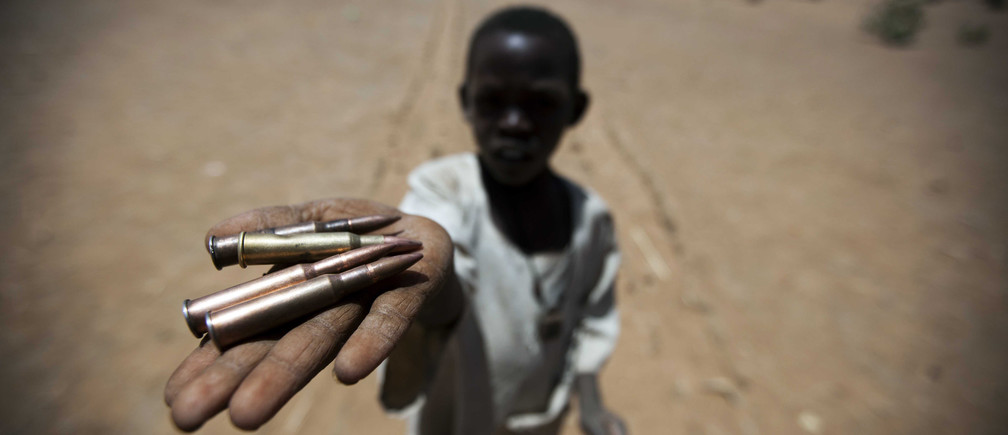
Natural resource-based conflicts and the zealous appetite to control extractive resources and benefits have pushed Countries such as Sudan, the Democratic Republic of Congo and Somalia into war and conflicts. The prospects for petroleum resources occurring largely in border lying areas threaten further efforts for regional stability and co-existence.

Incumbent presidents have largely relied on state institutions and armed forces or rigged elections to remain in power and countries such as Rwanda, Burundi, Uganda, Djibouti, DRC and Eritrea have had constitutional changes to facilitate the extension of presidential term limits while Sudan and Tanzania are pushing for similar changes.

The region is faced by an ever-looming threat of terrorism.  New in this regard is the increased radicalisation and recruitment of women and children into the terror groups. An example of this is the Mombasa police station attack by 3 women in September 2016 and hence the importance of addressing gender dimensions in efforts to counter violent extremism.

With over 1000 ethnic groupings subscribing to a multitude of faiths of which Islam and Christianity are the largest, the region is one of great diversities. More often than not these diversities have been captured by ethnic, political and religious elite to destabilise social relations and drive conflicts in the region. Ethnic tensions and at times violence have been hallmarks of election campaigns in countries such as Kenya where elections are won on the basis of ethnic bargaining rather than due democratic practices.

  • UNECA: Building Trading capacities for Africa’s Transformation: A critical review  of Aid for Trade, UNECA, Addis ababa, 2013