Regional Economic Cooperation and Diplomacy.

At national level the governance structures are weak and prone to systemic abuse by unresponsive political elite. At international level the government’s commitment to national and regional governance standards has been modest. Tanzania and a number of East African countries have signed up to a number of regional economic and governance commitments.

Tanzania is a member of the East African Community (EAC) and South African Development Community (SADC). Under the EAC framework the government has committed itself toward entering into a single customs territory, as a mechanism of increasing regional trade. Tanzania is also a member and signatory to a number of African Union protocols

Despite the entering in action of EAC Common Market Protocol in 2010, number of issues under the protocol are still not yet implemented. This is also built on the fact that the Customs Union protocol of 2005 is not yet fully fledged. Tanzania has been on constant blame by other EAC members that it is reluctant in implementing the signed commitments. 

Commitment to regional governance standards and norms such as AU’s African Governance Architecture (AGA)

The African Governance Architecture (AGA) is an AU mechanism or framework for dialogue between stakeholders that are mandated to promote good governance and bolster democracy in Africa. According to the AU so far by end of 2018 a total of 45 Countries had signed the African Charter on Democracy, Elections and Governance (ACDEG). Out of these 30 member states have ratified and deposited their legal instruments with the AU and hence effectively domesticating AGA-ACDEG implementation in their countries.  Only 8 member states have not signed and not yet ratified ACDEG. 

Tanzania is one of the 8 African states and only East African states that has not signed nor ratified and deposited the instruments in recognition of ACDEG. Yet Tanzania is high ranking member of the AU and has constantly reiterated its commitment to the AU’s visions and aspirations of a prosperous African continent by 2063.

Tanzania participated in the 14th -16th African Heads of state summits and endorsed the decision to establish ‘Pan African Architecture on Governance. The outcome of which was the African Governance Architecture. It also took part in the decisions that aligned key AU instruments such as the ACDEG and African Charter of Human and People’s Rights (ACHPR) in line with the AGA. 

Tanzania is host to the African Court of Human and People’s rights based in Arusha, a key institution in the realisation of AGA and ACDEG’s aspirations.  It is therefore imperative that Tanzania signs and fully ratifies the ACDEG. The AGA and ACDEG provides a framework for raising the governance and human rights standards in the Country and Citizens participation in building, promoting and monitoring these standards, and the broader AU vision and aspirations. The reasons for failure to sign and ratify are not given although the relevancy for the ratification for ACDEG and implementation of its standards in Tanzania is vivid.

We support, promote and advocate for compliance to regional mechanisms that promote good governance, regional cooperation and peace


  • The actual number of signatories and ratifications changes from time to time as new signatories and ratifications are made and deposited at the AU. But regular updates  one can visit: http://aga-platform.org/about

Governance, Corruption and State Capture

There is still corruption and corruptive behaviour in public service structures and as a consequence corruption is still recognised as one of the major governances and development obstacle to poverty eradication. Corruption has affected both the quality of social service delivery and business development. According to the World Bank doing business index report of 2012 Tanzania was ranked as 127th position out of 183 Countries. Corruption is ranked as a major impediment to doing business. The level of unpredictable political and economic policy regimes in the region have increased the level of risk to doing business and trade in the country and the region. Regional Political instability and uncertainties of regime change have created social anxiety, economic stagnation, political distress and conflicts.

In a nutshell key government institution like the electoral management, Judiciary and law enforcement are under ‘capture’ by acts of corruption and bribery which have seen these institutions ranked consistently as the most corrupt in the region for the past years

Fiscal Governance and Taxation : Latent deficits & Citizen participation


Tax is a block on which governments rely to finance development. Implicitly there is a social contract that exists between the citizens who pay the taxes and the government as a recipient, which spends on their behalf. Yet in reality there appears to be a gap and a none mutual accountability.

Taxes must be fair and just. There is weak citizen engagement in fiscal governance. Most citizens view fiscal governance and tax matters as complex, unfair and exploitative. They least see the relationship between taxation and development and this factor has led to low tax compliance amongst citizens. Multiple studies and surveys by Afro Barometer Survey and others reveal that citizens are willing to pay slightly more taxes if the quality of social services would be improved. Citizen apathy against taxation and affinity to evasion and avoidance is increased, with a perception that the fiscal policies are exploitative and taxes collected are not well spent.

Domestic resource mobilisation and quest for alternative development financing

Domestic resource mobilization is growing  as the best fiscal governance approach to reduce aid dependency and take full ownership of national development strategies. Overall, whilst traditional aid donors continue to be critical , foreign aid budgets have become increasingly under stress over the medium and long-term.

The search for alternative sources of development finance is  important yet constant reports show that African countries, such as Tanzania,  have been missing domestic revenue collection targets. National debts have  bludgeoned to unsustainable levels as governments seek to fill their tax holes, required to finance essential development. Tax evasion and illicit financial outflows are rampant. Reports by organizations such as the Global Financial Integrity and Tax Justice Network show massive resources lost through illicit outflows and tax dodging by multinational companies through aggressive avoidance measures such as transfer mispricing.  People’s awareness and participation in  fiscal governance is limited. Taxes are generally unfair and unjust for the poor.

The purpose of this project is to increase awareness and citizen participation in tax matters via

  • Simplified Analytical pieces on fiscal policy and Taxation
  • Strategic convenings and trainings or tax clinics
  • Local and  International advocacy for just and equitable tax policies and systems
Extractive Transparency and Accountability

Extractive Transparency and Accountability is the pillar for citizen participation, investment attraction and use of extractive resources. If the people know, risks to tax evasion, corruption and the resource curse are reduced.

The East African region is awash with vast natural resources. Over the past five years, the East African region has registered significant discoveries of Oil in the Albertine Graben in Uganda and Turkana in Kenya. The prospects of Natural gas along the coast line of Somalia are promising. Few years ago Tanzania discovered massive natural gas deposits along its coastline adding already to its large extractive resources base. By these standards, the region has a potential for enjoying a natural resource boom.
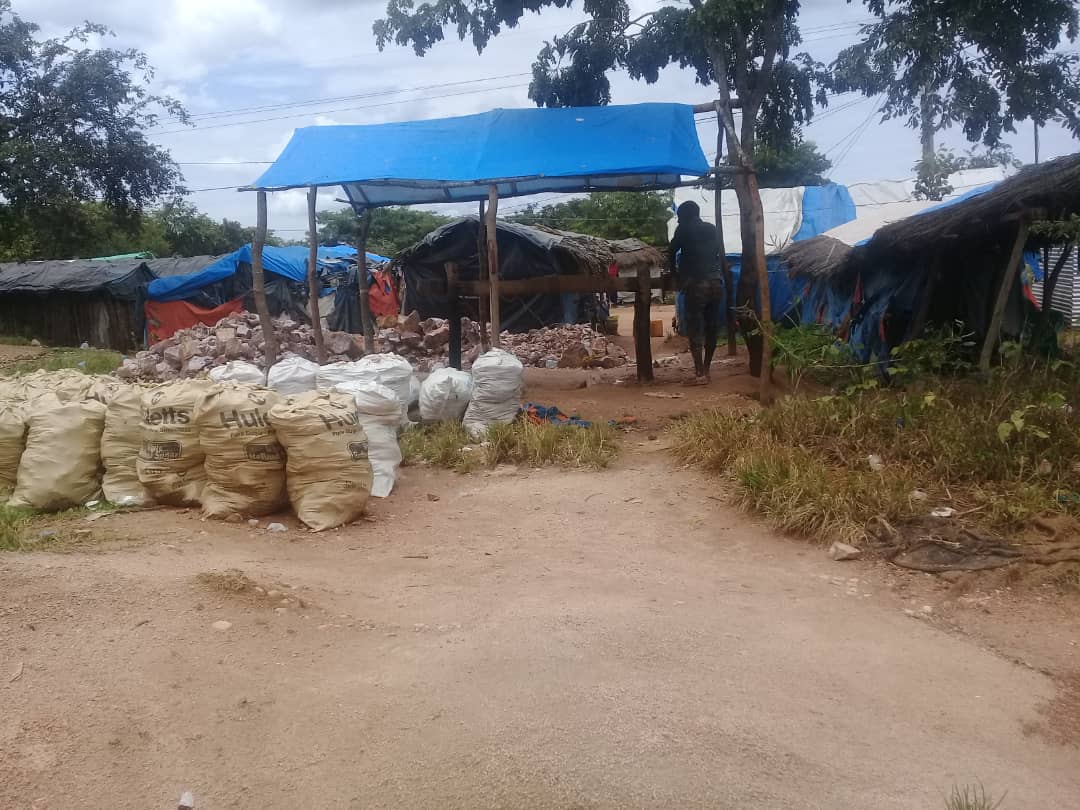
However, experiences from Tanzania have shown that weak governance and oversight deficits can thwart benefits from the sector. Reports show that for decades the Country was not able to harness the vast extractive resources for development. The government lost revenue through bad contracts with mining companies and communities did not significantly benefit from the minerals and mining operations in their areas. In DRC minerals have been a source of conflict and the environmental impact is tremendous.

Tanzania is a signatory and  member to global transparency and accountability standards such as the Extractive Industries Transparency Initiative (EITI). Tanzania has enacted  some of these principles into a national law,  the Tanzania Extractive Industries Act (TEITA) 2015. The country has established in law, a Multistakeholder body (comprising of government, civil society and companies), as platform for continuous consultation and mutual accountability. However there are deficits on some frontiers of transparency such as not publishing yet signed extractive contracts. Tanzania’s milestones on transparency partly inspired it East African neighbor  Uganda, to sign up to the initiative. The EITI provides an opportunity for East African Countries such as Tanzania, Uganda and DRC to  expand their transparency frontier  and thus expanding  citizens participation and attraction of largescale investment into their extractive sectors. However, citizens awareness and participation is still limited and governance deficits still exist.

This project  seeks to help  governments improve their transparency standards in policy and practice and citizens to be more aware and to participate in the extractive sector via;

  • Analytical pieces on extractive Transparency and Accountability
  • Local and International Advocacy on extractive governance and economic justice
  • Training and convenings on extractive sector governance

More about this work can be viewed via our latest news, reports and publications sections