Evaluating East Africa’s economic trends and outlook 2024: What should EAC governments do to reduce further hardships?

The East Africa Community is so far the largest economic block, with 7 members states with a vast territory straddling from the Indian ocean coast to the Atlantic Coast, with a staggering population of estimated 283.7 million citizens, 4.8 million square kilometers of land area and a combined Gross Domestic Product of US$ 305.3 billion[1], the EAC region is a big silent economic giant.  As of November, the UNDP estimated the EAC had 489,766,467 million people (6% of the total world population)[2], making it one of the fastest growing regional economic blocs in the world and number 1 in Africa among subregions ranked by population. Despite this potential, the region faces multiple economic and political setbacks.

In 2023, the EAC faced significant economic meltdown, with depreciating currencies, rising costs of living and political unrests, tainting the prospects for 2024. The rising cost of fuel, high costs of transportation and production, exerted high pressure on the cost of living, with inflation hoovering above 6% and reduced the region’s economic growth to around to about 3.3% in 2023. Already, the tight economic hardship has caused general anxiety across the East Africa region and social-political unrests in some countries such as Kenya.  Governments have experienced a crunch on revenue collections and significant reductions in external aid. They have resorted increasing taxation to shelter the governments against adverse effects of depreciating shilling against the dollar and heavy costs of borrowing which have surged over the past one year.

The latest World Economic Outlook report released in October predicts that the world’s economy will remain on a downward trajectory for the rest of 2023 and 2024, with the rate of growth decelerating to 2.9 percent next year, from this year’s 3.0 percent. Although the World Bank has predicted a positive outlook for East Africa, with a projected growth of 5.7%, amongst ordinary citizens, life is difficult and questions are everywhere. Where have governments gone wrong.

The purpose of this webinar is to facilitate public discussion assessing the current economic trend and government economic performance, with a view of influencing policy priorities, and practical economic choices that governments should make now to cushion its citizen against the rising cost of living and future hardships in 2024.  During this webinar our experts will paint an economic slate of the region and the extent to which socio-economic interventions such the Parish Development Model in Uganda and heavy taxation, can be a solution to the current and future economic quagmire facing the region. Most significantly, they will try to answer whether Kenya is headed to lose its economic mantra and Tanzania could emerge as new economic giant in the region

Expert Speakers

Dr Kasirye Ibrahim, Executive Director, Economic Policy Research Centre (EPRC), Makerere University, Kampala: Uganda’s experience: Are government social interventions such as PDM working to shelter the poor and vulnerable against poverty?

Expert perspectives on Uganda’s economy, the government interventions through projects such as the PDM and a quick glimpse of what 2024 could look like and what practical measures the government should take to avert the increasing economic hardships.


Mr Kwame Owino, Chief Executive Officer, Institute of Economic Affairs (IEA), Kenya: Can taxation be a solution and should we expect more taxes moving forward?

Perspectives on Kenya’s economy, the government’s economic hardship interventions and a quick glimpse of what 2024 could look like. With a depreciating shilling, dwindling FDI and choking debt are we likely to see more taxation in Kenya and this gradually snowballing across East Africa? Is there a significant risk that Kenya is or could fall from its pedestal as a major economic hub in the near future?  What practical measures should the government take to avert the increasing economic hardships across the country and the East African region.

Dr Mugisha Rweyemamu, Research Fellow, Economic Social Research Foundation, ESRF-Tanzania: Could Tanzania overtake its regional peers as the new regional economic giant?

Expert perspectives on Tanzania’s economy, the government’s economic hardship interventions and a quick glimpse of what 2024 could look like. With major strides made in attracting tourism, FDI and having a significant cache of valuable Minerals such as gold and green or critical minerals such as Nickel, Tungsten etc., could Tanzania overtake its East African peers to become a major economic hub in the near future?  What practical measures should the government take to avert the increasing economic hardships across the country and the East African region.

Hon: Zittto Kabwe, Economist and President of AcT-Wazalendo Political Party, Tanzania:  What is totally wrong-Could we expect economic-political unrest amongst the youth-What should political actors do to avert a near economic catastrophe and social uprising (Azania Spring) similar to the famous Arab Spring. Is an economic inspired Azania Spring inevitable if things don’t change?

Professional perspectives on the current economic hardships and what governments could do to avert further hardships in 2024. What are governments not getting politically or fundamentally right. In some countries such as Kenya we have seen some socio-political unrests over economic times, are we likely to see this ‘Azania economic springs’ in more countries in 2024?

Moses Kulaba, Convener, Governance and Economic Policy Centre

Can the EAC escape the current global economic meltdown, evade social-economic disruptions to remain soaring above its peers as the strongest economic subregion in Africa. What political-economic choices will make it maintain a comparative and competitive advantage against the tide


 Date: Thursday, 30th November, 2023

Time:  11AM-12:30 PM EAT

Registration and participation linkhttps://zoom.us/j/94699182519 

Meeting ID: 946 9918 2519

Passcode:  yJC673


[1] https://www.eac.int/overview-of-eac

[2] https://www.worldometers.info/world-population/eastern-africa-population/

TAXING E-COMMERCE IN A RAPID EXPANDING DIGITAL ECONOMY: Managing the delicate balance between DRM, and Employment in East Africa-How do we get right?

Taxation of e-commerce is an emerging area of challenge in tax policy and administration and yet the rapidly expanding digital economy has recorded a proliferation of technological innovations in the form of online business platforms, employing hundreds of youths and women, generating millions of revenues through innovation and e-commerce in Tanzania and East Africa generally.

Many research findings consistently suggest that a deeply integrated and competitive digital market among the EAC countries alone can boost the GDP by about $2.6 billion and create up to 4.5 million new jobs[1].  In Kenya alone, the digital economy is expected to add KSh 1.4 trillion or 9.24% of the GDP to Kenya’s economy by 2025 according to the Accenture, Africa iGDP Forecast. It is one of the fastest-growing sectors in the country with Kenya leading other African countries in terms of the digital economy’s contribution to the GDP at 7.7%, followed by Morocco and South Africa at 6.82% and 6.51% respectively[2]. The online industry contributed Ksh810 billion to Kenya’s GDP (7.7%) in 2020.

Some of the major businesses driving the online industry in Kenya are E-commerce firms such as Copia and Jumia, Fintech products like MPESA, and MShwari, HealthTech platforms like Daktari Africa, and Food-delivery startups. With an emerging army or tech talent and online trading platforms, the trend is upward in all the other East African countries.

And yet online businesses and e-commerce has been found to be a conduit for tax avoidance, evasion, and thus thwarting the government’s Domestic Resource Mobilisation (DRM) efforts.

With crunching national budgets and dwindling external aid, there is a reinvigorated push for governments to ramp up DRM efforts by expanding the tax bases through targeted new sources such as e-commerce.

Clearly, given the economic context at play, suggest that taking this trajectory as a new targeted area of taxation appears to be a delicate one that should be approached with caution.  Revenues should be collected but business and employment must be created and protected. Therefore, there is a need for a balance between the government’s imperative of maximizing DRM and promoting business and job creation for tech nerds, hundreds of digital entrepreneurs, and a bulging unemployed youth.

How can we manage this balance to be met without losing the gains achieved so far, by promoting fair taxation, DRM, and business opportunities to support innovation, business entrepreneurship, employment, and livelihoods required to meet the national development goals? What advances have been made by tax bodies, challenges so far, and concerns from digital entrepreneurs?

Our distinguished speakers at this webinar will dissect this subject with the purpose of creating a space for sensitization and public dialogue with key stakeholders such as Tax authorities and practitioners, private sector and digital entrepreneurs, Financial institutions, Civil Society Organizations, Africa’s economic diplomats, Government Officials and Agencies, development partners, and other interest groups.

They will help us understand the challenges facing this new area of taxation, including tax evasion, avoidance by transboundary online multinationals, and how the governments have integrated fiscal regimes in this year’s National budgets but significantly how do we get it right moving forward?

Our distinguished speakers will be:

1. Ms. Edna Gitachu,  Associate Director and Tax Policy Lead, PWC, Kenya: Budgets of Tough Times; An expert overview of digital taxation in Kenya’s National Budget 2023/24 and practical recommendations of fiscal measures that East African governments could take.


2. Ms. Leah Karunde, Tax Expert and Consultant, Tanzania:  Taxing the Invisible Red Hering: Practical Experiences in tackling online businesses and works of art such as television content, online content, marketing, sports betting, transportation, music, etc.


3. Mr. Francis Kairu, Policy Advisor, Tax Justice Network Africa; The Buffalo in the tent:  Tackling Tax avoidance, evasion, and illicit financial flows by Online Multinationals through e-commerce


4. Moses Kulaba, Convenor

Date and Time:  Wednesday, July 19, 2023 12:00 PM Nairobi , 11 AM CET and 9AM West Africa Time

Meeting ID: 99027631281   Personal Meeting ID: 321 806 9582

Pass Code:

Registration Link: https://zoom.us/j/99027631281


[1] https://www.trademarkafrica.com/news/east-africas-need-for-a-unified-digital-economy/

[2] https://kenyanwallstreet.com/kenya-to-earn-ksh-1-4-trillion-from-digital-economy-by-2025/


Financing of the Green Economy and prospects for Africa-Can Green Banks offer a viable alternative?

Achieving Green Economies and a just energy transition for Africa cannot be achieved without financing. It is said there is sufficient liquidity and capital to finance climate change and green economic revolution in Africa. Unfortunately, much is not reaching the African continent. In East Africa, access to financing of clean renewable energy such as solar is limited and expensive for many rural communities and poor households. There is potential for solar energy but the existing government policy, legal and financing have gaps limiting cheap financing and solar uptake for rural communities.

The US experience show successful green and clean energy financing models through Green Banks which can be adopted and replicated in East Africa.  Large and small financial institutions on the African continent have leveraged instruments and facilities towards financing the green economy, but these are largely unknown. Governments such as Tanzania are considering carbon trading mechanisms while others look towards imposing carbon taxes to raise the necessary financing for the next green economy. What are the viable options?

The problem

African countries still face significant challenges in financing their climate transition. While investment needs resulting from NDCs are estimated at $2.8 trillion by 2030, funds invested on the continent still represent a limited share of global green finance flows, and the share covered by the private sector remains limited[1] Governments, local financial institutions and communities find it difficult to mobilise or access financing. Large private sector players are reluctant to invest due to the high cost of capital, small scale of projects and inhibiting policy terrains that make it difficult to attract capital and financing into the green economies. Much of the available financing is not yet reaching the communities and thus scantly creating lasting change.

Viable options?

Green banks have been so far lauded as one of the most innovative policy developments that can be used to support and deployment of clean energy[2]. Green banks are financial institutions established primarily to use innovative financing to accelerate the transition to clean energy and fight climate change[3]. They mix commercial, public, and philanthropic approach to capital making it cheaper to finance new clean energy projects that otherwise couldn’t be built. They are a good vehicle for leveraging finance and directing investment to areas which are needed to scale up the green economy.  They are good tools for driving or achieving public policy with a social enterprise angle[4].

An assessment by the African Development Bank and the Climate Investment Funds revealed the potential of Green Banks in six African countries, namely Benin, Ghana, Mozambique, Tunisia, Uganda, and Zambia.

“The assessment revealed that green banks have significant potential for attracting new sources of catalytic funds when supporting low-carbon, climate-resilient development through blending capital and mobilising local private investment for green investments in Africa,” the AfDB reported.

Multilateral development banks and international financial institutions had a crucial role in enabling local financial institutions to develop a green pipeline of projects and ease their access to resources. It is for this reason that the AfDB has established the Africa Green Bank Initiative (ABI).

The AfDB’s Green Bank Initiative (AGBI) is described as a powerful tool for reducing financing costs and mobilising private sector investments in climate action in Africa. The African Green Bank Initiative will be backed up next year by a $1.5 billion trust fund due to close in 2025. The initiative will bolster the capacity of local financial institutions to build a robust pipeline of bankable green projects, while de-risking investments and entrenching long-term investor confidence toward climate-resilient and low-carbon projects in Africa.  “It will do so through investing in sectors such as energy efficiency and renewable energy, climate-smart agriculture, resilient infrastructure, and nature-based solutions, AfDB states.

According to Akinwumi Adesina, the AfDB President, the establishment of a green finance ecosystem could generate $3 trillion in climate finance opportunities on the continent, while over the period 2020-2030, the financing gap to address climate change is estimated at between $100 billion and $130 billion per year.

Moreover, there are other financing options that are or can be pursued. These include green bonds, green loans, and carbon trading mechanisms.

Coincidentally, all these financing mechanisms have upsides and downsides, which  upon evaluation climate financing justice advocates such as  the CSO network, Pan African Climate Justice Association (PACJA) and government officials like Ms Isatou  Camara of the Gambia are now calling out financial institutions  for a total re-engineering and redesign  of climate financing to ensure that more is structured in the form of grants than loans and that at least 70% of this funding reaches the communities. The loans are expensive, Africa is over indebted and yet investment in renewable energy is an expensive affair for African governments to pursue alone[5]

At national level access to green finance should be relatively cheap, driven by a combination of less profit maximisation goals and more social enterprise imperatives and back by enabling legislative and regulatory framework.

Purpose of the webinar

This webinar is the second in a series of the different webinars that GEPC plans to conduct this year on the different elements on economic governance and climate economics, with anticipation that we can contribute towards expanding knowledge, public discussion, and engagement in these spaces.

But more significantly creating opportunities for business economic opportunity in country, including space for youth and women led young businesses to benefit from the emerging context.

Our distinguished speakers will dissect this subject and help us understand Financing of Green Economy in the context of climate change and transition to clean energy: Prospects for Green banks and other financing mechanisms in East Africa with a view of

Objectives

  1. Increase awareness and knowledge about the current Climate Economics and Financing the Green Economy in Africa
  2. Provide an opportunity for stakeholders to interrogate financing structures, national policy terrains, initiative potential opportunities and inhibitors to success.
  3. Influence key stakeholders such finance institutions and potentially state parties to hasten reforms for success.
  4. Generate a potential opportunity for non-state actors, communities, and small entrepreneurs to benefit from existing financing plans.

Our distinguished speakers will be:

1. Ms Isatou F. Camara, Ministry of Finance and Economic Affairs, The Gambia, Least Developed Countries Group Climate Finance coordinator:  Restructuring of the global financing architecture for green economies-what financial institutions must do.

2. Ms Audrey Cynthia Yamadjako, Africa Green Banks Cordinator, African Development Bank (AfDB)

3.Ms Grace Mdemu, Capital Markets FSD Africa, former Business Development Officer at Africa Guarantee Fund (AGF): Leveraging of capital and opportunities to finance Green Economies in East Africa

4.    Dr Elifuraha Laltaika, Senior Lecturer of Natural Resources Law, Faculty of Law, Tumaini University Makumira, Tanzania:   Leveraging financing to poor and indigenous communities in Tanzania

5. Ms Cynthia Opakas,  Senior Legal Counsel, Green Max Capital , Kenya: Practical experiences on financing the green economy in Kenya and global best practices

6. Moses Kulaba, Convenor

Date and Time:  Wednesday, June 14, 2023 12:00 PM Nairobi , 11 AM CET and 9AM ACCRA Time

Pass Code:059752

Registration Link:  https://zoom.us/j/94532314396 

[1] https://www.afdb.org/en/news-and-events/african-development-bank-launches-model-deploying-green-financing-across-continent-56903

[2] Richard Kauffman, Yale School of Management, Financing Clean Energy Technology

[3] http://coalitionforgreencapital.com/wp-content/uploads/2019/07/GreenBanksintheUS-2018AnnualIndustryReport.pdf

[4]https://gepc.or.tz/make-it-happen-how-green-banks-acceleration-can-light-up-rural-hamlets-in-uganda/

[5] Her Excellence Dr Samia Suluhu Hassan, President of United Republic of Tanzania during her address to African leaders at a side event on the Southern Africa Power Pool (SAPP) organised during the CoP27 in Egypt

AfCFTA: Dissecting the world’s largest Free Trade Area: Challenges and Opportunities for East Africa. Is AfCFTA a window of opportunity or a fallacy?

The AfCFTA entered into force on May 30, 2019. Despite the speed at which this new Africa continental trading block is unloading, there is very limited knowledge amongst ordinary citizens, particularly youth, women, and small business.  There is a fear that AfCFTA may be built on a weak ground, set itself for an uphill task and potential failure

The Africa Continental Free Trade Area (AfCFTA) is so far the world’s largest Free Trade Area bringing together the 55 countries of the African Union (AU) and eight (8) Regional Economic Communities (RECs). The overall mandate of the AfCFTA is to create a single continental market with a population of about 1.3 billion people and a combined GDP of approximately US$ 3.4 trillion. The AfCFTA is one of the flagship projects of Agenda 2063: The Africa We Want, the African Union’s long-term development strategy for transforming the continent into a global powerhouse[1].

As part of its mandate, the AfCFTA is to eliminate trade barriers and boost intra-Africa trade. It is to advance trade in value-added production across all service sectors of the African Economy. The AfCFTA is expected to contribute to establishing regional value chains in Africa, enabling investment and job creation. The practical implementation of the AfCFTA has the potential to foster industrialisation, job creation, and investment, thus enhancing the competitiveness of Africa in the medium to long term.

The AfCFTA entered into force on May 30, 2019, after 24 Member States deposited their Instruments of Ratification following a series of continuous continental engagements spanning since 2012. By end of February 2023, 54 member states had signed up and 46 already deposited their ratification instruments, paving way for effective implementation of AfCFTA.

The problem

Despite the speed at which this new Africa continental trading block is unloading, there is very limited knowledge amongst ordinary citizens, particularly youth, women, and small business.  There is a fear that AfCFTA may be built on a weak ground, set itself for an uphill task and potential failure.   AfCFTA aims to create a supra regional economic block in an environment where previous efforts to trade and economic  integration  under frameworks such as the Economic Cooperation of West Africa States (ECOWAS), Preferential Trade Area and Common Market for Eastern and Southern Africa (PTA- COMESA), Southern Africa Development Cooperation (SADC) and East Africa Community (EAC)  have struggled to survive and fully benefit member states , particularly in expanding opportunities for small businesses, jobs and free movement of labour. Trade barriers still exits and overlapping regional configurations, with multiple membership of states to more than one block have exacerbated problems in implementation and held back member states and citizens from enjoying the benefits of regional economic integration.

From an academic perspective, there is a continuous debate on the role of regional integration and commercial diplomacy as instruments of economic diplomacy on trade export flows among African states. A study by the European University in 2016 show that bilateral diplomatic exchange is a relatively more significant determinant of bilateral exports among African states compared to regional integration. The study found a nuanced interaction between these two instruments of economic diplomacy: the trade-stimulating effect of diplomatic exchange was less pronounced among African countries that shared membership of the same regional block. Generally, this could mean that there exists a trade-off between regional integration and commercial diplomacy in facilitating exports or a lack of complementarity between these two instruments of economic diplomacy[2].

AfCFTA is therefore viewed in some analytical circles as potentially counterproductive, as may potentially open the continent to stiff external competition.  Further, cynics view AfCFTA as a potentially well-orchestrated tactical move suitable for developed economies, to open up Africa as a single market. With AfCFTA in place, its alleged, it will be cheap for large RECs such as the European Union (EU) to easily access Africa’s markets with minimal hinderance, as it may now be easy for large and well-established trading blocs such as the EU to negotiate preferential trade deals with one major African block and not with independent states. This had proven problematic in the past negotiations for trade deals such as the controversial Economic Partnership Agreements (EPAs).

Window of opportunity?

None the less, the AfCFTA is here, providing potentially a land shade moment for Africa to reclaim itself, unlock its trade potential and to take its well-deserved position in the community of nations as an economic giant.

The whole existence of the AfCFTA is to create a single continental market for the free movement of goods, services and investments. The AfCFTA Agreement covers goods and services, intellectual property rights, investments, digital trade and Women and Youth in Trade among other areas. The Secretariat, therefore, works with State Parties to negotiate trade rules and frameworks for eliminating trade barriers while putting in place a Dispute Settlement Mechanism, thereby levelling the ground for increased intra-Africa trade. Could this be a reclaimed window of opportunity for Africa?.

Purpose of the webinar

The purpose of this webinar is to dissect AfCFTA create a space for sensitisation and public dialogue with key stakeholders such as Civil Society Organizations, Africa’s economic diplomats, the Private Sector, Government Officials and Agencies, Partners, and other interest groups; in a bid to create awareness about the AfCFTA Agreement and the potential opportunities it offers, thus, securing their active support in the implementation of the Agreement.

This webinar is a first in a series of the different webinars that GEPC plans to conduct on the different elements of AfCFTA, with anticipation that we can contribute towards expanding knowledge and engagement with AfCFTA in the region and propelling its effective implementation.  But more significantly creating opportunities for business economic opportunity in country, including space for youth and women led young businesses to benefit from this new continental arrangement.

This webinar will be held ahead of marking the 4th Anniversary since the AfCTA came into force on 30th May 2023. The webinar will therefore be a major point for reflection on the aspirations and progress made and in generating views and which can potentially influence its future direction.

Our distinguished panelist speakers

  1. Ms Treasure Maphanga, Chief Operating Officer (COO), Africa E-Trade Group and Former AU Director Trade and Industry
  2. Mr Deus  M. Kibamba, Lecture Tanzania Centre for Foreign Relations
  3. Mr Elibarik Shammy, Programs Manager, Trade Mark  Africa
  4. Ms Jane Nalunga, Executive Director, Southern and Eastern Africa Trade Information and Negotiations Institute (SEATINI)
  5. Mr Robert Ssuna,  Tax and Trade Expert and Consultant
  6. Mr Moses Kulaba, Tax Law expert and Economic Diplomat (Convenor)

Tentative Dates: Wednesday, 10th May 2023

Time: 12-13:30 Hrs-EAT/ 11AM CET and 9:00 am Accra Time

To participate please register via: https://zoom.us/meeting/register/tJIsc-ispjwiGdVn1y4w9Jks-h-zs5i9QEzV

Meeting ID: 96141487831. Passcode: 391843

[1] https://au-afcfta.org/

[2] Afesorgbor Sylvanus Kwaku (2016) Economic Diplomacy in Africa: The Impact of Regional Integration versus Bilateral Diplomacy on Bilateral Trade, European University Institute, EUI Working Paper MWP 2016/18

The Future is Green: How Can Tanzania Harness its Renewable Energy-Opportunities and Gaps

With high winds potential that cover more than 10% of its land and solar energy levels ranging from 2800 to 3500 h of sunshine per year and a global horizontal radiation of 4–7 kWh/m2/day, Tanzania is just a step away from becoming a reckonable giant of renewable energy and leap jumping into a clean future

By Moses Kulaba, Governance Analysis Centre

Tanzania, like other developing countries, is striving to adopt different ways of ensuring affordable and accessible energy supply to its socioeconomic and political sectors to achieve renewable energy development. To secure affordable and accessible energy in the country, renewable energy is termed as an alternative energy source because of it is environmentally friendly. If renewable energy is produced and utilized in a modern and sustainable manner, it will help to eliminate energy problems in Tanzania

According to reports, Tanzania has a lot of renewable energy sources such as biomass, solar, hydropower, geothermal, biogas, wind, tidal, and waves. These sources are important for decentralized renewable energy technologies, which nurture the isolated nature of the settlements and are environmentally friendly. Despite their necessity, renewable energy sources are given low priority by both government and Households[1].

Tanzania’s power sector is dominated by state-owned TANESCO (Tanzania Electricity Supply Company Limited). TANESCO owns most of the country’s transmission and distribution network, and more than half of its generating capacity. Tanzania’s electricity generation comes mostly from natural gas (48%), followed by hydro (31%), petrol (18%) with solar (1%), and biofuels (1%). The traditional dependence on hydropower combined with the droughts that are affecting the country, often result in power supply shortages[2].

The World Economic Forum (WEF) reported the total sum of global investment into renewable energy has increased. This was supported by a 28% annual increase in investment from the United States (U.S), in 2019 totalling $54.6 billion[3]. Renewables cannot totally replace fossils such as oil, but increased investment shows increased potential contribution in the energy mix.  The International Energy Agency (IEA) estimates annual clean energy investments will more than triple by 2030.

With its vast resources and location, there are opportunities for investment in its abundant solar and wind potentials. Perhaps, it is argued, the country can leverage its strategic position to scale up investment to generate more and at the same time position as a major supplier and user of renewable energy sources.

However, there are gaps such as financing, infrastructure, storage, and government facilitation which potentially limit investment, scale up, use and benefiting from this potential. The cost for initial investment is high and the returns on investment could be slow. Exploration efforts have largely emphasized hydropower projects, and other renewable energy such as solar, thermal, wind, biomass, and biogas are under-utilized due to different socioeconomic and political reasons

Further, some of African political leaders, such as expressed by Uganda’s President Yoweri Museveni, have argued that renewable energy is not sustainable to meet the future global population energy demands. It cannot even meet or drive Africa’s development agenda.  Renewable energies such as solar and wind are largely dependent on whether and climatic factors. A solar farm requires huge tracts of land, and this can or may potentially spark off a new wave of land grabbing by solar energy investors and land conflict across the continent. Africa could also be a bystander in renewable energy technology. For Africa to benefit, investment in technologies and production of equipment, such as solar panels and wind turbines must be on the continent.

But CSOs such as power shift Africa and Anti Coal Coalition[4] argue that investment in renewable energy is economically viable, will create jobs and increase access to energy to the poor and rural areas where access to the national could be difficult. Significantly, it will help Tanzania achieve its domestic transition and unlocking the country from a fossil future.

The government, along with other renewable energy stakeholders, should complement existing policies and strategies to address issues related to renewable energy development to ensure timely and sustainable utilization of the available resources. Also, there is the need to provide a sound business and investment environment to local and foreign people who can provide capital towards renewable energy technologies and development. There should be more training and awareness made available to the public about how to invest and use renewable energy. Tanzania can and must benefit from the transition by upscaling its potential and starting to roll out implementation. Stalled projects should be implemented.

Tanzania’s potential in Wind and Solar Energy

Wind energy

Tanzania has areas of high wind potential that cover more than 10% of its land[5]. This is equivalent in size to Malawi and has greater potential than the US state of California, as reported by the World Bank report. There are areas with annual average wind speeds of 5–8 m/s[6] . These exist along a coastline of about 800 km with predominant surface winds, moving from south-east to northeast. Based on the current research works, Tanzania has a lot of wind energy resources in the areas of Great Lakes, the plains, and the highland plateau regions of the Rift Valley. Wind energy evaluation indicates that areas such as Makambako (Njombe) and Kititimo (Singida) have sufficient wind speed for grid-scale electricity generation, with average of wind speeds 8.9 m/s and 9.9 m/s at the height of 30 m, respectively[7]. Small-scale off-grid wind turbines along the coastline and in the islands also possess great potential in Tanzania.

By 2017, at least four companies had expressed interest in investing in wind energy in Tanzania to build wind plants with a capacity of more than 50 MW. These companies include Geo-Wind Tanzania Ltd in Dar es Salaam, Tanzania; Wind East Africa in Singida, Tanzania; and Sino Tan Renewable Energy Ltd. and Wind Energy Tanzania Ltd. in Makambako, Tanzania. Wind farms with capacities of 100 MW in Singida would be constructed under the corporation of the Six Telecoms Company in Singida, Tanzania; International Finance Corporation in Washington DC, The United States of America; and Aldwych International in London, the United Kingdom. The project would cost US$286 million[8]. Compared to other renewable energy resources that attract investment, most of the people have been trying without success to produce electricity from the wind energy. Thus, only the government and private companies are the ones who are involved in power generation assessments from wind energy resources[9] [66]

Solar Energy

In Tanzania, solar energy is used as a source of power by 24.7% of the households with access to electricity. Potential solar energy resources are found in the central parts of the country[10] [1]. There are high solar energy levels ranging from 2800 to 3500 h of sunshine per year and a global horizontal radiation of 4–7 kWh/m2/day [1,70]. According to the World Bank, Tanzania has a solar energy potential greater than that of Spain and wind energy potential greater than that of the US State of California. With such great potential for solar energy resources, Tanzania is naturally appropriate for producing solar energy as a feasible alternative source for modern energy supply and rural electrification.

The solar energy market in Tanzania has drastically grown and increased over the last few years. Currently, the potential solar energy resources in Tanzania are used in different parts such as solar thermal for heating and drying and photovoltaic for lighting, water pumps, refrigeration purposes, and telecommunication. Solar energy is used mostly in rural areas with about 64.8% compared to urban areas with only 3.4%. The regions of Lindi, Njombe, Mtwara, Katavi, and Ruvuma lead in the use of solar power electricity in Tanzania[11]. Despite the increasing market for solar energy applications, there are fewer signs that the government is expecting to include solar PV in the national electricity mix in any substantial way in the future

[1] Obadia Kyetuza Bishoge: The Potential Renewable Energy for Sustainable

Development in Tanzania: A Review, 2018 accessed at : https://www.mdpi.com/2571-8797/1/1/6/pdf#:~:text=Tanzania%20has%20a%20lot%20of,are%20environmental%20friendly%20%5B1%5D.

[2] https://www.trade.gov/energy-resource-guide-tanzania-renewable-energy

[3] https://www.weforum.org/agenda/2020/06/global-clean-energy-investment-research/

[4] https://www.theguardian.com/world/2022/aug/01/african-nations-set-to-make-the-case-for-big-rise-in-fossil-fuel-output#:~:text=African%20nations%20expected%20to%20make%20case%20for%20big%20rise%20in%20fossil%20fuel%20output,-Exclusive%3A%20leaders%20expected&text=Leaders%20of%20African%20countries%20are,documents%20seen%20by%20the%20Guardian.

[5] Tanzania Invest. Tanzania Has High Potential For Renewable Energy Projects, US Consulting Firm Indicates. TanzaniaInvest. 2015. Available online: https://www.tanzaniainvest.com/energy/tanzaniahas-high-potential-for-renewable-energy-re-projects (accessed on 15 April 2018).

[6] Kasasi, A.; Kainkwa, R. Assessment of wind energy potential for electricity generation in Setchet, Hanang, Tanzania. Tanz. J. Sci. 2002, 28, 1–7.

[7] Energy Charter Secretariat. Tanzanian Energy Sector under the Universal Principles of the Energy Charter. 2015. Available online: https://energycharter.org/fileadmin/DocumentsMedia/CONEXO/20150827- Tanzania_Pre-Assessment_Report.pdf (accessed on 8 May 2018)

[8] The Minister of Energy. The Speech of the Ministry of Energy and Minerals on the Estimates of the Revenue and Expenditure for Financial Year 2018/2019. 2018. Available online: https://www.nishati.go.tz/hotubaya-bajeti-ya-wizara-ya-nishati-kwa-mwaka-2018-19/ (accessed on 15 January 2018)

[9] The Economist. A World Turned Upside Down—Renewable Energy. 2017. Available online: https://www. economist.com/briefing/2017/02/25/a-world-turned-upside-down (accessed on 4 May 2018).

[10] Sarakikya, H. Renewable energy policies and practice in Tanzania: Their contribution to Tanzania economy and poverty alleviation. Int. J. Energy Power Eng. 2015, 4, 333. [CrossRef]

[11] https://www.thecitizen.co.tz/News/33pc-of-Tanzanians-have-access-to-electricity–report/1840340-3900298-9elccaz/index.html

Energy transition risks. Can Tanzania’s Gas and Coal remain stranded assets?


Tanzania has vast deposits of natural gas and coal. The looming energy transition will potentially have significant economic impacts on fossil rich countries and potential new producers such as Tanzania.

By Moses Kulaba, Governance Analysis Centre

The urge to curb Climate Change is here, and energy transition to cleaner energy is coming. These will affect countries differently. Fossil rich countries stand to lose most as countries transit from fossil fuels to clean energy. With the Russia-Ukraine war, current oil producers may enjoy a windfall benefit in the short term, but long-term demand cannot be guaranteed.  Fossils such as new oil and coal could remain stranded, as investments cut back. Yet, the energy transition also provides a potential opportunity for countries with viable deposits and potential suppliers of natural gas, if gas will be considered a clean source of energy, relevant for driving countries energy mix in the midterm and longer term.

With vast deposits of Natural Gas, so far discovered along its shores, Tanzania could benefit from the energy transition. At about 57 trillion cubic feet (tcf) Tanzania’s deposits are massive and considered of high quality, with low carbon.  However, this will be dependent on whether the global energy trends and discourse on energy transition can generally reach a consensus that gas is a clean source of energy, investment can be attracted, infrastructure can be developed and both domestic and international markets can be assured. Determining the potential for use of natural gas in achieving the country’s energy mix targets and securing its energy security will be key. Defeating international competition from established players such as Qatar and Algeria and new potential large producers such as Mozambique will equally be essential. If the global climate change movement reaches consensus and declares gas as a fossil fuel and polluting source, this will render Tanzania’s gas reserves to remain stranded.

The International Oil Companies (IOCs) interested in Tanzania’s gas are still optimistic that the project will take off. Although the over the past year’s negotiations were slow, the IOCs have not left, and this gives some hope that the Country could somehow navigate around the sensitive climate agenda and deliver its gas before 2030. The risks are there, and the negotiations for the development of the Liquefied Natural Gas (LNG) project in Mtwara must move faster before the gas is locked underground.

Tanzania’s coal as a stranded asset?’

Tanzania has vast deposits of coal. Tanzania’s coal is considered one of the best grades in the world. With the war raging in Ukraine over the past months, Tanzania has experienced a record boom in its exports to Europe since March 2022.

Globally, there has been an upsurge in the demand and prices for thermal coal reached above $400 per tonne up from $176 per tonne last year and around $75 in 2020. Europe is willing to pay more than twice the price for coal last year. This therefore gives Tanzania the opportunity to exploit its coal and benefit in the short-term demand, with or without totally losing out before a coal carbon future.

According to Mr Rizwan Ahmed, the managing director of Tanzania based coal miner Bluesky Minings and Jan Dieleman, President of Cargill Ocean transportation division, as European countries look everywhere, including far places for thermal coal. They are willing to pay twice the price and the Tanzanian suppliers plan to ramp up its production and double its exportation during this window.

According to the Mining commission and reported by Reuters and the Citizen Newsapers, Tanzania expects to double its coal exports this year to around 696,773 tonnes while production is expected to increase by 50% to about 1,364,707 tonnes.  Tanzania-based miner Ruvuma Coal had so far, exported at least 400,000 tonnes of coal via a trader to countries including the Netherlands, France, and India since November 2021, as per trade data reviewed by Reuters. Since November 2021 when Mtwara launched its first ever coal shipment, up to 13 vessels of coal had been loaded up by September 2022.

Tanzania has hinged its development pathway to an industrialised nation on harnessing its coal and gas potential. The two consecutive Five Year National Development Plans (2015-2020 and 2021-2026) identified the Natural Gas and Coal projects as strategic projects to deliver the country onto its development goals and to a Middle-Income Country. The project revenues and increasing access and supply of energy through to gas to electricity.

The government is considering building a railway that would link the coal-producing Ruvuma region to Mtwara, according to the acting executive secretary of the Mining Commission, Yahya Semamba.

Mitigating climate change concerns and the steadily moving trajectory towards energy transition away from fossil-based energy sources however offers a dilemma whether the government can achieve these objectives.

Tanzania’s development dilemma in the context of energy transition

In the wake of the looming energy transition to clean energy, the rekindled interest in coal because of the Russia-Ukraine war may not be guaranteed in the longterm. The war has accelerated interests in Africa’s thermal coal and gas but at the same time it may accelerate the energy transition in Europe as governments look for other cleaner alternatives including heavily investing in renewables to secure their cleaner future.

The government therefore needs to balance its excitement over bumper coal exports and use the extra revenues from the booming coal exports to invest in a cleaner energy system which will guarantee its country a place a clean energy future.

Securing financial investment in coal mining, and the market demand for coal, will be challenging in the future, as most (financial) institutions are now advocating for clean energy and sustainable finance. Indeed, according to the International Energy Agency (IEA) petroleum companies are the current leading investors in research and development for clean energy.  They don’t want to be locked out of the future and are spending their revenues carefully and locking into future energy markets with diligence.

Therefore, if the government of Tanzania still wants to benefit from its coal resources, it will need to take swift action to allow its extraction. Or, if it wants to participate in the energy transition, it will be compelled to leave its coal as a fossil fuel stranded in the ground. A tight policy choice that government may find difficult to partake. A divesture in investment from coal by large investors could cause potential disruptions in investment flows to Tanzania as a new producer, disrupt development projections.

Moreover, Tanzania is a signatory to international climate change obligations such as the UNFCC (1996) and Paris Agreement on climate change (2018), whose it must oblige.  According to the Nationally Determined Contribution (NDC) Tanzania has committed to reduce green gas emissions economy wide between 30%-35% relative to the business As Usual (BAU) Scenario by 2030[1]. Tanzania has committed to promoting climate resilient energy systems and exploring options for energy diversification. By doing so, Tanzania must balance its development imperative and climate change obligations. These will require political will, resources, and preparation. The government will also need to harmonise its NDC targets with the targets of its National Energy Systems Master plan which seek to increase the off take of gas to generate power into the national grid as part of the National energy mix.

Further, Tanzania is facing several challenges related to weak institutional, financial; poor access to appropriate technologies; weak climate knowledge management, inadequate participation of key stakeholders, and low public awareness which have significantly affected effective implementation of various strategies, programs, and plans[2].  The opposing voice against gas and coal is getting louder and this may have an impetus on whether these g projects move on. Government will have to address these moving forward

The energy transition debate therefore offers a potential dilemma for Tanzania. As alluded above, Tanzania is a potential supplier of critical minerals needed for the clean energy transition at the global level.  But also, a significant new producer of natural gas and fossils such as coal.


[1] URT: Nationally Determined Contribution, pg

[2] URT: Nationally Determined Contribution, pg3

Tanzania’s removal of penalties on transfer pricing: What did government seek to achieve?
Tanzania Finance Hon Mwigulu Nchemba

In this year’s (2021/22) budget speech Tanzania’s Minister for Finance, Mr Mwigulu Nchemba, made a surprising announcement that government would/had scrapped the 100% penalty for transfer pricing. The announcement was surprising as transfer pricing or mispricing in international transactions and currently a point of discussion globally as one of the leading enablers of illicit financial out flows and capital flight from developing and extractive rich countries.  From a Tax justice perspective, the government’s decision was received as a slight slip in the gains scored over the past 10 years.

According to Global Financial Integrity (GFI) and the Mbeki High-Level Panel Report on IFFs latest reports, shows that IFF’s from the African continent have been increasing with losses estimated between USD50 Million and USD 80 Million over the past years. Corruption and the extractive sector has constantly provided a major conduit for tax avoidance and illicit resource outflow from Africa

Transfer pricing is an accounting practice that represents the price that one branch, subsidiary or division in a company charges another branch, subsidiary or division for goods and services provided. Transfer pricing allows for the establishment of prices for the goods and services exchanged between a subsidiary, an affiliate or commonly controlled companies that are part of the same larger enterprise.

A transfer price is based on market prices in charging another division, subsidiary, or holding company for services rendered. Transfer pricing can lead to tax savings for corporations.  However, companies have used inter-company transfer pricing to reduce the tax burden of the parent company. Companies charge a higher price to divisions in high-tax countries (reducing profit) while charging a lower price (increasing profits) for divisions in low-tax countries.  This is what is also often referred to as transfer mispricing which is problematic for tax collection purposes. We have discussed this concept in detail via another publication via: https://gepc.or.tz/how-to-curb-transfer-pricing-tax-dodging-and-illicit-financial-flows-in-extractive-sector/

Why were heavy penalties imposed in Tanzania’s statutes?

Heavy penalties were imposed for transfer pricing  in Tanzania’s tax statutes because many companies dodged taxes through complex structures and subsidiaries in foreign jurisdictions which made it difficult or impossible for government to track transactions for tax purposes.

According to Financial Secrecy Index (2018) reported that Tanzania lost billions of shillings through potential transfer arrangements between mining companies.

The government was not explicit why it had taken this dramatic decision and therefore left experts and civil society actors bewildered and speculating. The reasons given were pointing towards improving Tanzania’s investment climate. The investment motive was more than the tax revenue imperative.

The potential hefty penalty for transfer mispricing was an inhibiting factor for attracting foreign investments as companies feared or found it difficult to structure their businesses with an international network of subsidiaries and branches anchored to Tanzania making sourcing for foreign financing and sourcing or procurement difficult.

The difficulties in determining market price or an arms price in transactions between related parties and establishing without any iota of doubt whether a given transaction was a mispricing arrangement and illicit in the face of Tanzania’s statute may have been another factor.

The Minister made another drastic announcement.  Effective 2021/22 the Minister responsible for finance was empowered to grant tax exemptions on specific projects without full cabinet approval.

The Minister proposes to restore the power of the Minister to grant income tax exemption on projects funded by the government on specific projects, grants and concessional loans if there is an agreement between the donor or lender with the government providing for such exemption. The measure would streamline and make it efficient for such exemptions to be provided as it has been a pain sticking point for many projects.

The government was attempting to address bureaucracy in approving exemptions and waivers which was a major stumbling blocks to investment and vitality to the success of some strategic projects. This was certainly a welcomed change for players in the construction and large-scale investment projects. At the time of presenting the budget some big and strategic projects were in offing. These included the OreCorp Nyazanga Gold Mine project in Mwanza, Kabanga Nickel project, the ongoing Standard Gauge Railway project and the East African Oil Company project (EACOP). The government announced a specific exemption of VAT on imported and local purchases of goods and services for East African Crude Oil Pipeline (EACOP). The government aimed to ensure the costs of EACOP are minimised.

However, by doing this, the government is walking a very tight rope and contentious terrain with a significant risk of returning to bedeviled fiscal policy regime era which dogged its tax revenue collection efforts in the early 2000s.  Hon Jerry Slaa, Member for Parliament for Ukonga Constituency in Dar es Salaam posted a passionate that perhaps the Minister may have been deceived or even this dangerous paragraph may have been smuggled into the Minister’s Speech. He passionately appealed to the Minister does not sign off this years financial appropriation bill which this provision. It is a dangerous route to take with potential risks.

In our opinion, for these latest decisions to be effective government will have to

  1. Strengthen its monitoring and surveillance capacity to ensure the international companies do not structure their operations and tax arrangements in a manner that facilitates tax avoidance and evasion.
  2. Strengthen its (TRA’s) International Tax department to detect in advance and reverse any transactions of a potential transfer pricing arrangement before they happen.
  3. Improving data collection capabilities to establish the true arm’s length price for potentially contentious transactions, such e-commerce, services, and intellectual property.
  1. Increase transparency around exemption by perhaps requesting the Minister to publish the list of all exempted projects and values within a short period of 30-90 days after approval, clearly stating the purpose and rationalisation for the exemption.
  2. Retain some mechanism for punishment for noncompliance to the commensurate level deterrent enough to the induce compliance.

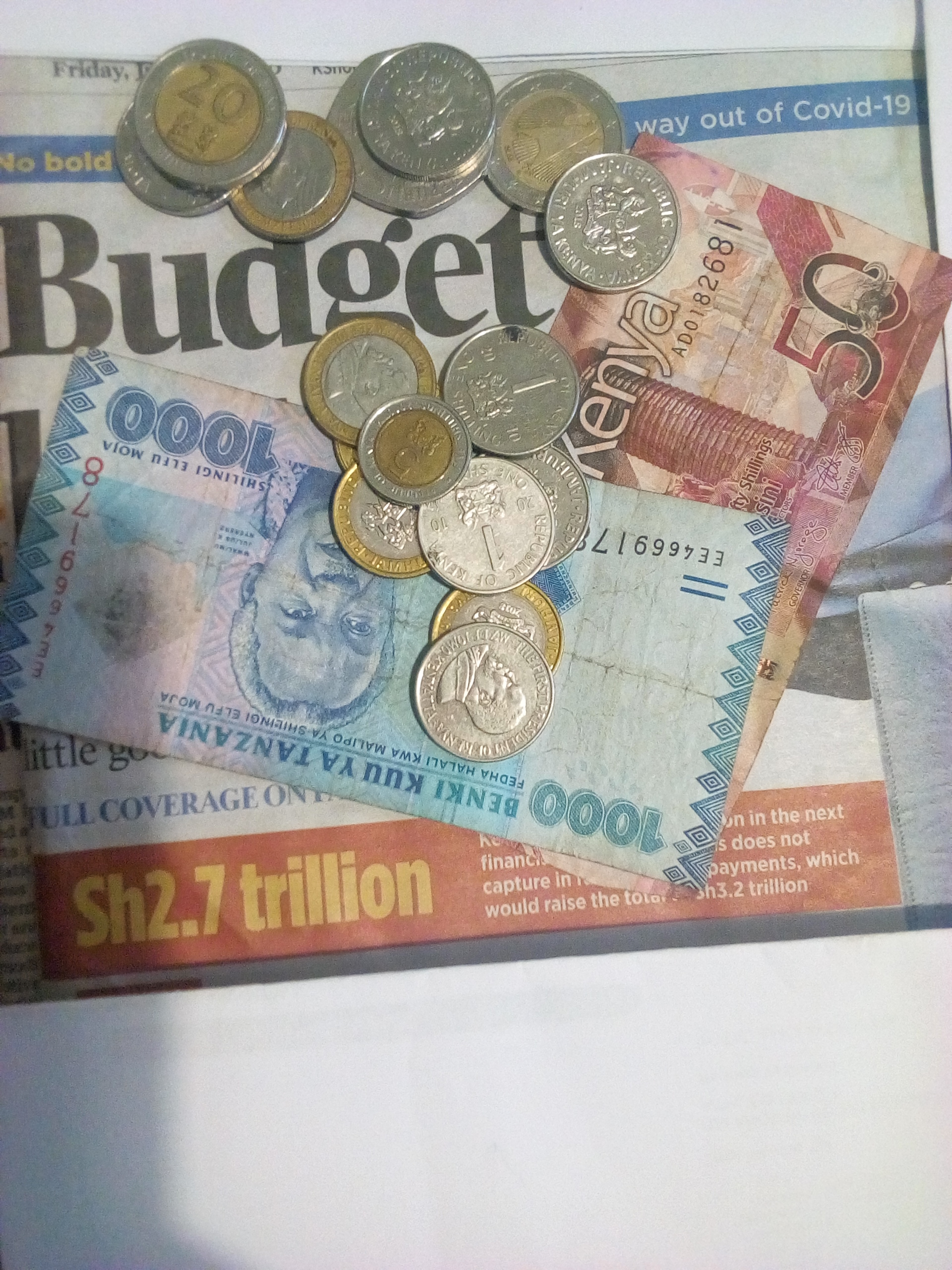
Highlights of Tanzania’s Budget 2021/22

Projected Total Budget 36.6% Trln (3.2% increase) Domestic 26.0 Trln (72%)
Expected GDP Growth 5.6% Grants 2.9 Trln (8%)
Inflation forecast 3.3% Development 13.3 Trln
Tax to GDP ratio 13.5% from 12.9% (2020/21 Recurrent 23.0 Trln
Debt to GDP ratio projections 37.3% Domestic Loans 5.0 Trln (14%)
Projected Budget Outturn 2020/21 86% – 95% External Loans 2.4 Trln (6%)

** The key challenge to government will be to raise domestic revenues in the face of shrinking grants and concessional loans and the COVID 19 pandemic which is stiff affecting key sectors such as tourism.

Uganda signals new impetus to Mining with a bill in offing

The Uganda government has signaled a new impetus in the mining sector with multiple reforms and political weight over the next five years yielded to transform, its previously dormant mining sector. The government plans to scale up its work in the Mining sector. As part of improving its geological data, the government recently announced commencement of aerial surveillance of Karamoja, which is one of the areas highly believed to be mineral rich. This will improve the quality of real time Mineral and geological data.
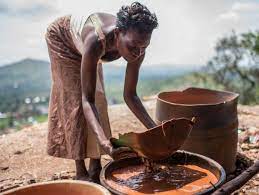
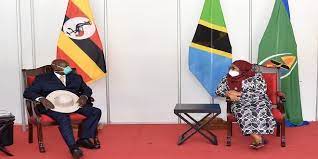
The Ministry plans to table the new Mining Bill in Parliament soon. Civil society organisations such as the Natural Resources Governance Institute (NRGI) have worked with the Ministry experts on this, and will be monitoring the developments, debate, and the outcome from this bill.

Civil Society and expert advice to government has been that Uganda needs to have a legislative environment which attracts large investments into its mining sector but also ensures citizens benefit from extractive resources. NRGI will be engaging with new Parliament, by providing some capacity building support and making technical presentations on the extractive sector governance during Uganda’s new journey.

On the12th of May, President Yoweri Museveni was sworn into office after a tenacious election period. Despite the violence and contestation, President Museveni was declared winner for a sixth term. Since 2006, the President has constantly anchored his economic development cards on the Country’s oil wealth as a conduit to pursue his long-term development agenda and pathway to a middle-income status. The tilt towards developing the country’s mining sector expands this vision further.

Under a new mining policy passed in 2018 Uganda proposed to maximse gains from its mining sector by automatically making value addition mandatory and owning shares in every mining company granted a mining lease. This policy was a major shift from the previous policy framework where the mining companies owned 100% of ownership with government being relegated to a  spectator.

The old policy regime was characterized by abuse, land conflicts, speculation and nuisance business practices which denied government maximum economic benefits. According to the Uganda Chamber of Mines and Petroleum (UCMP) there are over 800 mineral licenses, with over half held small companies and speculators. Uganda’s Mineral rich areas such as Karamoja are awash with prospective mineral license holders and artisanal miners. The current policy framework was not backed by commensurate enabling law.

With a comfortable majority in parliament, the President has lee way to use the advantage of numbers to push through policies that favour his vision. While  changes among the ministers are expected,  there is no expected much change regarding technical staff in the key government ministries, agencies, and departments. This may be of advantage as these technocrats can now focus on achieving this new ambition. Can Uganda pull it off?  As extractive sector stakeholders will be following the developments with keenest and wishing Uganda success.


Uganda-Tanzania East Africa Oil Pipeline: signed deal yes, but hurdles lie ahead.

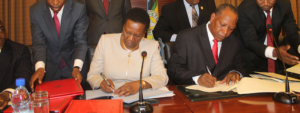
Samia, Museveni witness pipeline project final actsThe East African Oil Pipeline project received significant boots in April 2021 with Uganda with a series of key oil infrastructure related agreements signed between the government of Uganda and Tanzania and the oil companies for the East Africa Crude Oil Pipeline (EACOP) project to transport crude from Uganda to the Tanzania port of Tanga.
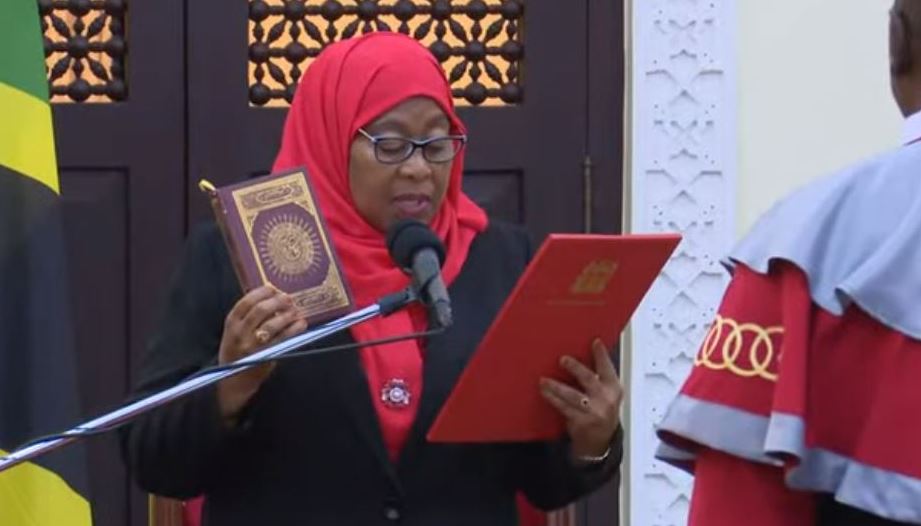
According to the government communications, these agreements signal Final Investment Decision (FID) which could be announced soon with production, expected around 2025. There has been already significant work going on at the oil sites in Hoima and as one of the Company officials remarked, work has started. The project is very important to the East Africa region as it promises great economic benefits to the governments and their citizens in the form of jobs, revenues, and other associated economic linkages.

Despite this rekindled hope, shortly after the signing of these agreements, it was evident that multiple uncertainties still lie ahead.

The details of the signed agreements remained undisclosed and technical experts involved in the negotiations remained secret on essential information on key fiscal terms surrounding the tariffs.

The project financing arrangement remains a quagmire.  Few days after signing of the agreements, several banks in France where the lead investor Total is based announced that they were staying away from the financing of the pipeline. The French banks included, BNP Paribas, Société’ Générale and Credit Agricole, Credit Suisse of Switzerland, ANZ of Australia and New Zealand and Barclays.

According to earlier government reports, The Standard Bank of South Africa, China’s ICBC and SMBC of Japan are lead advisors of the EACOP financing. These were under immense pressure from their counterparts Bank Track, Reclaim Finance and Energy Voice for what they described as pushing responsible financing of projects worldwide. According to these banks and activists EACOP’s environmental credentials were failing.

The Uganda government announced that it was not bothered by announcement, describing it as not new. However, the announcement by the banks signalled that the project could be still facing serious negative diplomacy from environmental activists and other political interested actors regionally and globally.

President Museveni described the project and the agreement signing occasion as an act economic liberation. This followed the political liberation which in his view happened some decades ago when Tanzania helped exiled Uganda political groups to take power in Uganda and change the course of history. With the hurdles still to overcome, it was evident that perhaps the financial, environmental, and political woes were not over, and the project was yet to fully get on track.

Tanzania political transition: new era, new opportunity

In March, East Africa was gripped with shock upon the sudden death of Tanzania’s President John Pombe Magufuli. Over the past five years, President Magufuli towered like a political colossus, led with a nationalistic approach, and pursued reforms which sent zillion sentiments across many frontiers. He threw out Accacia, Barrick’s Mining subsidiary in Tanzania, for tax evasion and dubious practices that he descried as stealing against Tanzanians. Enacted new mining laws and renegotiated a 50/50 sharing deal with Barrick which has since been mirrored as a template in other Countries far away such as Papua New Guinea. However, his style was considered as a possible deterrent to potential investors and perhaps disruptive to the extractive sector.
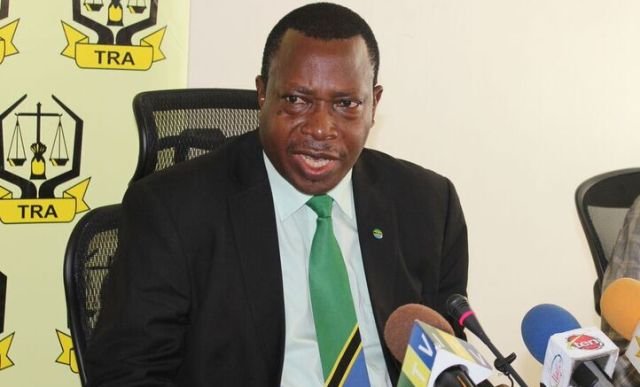
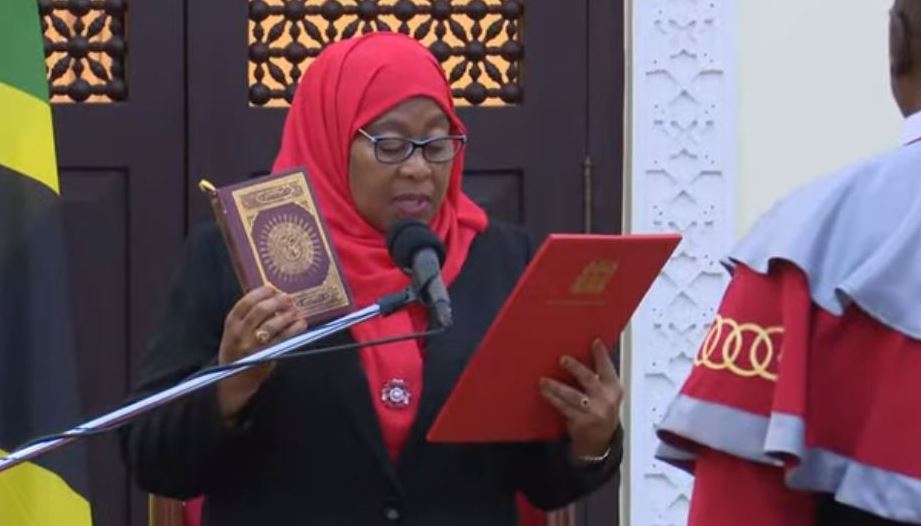
The transition to the new President Ms Suluhu Samia Hassan was peaceful and lauded as a new era for a new opportunity. President Samia has promised to set Tanzania to a new path. Few days into office, President Samia observed that all was not very well as earlier perceived. New investments in the sector were low. The volume of Mineral exports had fallen. Despite the Mererani wall, Tanzanite, the precious gemstone from Mererani, was still being stolen. Negotiations for conclusion of the lucrative LNG project had stalled. The tax laws were impeding and the enforcement style by the Tax Authorities had seen many companies’ close shop. The President has since called a truce with the private sector and declared Tanzania is fully open to investment.

Despite her aspirations, President Samia has insurmountable hurdles to climb. The mining reforms were passed in law and therefore amending or uprooting these will require parliamentary approval. The amendments were so popular with the Tanzanian public and this could be touch political gamble to make.

Nonetheless, Tanzania still has an opportunity to excel. The Country’s extractive wealth lies in Minerals such as gold.  The Country has vast deposits of what are considered critical minerals such as rare-earth, lithium etc which are vital to industrial use during the energy transition. With a revived and careful political navigation Tanzania could still attract potential investors and comfortably reap more benefits from its extractive wealth.