Securing Tanzania’s clean energy future: How Tanzania can harness its renewable energy opportunities

With a high wind potential that covers more than 10% of its land and a solar power potential estimated to be 31,482 TWh for CSP technology and 38,804 TWh for PV technology and a global horizontal radiation of 4–7 kWh/m2/day , Tanzania is a step away from becoming a reckonable power giant in clean renewable future

By Moses Kulaba, Governance  and Economic Analysis Centre

@climate change, energy transition series

Tanzania, like other developing countries,  has perennial energy shortages and striving to find different ways of ensuring affordable and accessible energy supply to its citizens and economic development needs.

In order to secure affordable and accessible energy in the country, renewable energy is viewed as a viable alternative energy source. It is readily available,  environmentally friendly and if harvested,  produced and utilized in a modern and sustainable manner, it can help to eliminate Tanzania’s energy problems.

Tanzania’s power sector is dominated by state-owned TANESCO (Tanzania Electricity Supply Company Limited). TANESCO owns most of the country’s transmission and distribution network, and more than half of its generating capacity. The grid faces acute shortages and power outages due to excessive demand and a dilapidated infrastructure, making reliance on the current fossil and hydro based energy generation systems impossible to cope with the country’s energy demand.

Tanzania’s electricity generation comes mostly from natural gas (48%), followed by hydro (31%), petrol (18%) with solar (1%), and biofuels (1%). The traditional dependence on hydropower combined with the droughts that are affecting the country, often result in power supply shortages[2].

According to reports, Tanzania has a lot of renewable energy sources such as biomass, solar, hydropower, geothermal, biogas, wind, tidal, and waves. These sources are important for decentralized renewable energy technologies, which are ideal for the isolated nature of the settlements and are environmentally friendly. Despite their necessity, renewable energy sources are given low priority by both government and Households[1].

The World Economic Forum (WEF) reported the total sum of global investment into renewable energy has increased. This was supported by a 28% annual increase in investment from the United States (U.S), in 2019 totaling $54.6 billion[3]. Renewables cannot totally replace fossils such as oil, but increased investment shows increased potential contribution in the energy mix.  The International Energy Agency (IEA) estimates annual clean energy investments will more than triple by 2030.

With its vast resources and location, there are opportunities for Tanzania to investment in its abundant solar and wind energy potentials. Perhaps, it is argued, the country can leverage its strategic position to scale up investment to generate more and at the same time position as a major supplier and user of renewable energy sources. So far, in Tanzania, solar energy is used as a source of power by 24.7% of the households with access to electricity.

Tanzania’s Solar Energy potential

A study by Ahmed et al in 2017 suggested that Tanzania has an annual technical solar power potential in Tanzania was estimated to be 31,482 TWh for CSP technology and 38,804 TWh for PV technology. Potential solar energy resources are found in the central parts of the country[10] [1]. There are high solar energy levels ranging from 2800 to 3500 h of sunshine per year and a global horizontal radiation of 4–7 kWh/m2/day [1,70].  

According to the World Bank, Tanzania has a solar energy potential greater than that of Spain and wind energy potential greater than that of the US State of California. With such great potential for solar energy resources, Tanzania is naturally appropriate for producing solar energy as a feasible alternative source for modern energy supply and rural electrification.

The solar energy market in Tanzania has drastically grown and increased over the last few years. Currently, the potential solar energy resources in Tanzania are used in different parts such as solar thermal for heating and drying and photovoltaic for lighting, water pumps, refrigeration purposes, and telecommunication. Solar energy is used mostly in rural areas with about 64.8% compared to urban areas with only 3.4%. The regions of Lindi, Njombe, Mtwara, Katavi, and Ruvuma lead in the use of solar power electricity in Tanzania[11]. Despite the increasing market for solar energy applications, there are fewer signs that the government is expecting to include solar PV in the national electricity mix in any substantial way in the future.

Tanzania’s Onshore Wind energy potential 

Tanzania has areas of high onshore wind potential that cover more than 10% of its land[5]. This is equivalent in size to Malawi and has greater potential than the US state of California, as reported by the World Bank report. There are areas with annual average wind speeds of 5–8 m/s[6] . These exist along a coastline of about 800 km with predominant surface winds, moving from south-east to northeast.

Based on the current research works, Tanzania has a lot of wind energy resources in the areas of Great Lakes, the plains, and the highland plateau regions of the Rift Valley. Wind energy evaluation indicates that areas such as Makambako (Njombe) and Kititimo (Singida) have sufficient wind speed for grid-scale electricity generation, with average of wind speeds 8.9 m/s and 9.9 m/s at the height of 30 m, respectively[7]. Small-scale off-grid wind turbines along the coastline and in the islands also possess great potential in Tanzania.

By 2017, at least four companies had expressed interest in investing in wind energy in Tanzania to build wind plants with a capacity of more than 50 MW. These companies included Geo-Wind Tanzania Ltd in Dar es Salaam,  Wind East Africa in Singida, and Sino Tan Renewable Energy Ltd. and Wind Energy Tanzania Ltd in Makambako.

It was further reported that wind farms with capacities of 100 MW in Singida would be constructed under the corporation of the Six Telecoms Company in Singida, financed by the International Finance Corporation and Aldwych International in London, the United Kingdom. The project would cost US$286 million[8].

But generally, the uptake of investments in wind energy is still low. Compared to other renewable energy resources that attract investment, most  projects have tried with little success to produce utility scale electricity from the wind energy. Tanzania’s renewable energy sector remains dormant with potential.

Recently, the government has indicated plans to review its national energy master plan with a view of integrating its energy mix with  renewable sources. This provides an opportunity for government to be intentional and focused on scaling its renewable sources from solar and wind.

What is stopping Tanzania’s renewable energy sector 

There are efforts and greenfield wind projects such as  the Mwenga project , the first wind farm to ever be built in Tanzania was completed in 2020. According to the project directors, Camco Clean Energy, the 2.4MW project – which received a $1.2m loan from the UK Government-funded Renewable Energy Performance Platform (REPP) – was supposed to be connected to an existing grid network, providing energy security to communities across the country. However, there are gaps such as financing, infrastructure, storage, and government facilitation which potentially limit investment, scale up, use and benefiting from this potential.

  • High investment costs: The cost for initial investment is high and the returns on investment are slow. With the dominance of TANESCO as a monopoly and absence of readily available Power Purchase Agreements for independent producers, project financing for renewable energies is still difficult.
  • Misaligned government priorities; Government efforts have largely emphasized hydropower projects. Other renewable energy sources such as solar, thermal, wind, biomass, and biogas are under-prioritized so far due to different socioeconomic and political reasons
  • Institutional and regulatory barriers; These are one of the main difficulties of developing renewable energy projects in the country, stakeholders say. According to Camco managing director Geoff Sinclair  “It’s very difficult to get a bankable PPA signed, offtaker creditworthiness remains an issue, and tariffs are regularly and somewhat randomly reduced to levels that undermine commercial viability.
  • Unmatched political will : The political will and support towards renewable energy over the past ten years has been on and off. After a major push in 2013 , the momentum appears to have dwindled.  Many projects stalled and such as the 150 MW Singida Wind Power project are yet to be fully delivered. In 2013, the Vice-President of China Daliang International Group, Mr Xu Youliang, told  Tanzania’s Prime Minister, Hon Mizengo Pinda,  that this project would be ready and start generating power by 2015. To date this has not materialized. Similar projects such as the Same Wind projects are still on their drawing boards and political support has been waning. Despite the energy resources available in the country and the government’s pledge to invest in renewable energy, foreign investors feel discouraged from  scaling up investments in  Tanzania’s renewable sector.
  • Overriding dissenting views on power of renewables in Africa: Further, this lukewarm and unpredictable stance towards renewable energy such as wind and solar seems to be a general  attitude  across the African continent. African governments have been slow to take on largescale renewable projects.  Some of African political leaders, such as Uganda’s President Yoweri Museveni, have argued that renewable energy is not sustainable to meet the future global population energy demands. It cannot even meet or drive Africa’s development agenda. 
  • Unreliability and lack of technology for storage: Renewable energies such as solar and wind are largely dependent on whether and climatic factors and therefore unreliable as a source of power. The technology for storage has not advanced enough to guarantee continuous supply whenever needed 
  • Potential of land grabing and conflicts: Moreover a solar farm requires huge tracts of land, and this can or may potentially spark off a new wave of land grabbing by solar energy investors, triggering land conflicts across the continent. Africa could is a bystander in renewable energy technology. For Africa to benefit, investment in technologies and production of equipment, such as solar panels and wind turbines must be on the continent.

CSOs such as power shift Africa , Anti Coal Coalition[4] and others however argue that investment in renewable energy is economically viable, and can  create jobs and increase access to energy to the poor and rural areas where access to the national grid is difficult. Significantly, investment in renewables will help Tanzania achieve its domestic transition and unlocking the country from a fossil future.

What can be done?

  • Moving forward, therefore the mysteries surrounding renewable energy and Tanzania’s potential must be unlocked 
  • Government, along with other renewable energy stakeholders, should complement existing policies and strategies to address issues related to renewable energy development to ensure timely and sustainable utilization of the available resources.
  • There is the need to provide a sound business and investment environment to local and foreign people who can provide capital towards renewable energy technologies and development.
  • There should be more training and awareness made available to the public about how to invest and use renewable energy.

Tanzania can and must benefit from the energy transition by upscaling its potential by starting to roll out implementation. Stalled renewable projects should be implemented.

[1] Obadia Kyetuza Bishoge: The Potential Renewable Energy for Sustainable

Development in Tanzania: A Review, 2018 accessed at : https://www.mdpi.com/2571-8797/1/1/6/pdf#:~:text=Tanzania%20has%20a%20lot%20of,are%20environmental%20friendly%20%5B1%5D.

[2] https://www.trade.gov/energy-resource-guide-tanzania-renewable-energy

[3] https://www.weforum.org/agenda/2020/06/global-clean-energy-investment-research/

[4] https://www.theguardian.com/world/2022/aug/01/african-nations-set-to-make-the-case-for-big-rise-in-fossil-fuel-output#:~:text=African%20nations%20expected%20to%20make%20case%20for%20big%20rise%20in%20fossil%20fuel%20output,-Exclusive%3A%20leaders%20expected&text=Leaders%20of%20African%20countries%20are,documents%20seen%20by%20the%20Guardian.

[5] Tanzania Invest. Tanzania Has High Potential For Renewable Energy Projects, US Consulting Firm Indicates. TanzaniaInvest. 2015. Available online: https://www.tanzaniainvest.com/energy/tanzaniahas-high-potential-for-renewable-energy-re-projects (accessed on 15 April 2018).

[6] Kasasi, A.; Kainkwa, R. Assessment of wind energy potential for electricity generation in Setchet, Hanang, Tanzania. Tanz. J. Sci. 2002, 28, 1–7.

[7] Energy Charter Secretariat. Tanzanian Energy Sector under the Universal Principles of the Energy Charter. 2015. Available online: https://energycharter.org/fileadmin/DocumentsMedia/CONEXO/20150827- Tanzania_Pre-Assessment_Report.pdf (accessed on 8 May 2018)

[8] The Minister of Energy. The Speech of the Ministry of Energy and Minerals on the Estimates of the Revenue and Expenditure for Financial Year 2018/2019. 2018. Available online: https://www.nishati.go.tz/hotubaya-bajeti-ya-wizara-ya-nishati-kwa-mwaka-2018-19/ (accessed on 15 January 2018)

[9] The Economist. A World Turned Upside Down—Renewable Energy. 2017. Available online: https://www. economist.com/briefing/2017/02/25/a-world-turned-upside-down (accessed on 4 May 2018).

[10] Sarakikya, H. Renewable energy policies and practice in Tanzania: Their contribution to Tanzania economy and poverty alleviation. Int. J. Energy Power Eng. 2015, 4, 333. [CrossRef]

[11] https://www.thecitizen.co.tz/News/33pc-of-Tanzanians-have-access-to-electricity–report/1840340-3900298-9elccaz/index.html

End to false promises: Why COP27 must be a true African COP


Climate Change and Energy Transition negotiations should be about people.  A just transition cannot be achieved if the majority already affected by climate change and are likely to be affected by the energy transition as a mitigation measure are not heard on the negotiation table

By Moses Kulaba

The 2022 United Nations Climate Change Conference, more commonly referred to as Conference of Parties (COP), was held from 6 -18 November 2022 in Sharm El Sheikh, Egypt. This year’s COP was branded as the African COP since it  happened on the African continent.

Interestingly, this was not be the first COP on the African continent (Africa has hosted other COPs before in Morocco, Durban and Nairobi) and if going by the precedent set by past COPs, climate change commitments and targets were never honored especially by the world leading countries in terms of carbon emissions even after the Paris Agreement. The COP26 promised funds which never came.

In most cases the African political leadership was often disjointed in terms of a common position grounded on the realities of the continent’s people, livelihoods, and economies as the least contributors to the climate crisis.  Furthermore, the people’s voices and grievances are often excluded in the negotiations and processes thereafter. The net result has been a technical process which has led to a potentially slow but catastrophic climatic journey to oblivion, with Africa bearing the brunt of climate shocks and stress.

Despite being the least polluter, Africa faces the worst vagaries of climate change and energy transition risks. Previous IPCC reports indicate that Africa is experiencing more rises in temperatures and sea levels than anywhere else in the world. In the next decade, Africa will experience intense heat waves of up to 5 times more than ever recorded, more uncertain rainfall, droughts etc. Africa is facing significant total disruptions and mitigation and adaptation is required to reduce overall risks of climate change.

Currently, East and Horn of Africa is experiencing the worst drought in over 40 years, with between 22 million to 50 million facing starvation and over 3.4 million children already malnourished. The March to May rains were the lowest in 70 years which has resulted in multiple cycles of crop failure and loss of millions of livestock which are essential sources of livelihood.

For Africa, the potential risks of global warming and climate change are everywhere and daily risk that we face. With a total Forest cover of about 7,13,789 sq km which is 21.71% -24.6% of the geographical area of the country, Tanzania is one of the largest remaining carbon sink. Tanzania’s forests contain more than 2,019 million metric tons of carbon in living forest biomass. Yet, it is estimated that between 1990 and 2010, Tanzania lost 19.4% of its forest cover, or around 8,067,000 ha. At this rate, we could lose half of our forest cover by 2030.

A sudden rise in the Ocean Sea levels by around 3 feet is enough to partially submerge Zanzibar. National Geographic scientists estimate that the islands of Zanzibar and Mafia are likely to disappear under water by 2100 due to a rise in sea level triggered by global warming. Globally, sea level has risen about eight inches since the beginning of the 20th century and more than two inches in the last 20 years alone. Every year, the sea rises another .13 inches (3.2 mm.) New research published on February 15, 2022, shows that sea level rise is accelerating and projected to rise by a foot by 2050.

It was this reason that I argued for CoP27 and any future negotiations on Climate Change and Energy Transition negotiations to be meaningful, they should be about people.  A just transition cannot be achieved if the majority already affected by climate change and are likely to be affected by the energy transition as a mitigation measure are not heard on the negotiation tableTangible results for Africa can only be achieved by;

Making climate change technology available

Make climate change technology available and cheap on the African continent. The unit cost of several low emission technologies has fallen since 2010 and innovation policy packages have also enabled the costs to go down. Both innovation systems and policy packages have helped to overcome the distributional, environmental, and social impacts potentially associated with global diffusion of low technology. Unfortunately, this investment and technological advancement are not evenly distributed. They are scantier in less developed countries and Africa in general.

As that transition is happening, Africa is being left behind, but it is rushed and expected to catch up at a similar pace like its developed counter parts. Therefore, a just transition in real sense is required that allows or enables Africa to benefit in the ongoing climate change technological advancement.

Africa should not only be a market but also a producer of climate change mitigation technology. As a matter of essence and fairness, let production of these be based on the African continent to make use of existing technology input resources, adding values, and creating jobs.

Harnessing Africa’s Oil Gas and Coal, without locking into a fossil future

Allow Africa to exploit its fossil resources in the short term as it gradually transits. Africa has vast deposits of coal and is largely an emerging producer of oil and gas. There are different views on the continent on the future of gas as a source of energy. The question that is often asked is whether gas can be described as ‘a clean’ fossil. But based on its energy poverty status, growing population and sustainable development goals. It is evident that Africa will continue to rely on oil as a source of energy for a longer foreseeable future than its developed counterparts.

The emerging African political leadership consensus appears to support the continued investment and use of gas as a transitional source of energy to bolster their energy mix plans to meet increasing energy demand required to propel Africa into the future. It is true that statistical data shows investment and deployment of clean and renewable energy has been increasing globally however the pace has not yet reached a tipping point to overtake fossil based sources on the African continent.  It is therefore imperative to have a balance that allows Africa to use its gas for development but is careful not to lock itself into a non-sustainable gas or fossil future.

Africa has vast deposits of coal. The recent Russia Ukraine war showed that despite earlier predictions, the use of coal as a source of energy may now have a longer lifetime than earlier predicted, as European Countries such as Germany planed to re-fire their coal plants as a way of diversifying away from reliance on Russian gas, meeting current energy demand and securing their future energy security. This therefore meant that perhaps this can allow Africa to exploit and benefit in the short-term demand, with or without totally losing out and locking itself in a coal carbon future. This could be a risky bet but worth trying as strategies are developed for a gradual phaseout.

Leveraging Africa’s transition minerals

There is need to leverage Africa’s transition minerals to drive economic prosperity and smooth domestic transition. Africa is endowed with vast deposits of minerals which are critical to the clean energy technology required in support of the energy transition and road to net zero. Africa produces less oil but more minerals. According to statistical data between 48% to 70% of cobalt (which is used in the manufacture of batteries for electric car vehicles and phones) and 4% of copper and 1% of lithium is found in the DRC. Tanzania, and Mozambique account for 45% of global graphite, with Tanzania ranked alone ranked to have around the 5th largest global reserve.

Historically, Africa has been a source of materials for global progressUnfortunately, minerals in Africa have been largely a source of misery and death.  The heart wrenching stories of mineral driven conflicts in Eastern DRC is well documented. A just transition, therefore,  cannot be achieved if Africa’s minerals are exploited to serve the technological advancement and energy security elsewhere. Africa’s resource rich countries should not be bystanders in this potential energy revolution. This time around Africa must be thinking about how to position itself, so it doesn’t find itself riddled with the resource curse which has bedeviled the continent for so long.

Pegging  Africa’s development on Africa Agenda 2063

Capping global warming at 1.5°C requires a transition to clean energy by 2030 and that global emissions reach net zero by 2050. This is barely less than eight years from now and many African Countries will not beat this deadline. Africa  can not be rushed into an energy transition. To have a just transition in Africa, governments and Africa people’s participation is critical in setting the agenda for the COP negotiations and securing targets that are feasible.

Africa needs to develop or redefine its vision and mission on climate change and energy transition. This redefined vision may be slightly different from the global vision but aligned to Africa’s vision, needs and development determinant factors or drivers of development. For example, setting Africa’s energy transition targets to Agenda 2063 could plausible idea.

Implementing NDCs and NAPs at government level

At government level, implementation of the Nationally Determined Contributions (NDCs) and National Adaptation Plans is critical At the previous COPs, the NDCs were lauded as a major breakthrough demonstrating global political commitment by member states towards climate change mitigation and adaptation. Unfortunately, in many African countries these plans have largely remained unimplemented. Leveraging financing of the NDCs will be an essential game changer in turning the tide against climate Change.

Financing Climate Change and the transition

One of the major obstacles holding back efforts to combat climate change is finance  and finance!. A just energy transition for Africa cannot be achieved without financing. Globally, there is sufficient liquidity and capital to finance climate change. In 2010 developed countries committed provide USD100 billion annually towards climate change. Unfortunately, this promise has not been honored. Much  of what is available is not reaching the African continent.

Africa requires and faces acute shortage in access to energy. Around 759 Mln people in Africa still lack access to electricity. According to the UN Road Map to 2030, it requires only 35bln annually to bring electricity to the 759 million who lack it in Sub Saharan Africa. Indeed, with as low as USD 25 bln annually spent, can raise all 2.6bln people who have no access to electricity, yet Africa seems not to get this money. CoP27 should be where this stain of shame in the fight against climate change is put to an end.

Financing Africa’s climate change and energy transition pathways is mutually beneficial to both Africa and the developed world. By virtue of its location and current low levels of emission, Africa so far is the largest existing carbon sink and buffer that so far can help save the globe.

Africa is not ready to finance a just transition because governments have a limited fiscal space to finance it due to debt servicing pressures and competing priorities for social expenditures. Developed countries must provide financing which was committed and follow by curbing illicit capital and financial out flows from Africa to enable the continent to use it to finance the transition.

Curb illicit financial flows from the continent.

For Africa to be ready for climate change and energy transition, there’s need to seal the existing  loopholes that are facilitating Illicit Financial Flows from Africa to the tune of U$ 89 billion annually (according to the 2020 United Nations Conference Trade and Development report). Much of these outflows trace their destination to developed countries and tax havens whose headquarters are located in developed countries. They are facilitated by weak governance structures, tax avoidance and white collar corruption. If these loopholes are closed, Africa could effectively meet and exceed its financing gap of U$ 70 billion for renewable energy.

In a nutshell, give Africa the financial means to deliver on climate change. Provide cheap technology for Africa to deliver on renewable energy. Facilitate Africa to add value to its green minerals so countries such as Tanzania, DRC and Zambia can share the benefits from their mining resources. Provide Africa with adequate timelines to catch up with  its developed counterparts and most importantly listen to our voices at the COPs if we are to collectively deliver on climate change and targets to net zero.

**A modified version of this article also appeared in the Citizen Newspaper of 10th November 2023 to coincide with the COP27

Tanzania proposes radical amendments to Mining and EITI Laws

The government of Tanzania has proposed radical amendments to its current Mining and Extractive Transparency Initiative (EITI) laws, sending harrowing concerns amongst civil society actors.

According to the proposed Written Laws Miscellaneous (Amendments (No 4) Act of 2021 the government plans to amend sections of Mining Act (CAP 123) by adding a definition of gross value to mean the market value of Minerals or minerals at a point of refining or sale or, in the case of consumption within Tanzania, at the point of delivery in Tanzania

The amendment also seeks to add a section on compounding of offences (under a section 132A) relating to penalties, where a person admits in writing that he has committed an offence under the Mining Act.

Significantly, the government proposes for establishment of a special arrangement that allows effective government participation in a mining or special mining license. The proposed section reads “Without prejudice to the provisions of subsection (1), the Government and a holder of a mining license or special mining license may, for the purposes of ensuring Government’s effective participation in the mining operations as contemplated in this section, establish a special arrangement in a manner prescribed in the regulations”

According to civil society actors, the government could be seeking to extend its negotiation framework with Barrick to other Mining operations. A special arrangement which is not defined could also be dangerous and subject to abusive practices which may not be beneficial to citizens, civil society actors argue.

The government proposes to amend the Transparency Extractive Industries Transparency and Accountability) Act 2015 (CAP 447) by reconstituting the number of the members constituting the Multi-stake Holders Group (MSG) from a maximum of 15 to nine (including the Chair). The radical amendment the government representation from 5 to 4 and Civil Society and Company representatives from 5 to 2 each.

If passed, this government representatives an absolute majority and effectively tilt the balance of decision making in favour of government. There can never be fairness and independence a setting as proposed, argues civil society

The MSG composition and power of each of the three constituencies (Government, Civil society, and Companies) is protected by the Extractive Industries Transparency Initiative (EITI) standard, which is a global transparency norm the government signed up to and upon whose spirit the government enacted the TEITA Act in 2015

According to the EITI standard 2019, the MSG is an independent body comprising of representatives from the government, civil society, and companies, tasked with the oversight of the implementation of the EITI process in the implementing Country. The EITI requires effective multi‑stakeholder oversight, including a functioning multi‑stakeholder group that involves the government, companies, and the full, independent, active, and effective participation of civil society.

The government is obliged under the EITI standard to ensure there is no that there are no obstacles to company or civil society participation in the EITI process. Civil society have an elaborate Civil society protocol, guaranteeing their unfettered participation. The EITI 2019 standard is however silent on the minimum or maximum number of members of the MSG.

Adversaries and proponents alike believe, the biggest anomaly in the TEITA Act was that the MSG was defined as a government body’ and therefore technically putting it under the ambits of government’s control and subject to government operational procedures and standards. The government wants to expand it sphere of control over the MSG, they argue.

In the past, interference with the MSG was considered as a breach of the EITI standards and governments found to be in breach were sanctioned. This was the case with Azerbaijan and Myanmar.  It is not clear what position the international board will take. However, the government while determining on the nature of amendments it wants to make, may have to consider whether the independence of the MSG in performing its oversight task will be compromised. The rationale for the amendment will need to be elaborate and robust enough to stand public and international scrutiny.

Tanzania’s removal of penalties on transfer pricing: What did government seek to achieve?
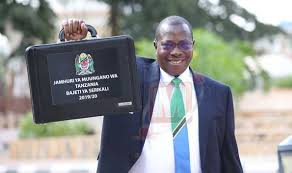
Tanzania Finance Hon Mwigulu Nchemba

In this year’s (2021/22) budget speech Tanzania’s Minister for Finance, Mr Mwigulu Nchemba, made a surprising announcement that government would/had scrapped the 100% penalty for transfer pricing. The announcement was surprising as transfer pricing or mispricing in international transactions and currently a point of discussion globally as one of the leading enablers of illicit financial out flows and capital flight from developing and extractive rich countries.  From a Tax justice perspective, the government’s decision was received as a slight slip in the gains scored over the past 10 years.

According to Global Financial Integrity (GFI) and the Mbeki High-Level Panel Report on IFFs latest reports, shows that IFF’s from the African continent have been increasing with losses estimated between USD50 Million and USD 80 Million over the past years. Corruption and the extractive sector has constantly provided a major conduit for tax avoidance and illicit resource outflow from Africa

Transfer pricing is an accounting practice that represents the price that one branch, subsidiary or division in a company charges another branch, subsidiary or division for goods and services provided. Transfer pricing allows for the establishment of prices for the goods and services exchanged between a subsidiary, an affiliate or commonly controlled companies that are part of the same larger enterprise.

A transfer price is based on market prices in charging another division, subsidiary, or holding company for services rendered. Transfer pricing can lead to tax savings for corporations.  However, companies have used inter-company transfer pricing to reduce the tax burden of the parent company. Companies charge a higher price to divisions in high-tax countries (reducing profit) while charging a lower price (increasing profits) for divisions in low-tax countries.  This is what is also often referred to as transfer mispricing which is problematic for tax collection purposes. We have discussed this concept in detail via another publication via: https://gepc.or.tz/how-to-curb-transfer-pricing-tax-dodging-and-illicit-financial-flows-in-extractive-sector/

Why were heavy penalties imposed in Tanzania’s statutes?

Heavy penalties were imposed for transfer pricing  in Tanzania’s tax statutes because many companies dodged taxes through complex structures and subsidiaries in foreign jurisdictions which made it difficult or impossible for government to track transactions for tax purposes.

According to Financial Secrecy Index (2018) reported that Tanzania lost billions of shillings through potential transfer arrangements between mining companies.

The government was not explicit why it had taken this dramatic decision and therefore left experts and civil society actors bewildered and speculating. The reasons given were pointing towards improving Tanzania’s investment climate. The investment motive was more than the tax revenue imperative.

The potential hefty penalty for transfer mispricing was an inhibiting factor for attracting foreign investments as companies feared or found it difficult to structure their businesses with an international network of subsidiaries and branches anchored to Tanzania making sourcing for foreign financing and sourcing or procurement difficult.

The difficulties in determining market price or an arms price in transactions between related parties and establishing without any iota of doubt whether a given transaction was a mispricing arrangement and illicit in the face of Tanzania’s statute may have been another factor.

The Minister made another drastic announcement.  Effective 2021/22 the Minister responsible for finance was empowered to grant tax exemptions on specific projects without full cabinet approval.

The Minister proposes to restore the power of the Minister to grant income tax exemption on projects funded by the government on specific projects, grants and concessional loans if there is an agreement between the donor or lender with the government providing for such exemption. The measure would streamline and make it efficient for such exemptions to be provided as it has been a pain sticking point for many projects.

The government was attempting to address bureaucracy in approving exemptions and waivers which was a major stumbling blocks to investment and vitality to the success of some strategic projects. This was certainly a welcomed change for players in the construction and large-scale investment projects. At the time of presenting the budget some big and strategic projects were in offing. These included the OreCorp Nyazanga Gold Mine project in Mwanza, Kabanga Nickel project, the ongoing Standard Gauge Railway project and the East African Oil Company project (EACOP). The government announced a specific exemption of VAT on imported and local purchases of goods and services for East African Crude Oil Pipeline (EACOP). The government aimed to ensure the costs of EACOP are minimised.

However, by doing this, the government is walking a very tight rope and contentious terrain with a significant risk of returning to bedeviled fiscal policy regime era which dogged its tax revenue collection efforts in the early 2000s.  Hon Jerry Slaa, Member for Parliament for Ukonga Constituency in Dar es Salaam posted a passionate that perhaps the Minister may have been deceived or even this dangerous paragraph may have been smuggled into the Minister’s Speech. He passionately appealed to the Minister does not sign off this years financial appropriation bill which this provision. It is a dangerous route to take with potential risks.

In our opinion, for these latest decisions to be effective government will have to

  1. Strengthen its monitoring and surveillance capacity to ensure the international companies do not structure their operations and tax arrangements in a manner that facilitates tax avoidance and evasion.
  2. Strengthen its (TRA’s) International Tax department to detect in advance and reverse any transactions of a potential transfer pricing arrangement before they happen.
  3. Improving data collection capabilities to establish the true arm’s length price for potentially contentious transactions, such e-commerce, services, and intellectual property.
  1. Increase transparency around exemption by perhaps requesting the Minister to publish the list of all exempted projects and values within a short period of 30-90 days after approval, clearly stating the purpose and rationalisation for the exemption.
  2. Retain some mechanism for punishment for noncompliance to the commensurate level deterrent enough to the induce compliance.

Highlights of Tanzania’s Budget 2021/22

Projected Total Budget 36.6% Trln (3.2% increase) Domestic 26.0 Trln (72%)
Expected GDP Growth 5.6% Grants 2.9 Trln (8%)
Inflation forecast 3.3% Development 13.3 Trln
Tax to GDP ratio 13.5% from 12.9% (2020/21 Recurrent 23.0 Trln
Debt to GDP ratio projections 37.3% Domestic Loans 5.0 Trln (14%)
Projected Budget Outturn 2020/21 86% – 95% External Loans 2.4 Trln (6%)

** The key challenge to government will be to raise domestic revenues in the face of shrinking grants and concessional loans and the COVID 19 pandemic which is stiff affecting key sectors such as tourism.

Uganda signals new impetus to Mining with a bill in offing

The Uganda government has signaled a new impetus in the mining sector with multiple reforms and political weight over the next five years yielded to transform, its previously dormant mining sector. The government plans to scale up its work in the Mining sector. As part of improving its geological data, the government recently announced commencement of aerial surveillance of Karamoja, which is one of the areas highly believed to be mineral rich. This will improve the quality of real time Mineral and geological data.

The Ministry plans to table the new Mining Bill in Parliament soon. Civil society organisations such as the Natural Resources Governance Institute (NRGI) have worked with the Ministry experts on this, and will be monitoring the developments, debate, and the outcome from this bill.

Civil Society and expert advice to government has been that Uganda needs to have a legislative environment which attracts large investments into its mining sector but also ensures citizens benefit from extractive resources. NRGI will be engaging with new Parliament, by providing some capacity building support and making technical presentations on the extractive sector governance during Uganda’s new journey.

On the12th of May, President Yoweri Museveni was sworn into office after a tenacious election period. Despite the violence and contestation, President Museveni was declared winner for a sixth term. Since 2006, the President has constantly anchored his economic development cards on the Country’s oil wealth as a conduit to pursue his long-term development agenda and pathway to a middle-income status. The tilt towards developing the country’s mining sector expands this vision further.

Under a new mining policy passed in 2018 Uganda proposed to maximse gains from its mining sector by automatically making value addition mandatory and owning shares in every mining company granted a mining lease. This policy was a major shift from the previous policy framework where the mining companies owned 100% of ownership with government being relegated to a  spectator.

The old policy regime was characterized by abuse, land conflicts, speculation and nuisance business practices which denied government maximum economic benefits. According to the Uganda Chamber of Mines and Petroleum (UCMP) there are over 800 mineral licenses, with over half held small companies and speculators. Uganda’s Mineral rich areas such as Karamoja are awash with prospective mineral license holders and artisanal miners. The current policy framework was not backed by commensurate enabling law.

With a comfortable majority in parliament, the President has lee way to use the advantage of numbers to push through policies that favour his vision. While  changes among the ministers are expected,  there is no expected much change regarding technical staff in the key government ministries, agencies, and departments. This may be of advantage as these technocrats can now focus on achieving this new ambition. Can Uganda pull it off?  As extractive sector stakeholders will be following the developments with keenest and wishing Uganda success.


Uganda-Tanzania East Africa Oil Pipeline: signed deal yes, but hurdles lie ahead.

Samia, Museveni witness pipeline project final actsThe East African Oil Pipeline project received significant boots in April 2021 with Uganda with a series of key oil infrastructure related agreements signed between the government of Uganda and Tanzania and the oil companies for the East Africa Crude Oil Pipeline (EACOP) project to transport crude from Uganda to the Tanzania port of Tanga.

According to the government communications, these agreements signal Final Investment Decision (FID) which could be announced soon with production, expected around 2025. There has been already significant work going on at the oil sites in Hoima and as one of the Company officials remarked, work has started. The project is very important to the East Africa region as it promises great economic benefits to the governments and their citizens in the form of jobs, revenues, and other associated economic linkages.

Despite this rekindled hope, shortly after the signing of these agreements, it was evident that multiple uncertainties still lie ahead.

The details of the signed agreements remained undisclosed and technical experts involved in the negotiations remained secret on essential information on key fiscal terms surrounding the tariffs.

The project financing arrangement remains a quagmire.  Few days after signing of the agreements, several banks in France where the lead investor Total is based announced that they were staying away from the financing of the pipeline. The French banks included, BNP Paribas, Société’ Générale and Credit Agricole, Credit Suisse of Switzerland, ANZ of Australia and New Zealand and Barclays.

According to earlier government reports, The Standard Bank of South Africa, China’s ICBC and SMBC of Japan are lead advisors of the EACOP financing. These were under immense pressure from their counterparts Bank Track, Reclaim Finance and Energy Voice for what they described as pushing responsible financing of projects worldwide. According to these banks and activists EACOP’s environmental credentials were failing.

The Uganda government announced that it was not bothered by announcement, describing it as not new. However, the announcement by the banks signalled that the project could be still facing serious negative diplomacy from environmental activists and other political interested actors regionally and globally.

President Museveni described the project and the agreement signing occasion as an act economic liberation. This followed the political liberation which in his view happened some decades ago when Tanzania helped exiled Uganda political groups to take power in Uganda and change the course of history. With the hurdles still to overcome, it was evident that perhaps the financial, environmental, and political woes were not over, and the project was yet to fully get on track.

Tanzania political transition: new era, new opportunity

In March, East Africa was gripped with shock upon the sudden death of Tanzania’s President John Pombe Magufuli. Over the past five years, President Magufuli towered like a political colossus, led with a nationalistic approach, and pursued reforms which sent zillion sentiments across many frontiers. He threw out Accacia, Barrick’s Mining subsidiary in Tanzania, for tax evasion and dubious practices that he descried as stealing against Tanzanians. Enacted new mining laws and renegotiated a 50/50 sharing deal with Barrick which has since been mirrored as a template in other Countries far away such as Papua New Guinea. However, his style was considered as a possible deterrent to potential investors and perhaps disruptive to the extractive sector.

The transition to the new President Ms Suluhu Samia Hassan was peaceful and lauded as a new era for a new opportunity. President Samia has promised to set Tanzania to a new path. Few days into office, President Samia observed that all was not very well as earlier perceived. New investments in the sector were low. The volume of Mineral exports had fallen. Despite the Mererani wall, Tanzanite, the precious gemstone from Mererani, was still being stolen. Negotiations for conclusion of the lucrative LNG project had stalled. The tax laws were impeding and the enforcement style by the Tax Authorities had seen many companies’ close shop. The President has since called a truce with the private sector and declared Tanzania is fully open to investment.

Despite her aspirations, President Samia has insurmountable hurdles to climb. The mining reforms were passed in law and therefore amending or uprooting these will require parliamentary approval. The amendments were so popular with the Tanzanian public and this could be touch political gamble to make.

Nonetheless, Tanzania still has an opportunity to excel. The Country’s extractive wealth lies in Minerals such as gold.  The Country has vast deposits of what are considered critical minerals such as rare-earth, lithium etc which are vital to industrial use during the energy transition. With a revived and careful political navigation Tanzania could still attract potential investors and comfortably reap more benefits from its extractive wealth.

Were 2020/21 National Budgets Ceremonial? A commentary of how this year’s budgets missed the Bigger Picture

National budgets are statements of how the government plans to raise and spend public money. They are based on fundamental economic parameters which inform planning.  Looking at the budget proposals and given the unusual current economic realities that the Finance Ministers found themselves in, this year’s budget can be described as largely ceremonial after all. In This brief commentary, we show why.

By Moses Kulaba; Governance and economic analysis centre

On Thursday, 11th June 2020, the Finance Ministers in Tanzania, Kenya and Uganda presented their annual budget estimates for the year 202/21.  While Tanzania pitched its budget as one for nurturing industrialisation for economic transformation and human development, the Kenyan Budget was presented as a budget for growth while Uganda’s budget was presented as one for consolidation and continuity towards achieving the Five-year development plan.

Conservatively defined, a national budget is a statement of how government plans to raise and spend revenue or public money collected from various domestic and external sources. Domestically, the government largely raises revenues through taxation and externally through borrowing and grants.

Looking at the budget proposals and given the unusual current economic realities that the Finance Ministers found themselves in, this year’s budgets can be described as largely ceremonial after all.  The macro economic parameters of which the budget projections were based are hollow when subjected to the test of COVID 19. There were all indications that the Ministers would soon come back to parliament asking for supplementary budgets before the end of this financial year.

Indeed, the Finance Minister, Mathia Kasaija told Uganda’s Parliamentarians, that the COVID 19 pandemic had necessitated changes to the budget and he would come back seeking  approval for a supplementary budget to reflect the true realities. A similar sentiment was echoed by Kenyan legislators and policy experts, who expected the Treasury Minister, Mr Ukur Yatani, to return to parliament sooner than later with a more aligned budget.

The Daily Nation newspaper summed up the Kenyan National proposals as a ‘Budget for bad times’, while the Kenyan Standard described it’s a ‘Nightmare budget’, stressed with Corona virus, lost jobs, empty coffers, shrinking revenues, huge debts, funding gaps, which all combined to under cut the treasury’s ambitions. In summary, the budget added more pain to the already suffering Kenyans.

So what was contained in the budgets which make them peculiar, largely symbolic and ceremonial.

Key items of the budget frames

Budget Item Kenya Tanzania Uganda
Economic Growth projections 2.5 % 5.5% 3.1%
Total Proposed  Budget 3.4trln ($27Bln) 34.88tln ($20bln) 45tln ($12Bln)
Domestic Revenue 2.79trln 24.07trln 25.5trln
Deficit ( to be financed thru external borrowing, grants and other measures) 840.6bln (7.5% of GDP) 10.81trln 20 trln
Latest National Debt &  Debt to GDP 63% (6.4trln) 55.43tln (27.1%) USD 13.3bln (Approx 43.6%)  


From the figures and proposals contained in the budget speeches, it was evident that the finance Ministers were reading from a script of optimism and perhaps missed a big picture.  Tony Watima, an economist writing for the Standard Newspaper’s ‘Business daily’ concluded that positioning of the Kenyan budget as pro-growth was misguided. Stabilisation should have been the tenor of this year’s National budgets.

The East African was franker in its editorial when it wrote; ‘Finance Ministers owe Citizens the truth on budgets’. The Editor noted that despite the unusual circumstances, the Finance Ministers struck an optimistic positive, calculate perhaps to lift the spirits of a region weighed down by the ripple effects of varying levels of COVID 19 related to lockdowns.

Given, the recent changes to the budget policy and public finance requirement, clearly the Finance Ministers, perhaps could be excused. They were caught between the law and COVID 19, the Finance Ministers found themselves in a tight corner. Having prepared the budget statements before March, they had to present what they had.

The Kenyan Constitution, for example, requires the government treasury to disclose to the public spending plans two months before the end of the financial year. In Kenya, a court ruling directed that the treasury publishes the finance bill earlier so parliament can debate in parliament. The Annual Budget Policy Statement (“the BPS”) was issued in February 2020 and as the CS rightly pointed out, the economic environment had vastly changed from what they found themselves in June. Similarly, in Tanzania and Uganda, the budget policy framework papers were passed months ago.

Realities of COVID 19 on the economies

The negative realities of COVID 19 on the economies are everywhere.  The key economic sectors have all been affected. Within a short span of three months, nearly 1 million Kenyans had lost jobs, several companies had closed operations while many were on the edge. Revenue collections had plummeted and some revenue streams were on the verge of total disappearance. Kenya, East Africa’s largest economy was in free fall with rising unemployment and disruption in major economic sectors. Uganda’s economic fundamentals were in tatters while Tanzania appeared to live in self-denial of the current and long-term adverse economic effects of COVID 19. The Minister admitted that COVID19 had affected the economy but was upbeat that measures had been taken to circumvent the pandemic.

Kenya’s Finance Minister was more optimistic with an estimate of the growth at 2.5% in 2020 and 5.8% in 2021. Pre-the pandemic the economy was projected to grow at 6.1% up from 5.4% in 2019. The IMF projected that global economies were expected to contract by as much as 3% growing to 5.8% in 2021 and Kenya was expected to grow at 1% in 2020.  Kenya’s revenue collection by April 2020 was Ksh 20.1 Billion-lower than the same month last year and below target. The fiscal deficit in 2019 was 8.3% up from 6.3% in 2018.

In Uganda revenue collection by April 2020 fell by Ush789.8bln below targeted Ush1.8trln. This was the largest deficit ever recorded in a single month. With the lockdowns, there was no way URA could meet its target. Tourism and business sector was largely affected.  80% of agricultural businesses and 41 Manufacturing had reduced production and employment. Yet, these contribute to the largest share of tax revenue. Agriculture accounts for 45% of exports and employs 64% of all Ugandans. Uganda expected to receive US128bln grants from donors but had only received Ush28bln. All projections were below target.

In Tanzania, the affected areas included tourism, business (wholesale and retail), traditional export crops such as cotton, cashew nuts and coffee. On 8th of June, just three days to the budget day, Tanzania’s Dar es Salaam Stock Exchange (DSE) recorded zero tradings at its equities counter. This signified an economy under distress and barely recovering from loses of COVID 19. Yet, Tanzania’s Finance Minister projected an increase in revenue collections from 14.0% in 2019/20 to 14.7% in 2020/21.

Response measures are taken

The governments undertook some fiscal and tax administration reforms and provided some stimulus packages aimed at cushioning the economies against the pandemic. However, when deeply analysed, the measures were based on shaky economic grounds, expensive in revenue foregone, difficult to achieve and can not guarantee to reverse the negative impacts of COVID 19.

Summary of some COVID 19 related response measures taken in 2020/21 budgets

Kenya Tanzania Uganda
Concessional Loans from External Lenders (IMF & WB) amounting to USD 739Mln and USD1Bln Negotiated debt relief of USD14.3Mln and potentially up to USD25.7Mln under IMF Catastrophe Containment Relief fund. Ongoing negotiations with other donors Concessional Loans (IMF & WB) –USD100Mln in 2020 and 90 Mln in 2021 and negotiation for debt relief.
Reduction of CBR from 8.25% to 7% and Cash Reserve Ration from 5.25% to 4.25%-Releasing 35bln to commercial banks Reduction of BoT Discount rate from 7% to 5% , Lowering statutory Minimum Reserve Rate (SMR) from 7% to 6% Reduce BoU Central Bank Rate from 9% to 8%
Turn over tax rates reduced from 3% to 1%, Allowance for restructuring and rescheduling of distressed loans by commercial banks and lenders Reduce the cost of Mobile Money transactions by Increasing daily minimum transfers from 3Mln to 5Mln and Minimum balance from 5mln to 7 Mln Extension of time to file Income taxes or presumptive tax  for six months
KSH 10 Bln for Kazi Mtaani Vijana Program targeting 200,000 youth, recruitment of teachers and health workers Zero-rating of import duty on raw materials for COVID 19 Manufacturers sanitizers, PPE Masks Local Manufacture and purchase of PPE for free distribution to all Ugandans
Reduction of VAT from 16% to 14%, Reduction of Corporate tax from 30% to 25% 100% allowable deductions on contributions in support of government’s COVID 19 response Ush130bln for vulnerable but able-bodied persons affected by COVID19
Reduction of PAYE for low earners of up to Ksh 24,000 per month Allowing loan restructuring and rescheduling, VAT exemption on Agricultural Crop insurance Ush1.045bln to UDB for low-interest credit to manufacturers agribusiness
500 mln for purchase of locally made hospital beds and 600mln for purchase of the locally assembled vehicles Abolishment of over 144 levies charged by MDA and Local Authorities for an improved business environment. Ush138 to UDC to facilitate public-private import substitution investment
Ksh18.3bln to support local manufacturing, 3bln for Agric Credit Guarantee schemes, 400 million in food and non food commodities to household affected by COVID 19 Subventions to TANAPA, NCAA, TMWA to meet their operational expenses,  Increase minimum threshold of Primary SACCOS liable to income tax for 50,000,000 to 100,000,000 Provide Credit through SACCOs and Micro-Finance Institutions


What was missed?

The plans and fiscal reforms were taken as if the economy would be normal.

The trend shows that the finance Ministers planned normally and even increased their budgets estimates, despite the odds and indications that the outturns were likely to be suppressed by COVID 19. The law firm Bowman’s noted that Budget speeches did not necessarily provide any solutions to the perineal challenges the countries faced and in some ways simply repeated what we have heard before.

What have been the budget trends?

Country 2017/18 2018/19 2019/20 2020/21
Kenya Ksh 2.3bln Ksh 2.5bln Ksh3 trln Ksh 3.4trln
Tanzania Tsh 31.7trln Tsh32.4trln Tsh 33.11trln Tsh 34.88trln
Uganda Ush 29 trln Ush 32.7 trln Ush 40.487trln Ush45 trln


The actual budget out turns has fallen short of projections. Kenya, which is the biggest economy in the region has missed targets for the past eight years. In 2018/19 Tanzania recorded a shortfall in budget outturn only achieving 88% of its targeted revenue collection. Tanzania had collected 26.13trln (93.4%) of its budget by the end of April 2020. Uganda Tax Revenue Authority had perennially missed its targets. In the current environment, it is very unlikely that the economy will bounce back before 2021 and by all accounts, 2020 was going to turn out the tough year.

In Uganda, the budget was not significantly different from the previous Budgets.

Table of Uganda’s sectoral allocations

Sector Allocation Approved Budget 2020/21 % share Approved budget 2019/20 % share
Works  & Transport 5,846.00 12.85% 6,404.60 15.82%
Security 4,584.68 9.90% 3,620.80 8.94%
Interest Payment 4,086.50 8.98% 3,145.20 7.77%
Education 3,624.06 7.97% 3,397.60 8.39%
Health 2,772.91 6.10% 2,589.50 6.40%
Energy & Minerals 2,602.60 5.72% 3,007.20 7.43%


In Kenya, the 10 bln stimulus packages offered youth employment under the Ajira Mtaani program appears generous. However, experiences from the past indicate that stimulus packages never trickle down to the real people who need them. This was the case with the maize stimulus package passed during the maize shortages in 2017. The scandals that have rocked the National Youth Service program for years further underscored the weakness of Kenyan institutions in managing affirmative budget programs such as these. Kenya’s imposition of tax on pensioners was clearly off the mark as it indicated that perhaps the government was robbing from the elderly to reward the youth and wealthy.

The agricultural sector which had already been devastated by the floods and locusts a received a raw deal in Kenya and Uganda. The post-COVID 19 scenario presents the region with significant food insecurity. There is likely for a surge in food prices, squeezing further on the household incomes.

Yet, in Uganda, the Ush 1.3trln (2.9%) budget allocated to the agricultural sector was equivalent to that allocated to Uganda’s Public administration. Uganda’s Parliament accounted for Ush 667.78bln equivalent to half of the total budget allocated to the Agricultural sector. 

As Ms Salaam Musumba, a Ugandan political activist said, people, expected a clean cut for political niceties such as for conferences, meetings, benchmarking on foreign travels, health care abroad, etc. However, this was not reflected in the budgets.

In Kenya, the Governors, MCAs and their political handlers account for a substantive portion of the recurrent budget. Kenya’s parliament received a budget twice that of the entire Judiciary. In 2020/21 some political offices such as that of former Prime Minister even received 100% budget (Ksh 71.9Mln) allocations for first time since they were created.

Generally, East African public services are bloated with public servants and money guzzling politicians and their handlers, who have become too expensive for governments to carry, yet, politically costly to offload. As a net effect, the recurrent expenditures have increased tremendously to take care of this political baggage and the entities associated with this. The Finance Ministers could do nothing to reduce taxpayers of this burden.

In Tanzania, the government did not provide much booster to the tourism sector which is a leading foreign earner. The sector has faced the largest hit from COVID 19. The government instead took away powers to collect tourism-related revenues from the authorities Tanzania National Parks Authority (TANAPA), Ngorongoro Conservation Area Authority (NCAA), Tanzania Wildlife Management Authority(TWMA) to Tanzania Revenue Authority (TRA). The revenues collected from these authorities would be directly remitted to the consolidated Fund and disbursed back through normal government budget channels. The government would provide some subventions to keep the operational and development expenses of the authorities afloat.

The Finance Minister acknowledged that Tanzania’s flagship projects aimed at putting Tanzania back to a spurring economic path faced 11 risks including COVID 19, which had affected the global economies and financing environment. The government planned to raise and spend Tsh 12.78 trln (27%) of the budget on mega infrastructure projects. According to the Minister, an evaluation conducted in April showed that the Country had not been badly affected by the pandemic, allowing it to raise its growth forecasts and maintain firm financing for its mega-development projects.

However, the truth is that the real impacts of COVID 19 on countries such as Tanzania, which are not interlinked to the global financial systems take a while to be registered and will likely be evident in the 4th Quarter of this financial year and 1st to 2nd Quarter of the new financial year 2020/21 as distressed economic sectors and business begin filling distressed tax returns for income and corporate tax purposes.

Political –economy risks underestimated

The budgets underestimated the political risks that were associated with the national general elections taking place in Tanzania (2020) and Uganda (2021) during this year’s financial year. Election seasons are largely characterised with politicking and less to production. Investment decisions and external donor commitments tend to be staggered as foreign investors and donors weigh the political barometer and wait for the electoral results and policy directions of the new government.

The electoral environment in East Africa has often been adversarial and conflictual. In Uganda and Kenya, the political environment before and during elections is often characterised with political turbulence and violence to the extent that the fundamentals of the economy, such as insecurity and government paralysis rocks the key production and business sectors of the economy.

Although, the Kenya general elections will take place in 2022, the political tension that characterises Kenya’s electoral politics had been building before being slowed down by the COVID 19 in March. It is likely as soon the lockdowns are eased, Kenyan politicians will be back to their usual political tirades and overtures. Tanzania’s Finance Minister acknowledged that political instability in the neighbouring countries, region and globally was an external risk. It did not acknowledge that it was an internal risk too and did not provide any mitigation against this risk on the economy and investment in 2020/21.

Clearly, the budgets were based on a positive scenario that COVID 19 would end soon. But given the trends, we can ably project that the journey of return to full economic recovery will be quite long. The likely upturn under a suppressed Corona Virus environment would be towards the third quarter of 2021.

Under a suppressed COVID 19 situation, the economy was still expected to shrink further by 1%.  In a worst-case scenario, the economies would shrink by at least 2% significantly affecting the key revenues sources. Governments would lose further revenue through the stimulus packages offered. For example, Kenya expected to lose cumulatively Ksh172bln to cushion vulnerable Kenyans and the economy from the vagaries of COVID19.

It was no wonder that the editor for the East African concluded, that coming against a backdrop of a back to back missed targets by the taxman and uncertainty around COVID 19 and global economy, this year’s budgets are either based on an informed optimism or simply a bluff. We conclude that this year’s budget estimates were symbolic and the Ministers would return.

Recommendations or take waypoints for budget stakeholder.

  • Tax Payers-Ready for engagement with government on real measures that will save
  • Investors- Take precautionary measure and monitoring the economic trends, avoid taking decisions which will worsen the situation further.
  • Governments-Remain conservative in expenditure and open for re-negotiation with taxpayers and adjustments of the budgets to fit the unusual 2021
  • Citizens- Expect changes in the budgets as the effects of COVID 19 bite harder, minimise luxurious consumption and expect a tight budget.

Indeed, as noted by the legendary Economist and tax theorist Adam Smith:

There is no art which one government sooner learns than that of draining money from the pockets of People-Adam Smith

National Budgeting amidst COVID 19:Why 2020/21 National budgets should be revised and steps government could take

COVID 19 has been known for many reasons but for Tanzania and East African governments in general, the pandemic arrived at a very wrong time. Coming in the middle of national economic planning and budgeting for the 2020/21 financial year, the pandemic has totally ripped apart as much as it can all the basic economic fundamentals that governments had banked on in projecting their 2020/21 revenue and economic growth forecasts.

By Moses Kulaba, Governance and economic analysis center

Developed close to five years ago as Five Year National Development Plans, as they are known, the plans were modelled based on a myriad of positive assumptions and designed to achieve stellar economic growth targets.

According to the Ministry of Finance and Economic Planning, Tanzania’s economy was projected to grow at 6.9%. Kenya projected to grow by 6.2% while Uganda expected an outstanding growth of 6.3% during the 2020/21. But going by the havoc currently wrecked by the COVID 19 pandemic and the global statistics so far it is highly likely that these plans will be significantly affected.

According to the World Bank, the global economy will shrink by 3% in 2020 sending millions deeper into poverty. Sub Saharan Africa’s economic growth is expected to contract from 2.4% in 2019 to between -2.1 and -5.1% in 2020, sparking the region’s first recession in 25 years.

McKinsey & Company forecast that East African economy will shrink by 3% and 1.9% during this financial year. In East Africa, Kenya, under a contained-outbreak scenario, GDP growth could decline from an already reduced 5.2 per cent accounting for the locust invasion earlier this year, to 1.9 per cent.

Under a best-case scenario, Kenya is looking at a reduction in GDP of $3billion while South Africa could be whipped to a GDP growth fall from 0.8 per cent to 2.1 per cent, representing a reduction in GDP of roughly $10 billion, the reports indicate. Other sources such as have even made higher projections that East African economies may shrink by 5.4% in 2019. It is clear now that the economic impacts of the pandemic could be more catastrophic than their health dimension.

Why Tanzania should revise its Budget Estimates

In the 2020/21 budget speech delivered to parliament in March 2020 by Tanzania’s Minister of Finance and Economic Planning the government projected to spend Tsh 34.879.8 billion for the implementation of its final year of the Five-Years National Development Plan (FYDP II) 2016/17-2020/21

The Minister highlighted that the Growth Domestic Product (GDP) had shown a positive trend, increasing at an average of 6.9% per annum for the period between 2016-2019 and government revenue collection had increased. The FYDP II indicates the government targeted to raise annual tax revenue collection from TZS 15,105,100 million during the FY 2016/17 to TZS 25,592,631 million during FY 2020/21, which translates into an increase in tax revenue to GDP ratio of 15.9 per cent by 2020.

Although the period between July 2019 and January 2020 witnessed revenue collection targets hitting high levels with TZS 10.62 trillion, which is about 97% of the target for that period which was TZS 10.96 trillion, It is sufficient to anticipate that revenue collection starting the fourth quarter of 2019/20 will experience significant decrease as a result of COVID-19 impact in the economy.

The budget ceilings for the financial year 2020/21 indicate a 5% increase of the national budget from TZS 33,105.4 billion in 2019/20 to TZS 34,879.8 billion in 2020/21. The budget proposals presented in March 2020 by the Minister of Finance and Planning for 2020/21 projected raising domestic revenue collection from TZS 23.05 trillion in 2019/20 to TZS 24.07 trillion in 2020/21 which will be equivalent to 69% of the total budget estimates.

This is despite the clear indications that the 2020/21 budget will experience serious shortfalls never experienced before.  The evidence from the economic shocks encountered so far with the closure of business, transport restrictions and exports such as horticulture, suggest tell that the current government’s economic plans and revenue projections for 2020/21 could be quite zealous and perhaps needed review.

According to the African Development Bank’s (East Africa Economic outlook report for 2019) economic growth in Tanzania and East Africa, in general, has been driven by tourism, services, agriculture and consumption sectors.  Tourism and services sector in Kenya and Tanzania grew and maintained an upward trend for the past five years.

All these vital sectors have been significantly affected and will centris pari bus record negative growth in their last and first quarters of 2020. Both the formal and the informal sector have been massively hit by this global pandemic. The economy will undoubtedly shrink substantially and therefore this should be reflected in the 2020/21 national budgets.

Global projections show that travel, hospitality and services sector will significantly be affected. Kenya, the regional economic powerhouse has so far downgraded key sectors such as the tourism sector to projected growth of about 2% in 2019 and this could even worse.

According to the World Tourism Council, the direct and indirect contribution of tourism was 14% of Tanzania’s GDP in 2014 with USD 6.7bn. This was expected to rise by 6.6% annually in the next 10 years, according to the World Travel and Tourism Council (WTTC).

According to the Bank of Tanzania Monthly Economic Review report, the tourism industry was the main source of foreign exchange receipts by Tanzania in 2018. In the MER report for the year ending December 2018, travel earnings (dominated by tourism) increased due to a rise in the number of tourist arrivals. The earnings reached US$2.44 billion from US$2.25 billion tabled in the same period the previous year.

The total receipts from services recorded a positive trend due to also the increase in the transport sector, which rose from $1.14 billion in 2017 to $1.22 billion in 2018.  MER reported that following an increase in travel and transport foreign receipts, the total foreign exchange receipt from services was $4.01 billion in the year to December 2018, an increase of $182.8 million from the amount registered in the corresponding period in 2017

“Transport receipt increased due to growth in the volume of transit goods to and from neighbouring countries particularly Zambia, DRC, Rwanda and Burundi partly contributed by improved competitiveness at the DSM port, including removal of Value Added Tax on auxiliary services of transit cargo, the bank reported.

The current lockdowns and travel restrictions in the neighbouring countries clearly indicate that these gains will be thrown out of the equation.

Zanzibar as a major tourist destination will be significantly affected and this will pull down the overall national economic growth of the sector and its impacts on the country.

Production and consumption will equally be affected by the economic lockdowns, staff layoffs and economic distress as disposable incomes shrink and consumer’s marginal propensities to spend drastically reduce.

Agriculture which has always been taunted as the backbone of the economy will also be affected by the menacing locusts, floods and disruptions in agricultural chains for inputs and domestic and export markets. Lending towards the sector will likely be affected and large scale production curtailed. The net effect in the wake of this will be potentially increased food insecurity, high prices (food inflation) and famine in large parts of the country.

Government costs of health care and treatment will significantly increase, drawing away resources from investment in other social and development sectors. According to public health experts, COVID 19 is one of the most expensive diseases to treat. It draws a lot of resources as it requires specialized facilities, expertise and treatment to deal per capita patient.

The financial sector will be distressed. Non-performing loans have increased and will increase significantly in defaults, distressed assets and foreclosure. The government could be a net loser too as banks, entities and individuals experience financial squeeze, fall back in tax payments and doing with on matters financial such as the purchase of government fiduciary instruments, such as treasury bills.

The industrialization agenda mooted by the government five years ago will significantly be affected as foreign capital to investment becomes difficult to mobilise. The major source countries of FDI inflows into Tanzania such as China, Europe and the United States and South Africa have been the epicentres of the pandemic and struggled to cope.

The turbulence in the global stock markets in the key financial centres such as New York, Tokyo, Frankfurt and London has worsened the situation further as major companies saw their net value and investments wiped within a short span of two months. The balance sheets and bottom lines of major companies shrunk significantly and remain extremely stressed. During and immediately after the COVID 19, investors and companies will be conservative to invest en masse and choosy in which markets and type of business they invest.

It is based on these realities that the Governance and Economic Policy Center and other Civil Society Organisations (under the umbrella of Tanzania Tax Justice Coalition) caution that the government needs to be precautionary in its projections and conservative in its estimates. As stated above that chances for the economy to shrink and domestic revenue mobilisation will adversely be impacted. It is likely that investment and revenues from key sectors such as tourism, construction and the extractive sector will likely be affected.

What governments should do

  1. Revise the previous and current budget projections to take care of the negative effects that COVID 19 will have on the economy and revenue mobilisation. (The World Bank and IMF both project that the African economy will shrink between 1.9% -3%). The new budget projections should factor this into their models to avoid a serious shortfall.
  1. Reduce VAT from the current 18% to 16% for the year 2020/21 to encourage production, tax rebates for manufacturers producing products for fighting Covid19, such as sanitisers, soap, masks and a well-reduced price for products hence increasing the purchasing power by consumers.
  1. The government should suspend all debt payments and re-negotiate future debt servicing in the context of COVID-19.
  1. Businesses and self-employed individuals in sectors hard-hit by the crisis or with serious repayment difficulties related to it should be allowed to reschedule their loan repayments or defer payments for a limited period (3 months). This will enable businesses and self-employed individuals in sectors hard-hit by the COVID-19 crisis or with serious repayment difficulties to remain in control.
  1. Halt or pause or stagger large expenditure on some large ongoing and proposed strategic projects such as infrastructure projects this year and reschedule the respective fund to short-term productive sectors for the economy and saving people’s lives.
  1. Set up an emergency fund or reserve fund at the Central bank capable of shielding the economy from the longer effects of COVID- 19 and the CB increase more liquidity into the banks to facilitate cheap lending.
  1. Businesses adversely affected by the COVID-19 should be given temporary tax payment relief in this regard. This should, however, be closely to avoid misuse.
  1. The governments need to earmark existing or additional funds to reinforce all mechanisms to fight COVID-19.
  2. Protect the public and consumers from hoarding, price hikes and disruptions in the supply chain of vital goods and services, which could gradually drift the country into structural inflation, affecting further the poor and extremely economically vulnerable.
  1. Consider pay cuts for highly paid public servants transfer some of these savings towards the national fund to finance COVID 19 response mechanisms
  1. Take measures that shield the private sector from collapse, protect jobs and hence protecting the government’s vital tax base.
  1. External borrowing at this stage to fight COVID-19 could be extremely dangerous as it is not exactly known when the situation will return to normalcy and the economy could be badly beaten after COVID-19 and not able to meet the ability for the government to pay its debt without default.

East African governments have been victims of ambitious budgeting appetites, whose targets are never achieved. According to a review of budget trends by GEPC in 2018/19 showed there were perpetual shortfalls between what was projected and what was collected. The trend showed that budgets estimates had been increasing over the years with every year’s budgets touted as the highest since independence. However, the actual budget out turns had fallen short of projections.

Kenya, which is the biggest economy in the region had missed targets for the past seven years while Uganda was a perpetual budget crusher with key ministry asking for supplementary budgets midway.

In 2018/19 Tanzania recorded a shortfall in budget outturn only achieving 88% of its targeted revenue collection. This was attributed to a number of factors, decline in domestic revenue, tighter global conditions, decline and delayed disbursement in government.

Generally, governments were net beggars, relying heavily on domestic and external borrowing to fill their budget deficits. Very little was saved. For this year, the signs are all over that the economies are glaring into the abyss. Cautionary budgeting could save the economies from further meltdown.


2020 General Elections: Key Electoral Reforms Tanzania must take

Tanzania has made progress on a number of democratic fronts compared to its peers in the region. However, when ranked on the common standards and guidelines for electoral management and regulation of political parties developed by European Commission for Democracy, Tanzania scores unfavourably on a number of major aspects whose reform would be helpful in strengthening Tanzania’s electoral governance credentials ahead of 2020 General elections

By Moses Kulaba, Governance and Economic Policy Center

Compared to its peers in the region, Tanzania’s Electoral Management Body (EMB) and Offices of the registrar of political parties only ranks in equal measure with its comparative peers in the respect that they are Constitutional bodies headed by persons of high integrity at a level of a judge or retired judge.

In our comparative analysis gaps are found in the following aspects whose reforms would place Tanzania at a higher pedestal in matters electoral governance;  The finality of decisions of its EMB (the National Electoral Commission) and Office of Registrar of Political parties, whereby their decisions are final and cannot be challenged in court, Election of NEC’s commissioners is not subject to a parliamentary vetting process, NEC’s mandate is limited to Presidential elections and local elections organised and supervised by local government executives under the Minister responsible for local government. The EMB and Office of Registrar of political parties’ reports to the responsible Minister compared to its comparative Countries such as South Africa and Nigeria where these institutions are answerable to parliament.

Mandate and powers of the Electoral Management Bodies and Political Party Regulation

National Electoral Commission Office of Registrar of Political Parties
The National Electoral commissions is mandated by the law (Article 74 of the Constitution of the United Republic of Tanzania (URT)) to supervise and coordinate, conduct of presidential, parliamentary and councillor’s elections (mainland Tanzania), review (electoral) boundaries and demarcate the URT into various areas for parliamentary elections, supervise and coordinate the registration of voters and conducting of voter education. Has mandate to conduct Civic and Voter education Mandated to register and de-register political parties, Monitor political parties’ adherence to political parties Act, Scrutinize political parties’ constitutions and regulations, advice to government on political party matters, mediate inter and intraparty conflicts, promote political tolerance between and among parties, and coordinate political party activity.
The Constitution of the URT and the Elections Act distinguishes the roles of the NEC and the Zanzibar Electoral Commission (ZEC). The NEC has the mandate of overseeing the President and Parliamentary elections while the ZEC is mandated with organizing elections for the President of Zanzibar and Members of Zanzibar’s House of Representatives. Also mandated to register political party symbols and ensure ethical conduct of political parties

Mandated to receive and disburse government subsidy to qualified political parties, oversee the financial management of political parties, including initiating and receiving audited accounts and statements.

Strengths and limitations of Tanzania in Comparative to South Africa, Kenya and Nigeria

  1. Curtailed powers to conduct local or grassroots elections. Tanzania’s electoral commission is provided with limited or restrained powers to organising only the Presidential, Parliamentary and council elections. The Local Government Act of 1982 gives the Minister responsible for local government the mandate to organise and coordinate local government and municipal elections. The minister appoints returning officers. The District and Municipal directors who are public servants directly answerable to the Minister for local government are the returning officers.

        This is viewed as a weakness in Tanzania’s electoral management laws since the Minister responsible for local government is appointed by the President from the  ruling party. By virtue of his or her party affiliation, the Minister can have an ‘invisible’ influence in the results of local government and municipal elections. The principle of impartiality of the process is jeopardized[1]

This was experienced during the 2015 mayoral elections in Dar es Salaam where the Minister for Local Government was perceived by the opposition to have been determined to influence the outcome of the mayoral results in favour of the ruling party CCM by appointing none eligible people and Members of Parliament as councillors to vote for the mayor.  It is for this reason that there have been appeals from civil society and other political parties for expanded powers to be given to the Electoral Commission to conduct national and local government elections.

A High court on May 10th in  2019 declared unconstitutional electoral laws that gives Municipal towns and District Executive Directors (DEDs) powers to supervise local government elections on behalf of the Electoral Commission. The Court ruled that sections 7(11) and 7(3) which empower DEDs to supervise and coordinate registration of voters for presidential, parliamentary and council elections offended the Constitution, which also bared people affiliated to political parties from running elections. Lady Justice Atuganile Ngala said the sections contradict sections 74(14) of the constitution for not setting limitations to ensure independence and accountability of DEDs and directors of towns, municipalities or city councils who double as returning officers during elections. The ruling was in favour of a petition filed by activists and the opposition party, CHADEMA.[2]  This ruling has however been overturned by a Superior court which ruled that the independence and partiality of the District Executives is guaranteed by the oath of allegiance they take to remain nonpartisan.

  1. Overarching Presidential powers to appoint top EMB and ORPP leadership. The powers granted to the President to appoint the top leadership of the commission and the Office of Registrar of Political parties without due nomination and vetting process from an independent, representative body like parliament is judged as a major lacuna in Tanzania’s electoral management process. The current system is perceived as bias, providing room for political influence or unsolicited return for political favors by the presidential appointees.

Indeed, this has been a ground for discontent which has been raised in the past by opposition political parties (such as Dr Augustine Lyantonga Mrema’s TLP, Late Christopher Mtikila’s DP and CHADEMA). The strength of these perceptions is increased, especially where high ranking officials from the EMB and ORPP have expressed interest or contested for political office on a ruling party ticket, CCM, shortly after leaving office.

  1. The prerogative of finality of decisions made by the NEC, ZEC and ORPP is considered a major lacuna in Tanzania’s electoral law compared to Kenya’s system. NEC and ZEC have the exclusive powers to announce Presidential and parliamentary election results. After being declared by the NEC and the ZEC in the case of Zanzibar, Presidential results cannot be contestable in any Tanzanian court of law. This is perceived as an infringement on common standards of democratic practice, rule of law, natural justice and democratic rights to a fair hearing[3]. The exercise of finality of decisions can also be confusing, especially where it concerns matters that can be of concern to both institutions. The Kenyan system emerges as superior in this area as it allows decisions made by the EMB and ORPP to be contested in an appropriate court and further requires the courts to act expeditiously in determining cases of this nature.
  2. Lack of clarity on the role of ORPP during the elections campaign period. In Tanzania the law clearly gives the NEC overriding powers during the election period. For example, it is not clear whether the ORPP can actively observe election campaigns, comment and take any action without accreditation and approval of NEC. ORPP is not a member of the Electoral ethics committees. It appears like the powers to supervise political party behaviour during elections are temporarily taken over by the electoral commission. The Kenyan system is also not clear either and the ORPP suggests that clarity in this area would improve the functional relationships between the two institutions
  3. Lack of clarity on the role of ORPP during or in conducting civic education. The ORPP in Tanzania mentions providing civic education as one of its functions but this is not mentioned in the law. Civic education is clearly in the ambits of the National Electoral Commission. The Kenyan system appears to have clarified this role by clearly mandating the ORPP to conduct civic education but according to the ORPP, the resources to provide civic education of this nature are not guaranteed and as such this role has remained largely symbolic
  4. Adhoc mechanisms and structures for coordination and potential functional conflict resolution. According to Tanzania’s NEC, the committees like the electoral code of conduct committees, ethics committees and stakeholder’s meetings are adhoc and others are need based. This is aimed at reducing operational costs. The Kenyan system appears to have attempted to circumvent this weakness by establishing a permanent Political Parties Liaison Committees, however the functioning of this body is still weak and structured intra and inter –agency coordination structures are still non existent


  1. Perceived mistrust, suspicion and weak collaboration between the institutions. This perception is more pronounced in the Kenyan system where the ORPP perceives to be excluded from major decisions taken by the EMB and feels treated as a subordinate body to the EMB.

Therefore, the key reforms Tanzania must take ahead of the 2020 general elections are:

  1. Review of current election coordination mechanisms with a view of minimizing election disputes and overlaps between NEC, Office of Registrar of Political parties and other government departments.


  1. Expedite independent mechanisms for dispensation and resolution of election-related cases and offences. Nigeria and South Africa have established legal organs in the form of Electoral Courts and Tribunals headed by high court judges to enforce the code of conduct and preside over disputes whenever misunderstandings occur


  1. Implement or review and adopt merits in Court decisions current and previous in regards to election-related matters such as independent candidates in Presidential elections and the role of local government executives or civil servants in election management.


  1. Increase avenues for transparent and objective dispute resolution. These should be documented and formalised in law. South Africa has developed detailed operational guidelines for better communication and clarity on the roles of the two institutions. These have been enacted in a detailed law which provides a basis for better coordination


  1. Adopt and adopt best practices from the comparative countries such as South Africa on matters related to election management and coordination, including opportunities to legally challenge the finality of decisions by the election coordination mechanism.


  1. Address some of the concerns of political parties through some kind of a national convening and dialogue process ahead of the 2020 general elections


[1] OSCE/ODIHR & Venice Commission: European Commission for Democracy through Law (Venice Commission), Political Parties Regulation, adopted by the Venice Commission at its 84th Plenary Session, Venice (15-16th October 2010)Principle 8

[2] https://www.thecitizen.co.tz/news/Ruling-raises-hope-of-free-polls-body/1840340-5110172-ag1x2cz/index.html

[3] Ibid, Section XIII: Monitoring of Political Parties: Impartiality and Neutrality in Elections, paragraph 218